10 Indie Games That Made Me Ugly-Cry (Sorry, Roger Ebert)
Emotional indie games that make you cry: a tear-stained list from Emily is Away <3 to Hypnospace Outlaw.
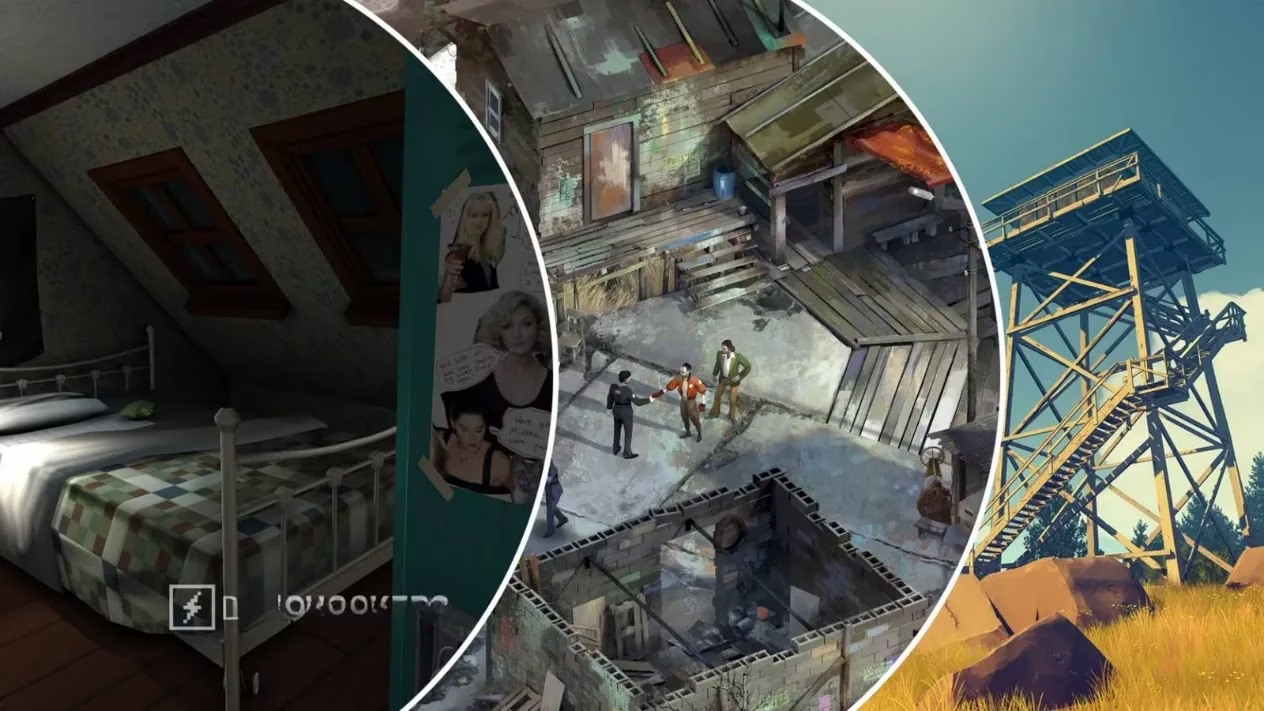
I’ll never forget the moment I read Roger Ebert’s famous declaration that video games can never be art. I was sixteen, hunched over a glowing CRT monitor, and my teenage soul nearly evaporated on the spot. The man hadn't even touched Braid or Flower. He just… decided. Even in 2026, that debate feels as quaint as a floppy disk, but I still get a tiny bit fired up. Because every single year, games — especially indie games — prove him catastrophically wrong. These scrappy little labors of love reach right into your chest and punch your heart with a well-written fist. I should know: I’ve sobbed more into my controller playing these than I ever have at any Oscar-bait film. So here’s my highly personal, slightly embarrassing, and 100% tear-stained list of indie games that emotionally wrecked me. Proceed with caution — and maybe some tissues.
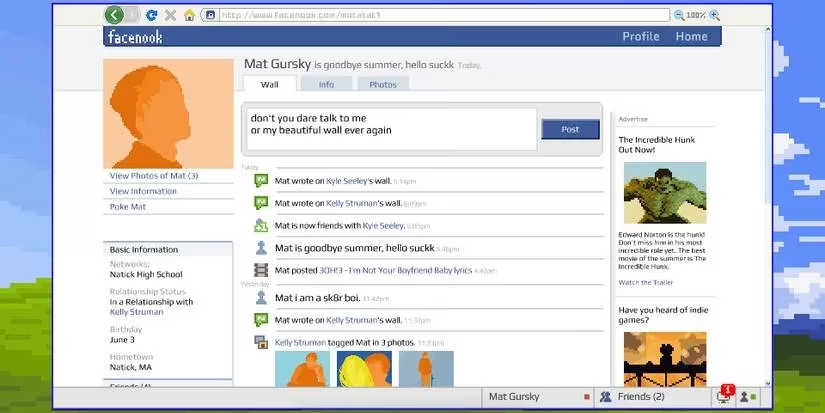
10. Emily is Away <3
I thought I was immune to 2008 nostalgia. Then Emily is Away <3 slapped me with a Facenook login and a YouToob playlist, and suddenly I was back in high school, typing awkward messages while dashboard confessional played in my head. The game perfectly captures that stomach-lurching anxiety of a changing world, where friendships fade and love feels like a carefully worded AIM status. What got me wasn’t just the bittersweet writing, but the way it made me miss a version of the internet that never really existed. The fake meme videos and glitchy HTML sites felt more alive than my actual social media feed in 2026. I finished the game and just sat there, wondering why I hadn’t told my younger self that everything would be okay. Also, “YouToob” is a pun that should be prosecutable, and yet I love it.
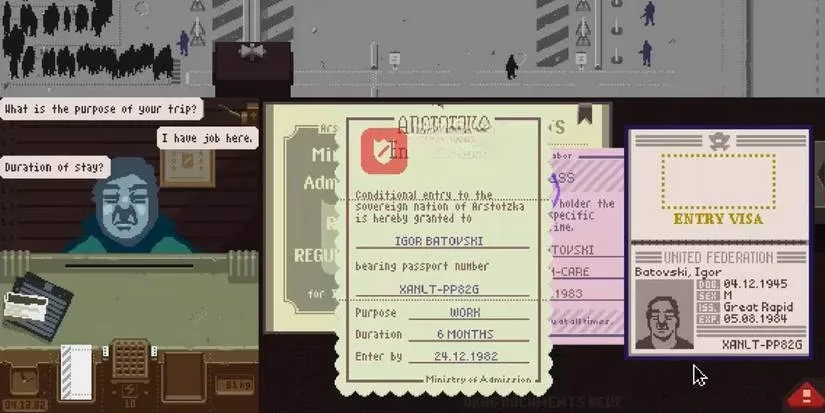
9. Papers, Please
I’ve never felt more like a cog in a soulless machine than when I denied a desperate father entry into Arstotzka because his paperwork was one day expired. Papers, Please turns bureaucracy into a survival horror, and the real monster is apartment rent. You have a family to feed, so you follow the rules — even when the rules are monstrous. It’s the quietest, most profound illustration of why revolutions are so rare: when you’re at the bottom, you can’t afford virtue. I bent the rules exactly once and immediately regretted it when my son’s hunger meter ticked down. The game doesn’t judge you, which makes the guilt a thousand times worse. I still hear the stamping sound in my nightmares, and I’m not even being dramatic.
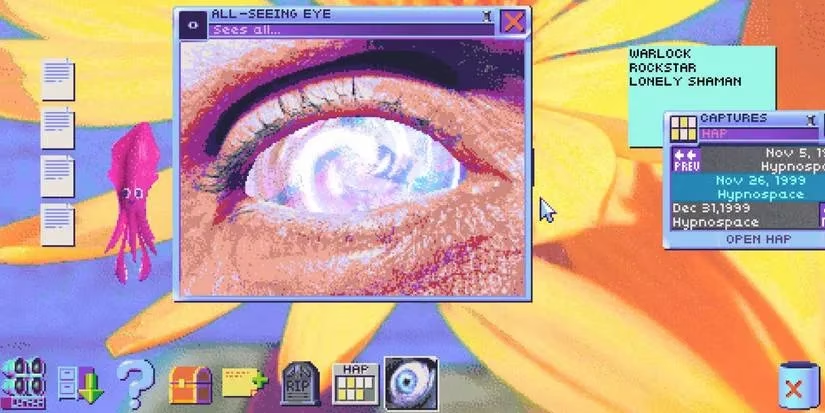
8. Hypnospace Outlaw
Imagine diving into a gloriously cursed version of GeoCities from the late `90s, where every page had a MIDI file and a strong opinion about fictional boy bands. Hypnospace Outlaw hired me as a moderator and I quickly discovered that policing weirdos on the internet was less about rules and more about empathy. Beneath the absurd humor — and there’s so much absurd humor — lies a tender story about belonging and the ways capitalism feeds on nostalgia. The original songs alone could make me emotional; there’s one about a pizza-loving teen that somehow feels like a lost hymn. I laughed until I cried, and then I cried until I laughed again. Even the villain gets a redemption arc that made me question my own online snark. If you’ve ever been part of a tiny internet community, this game will destroy you in the best way.
7. Celeste
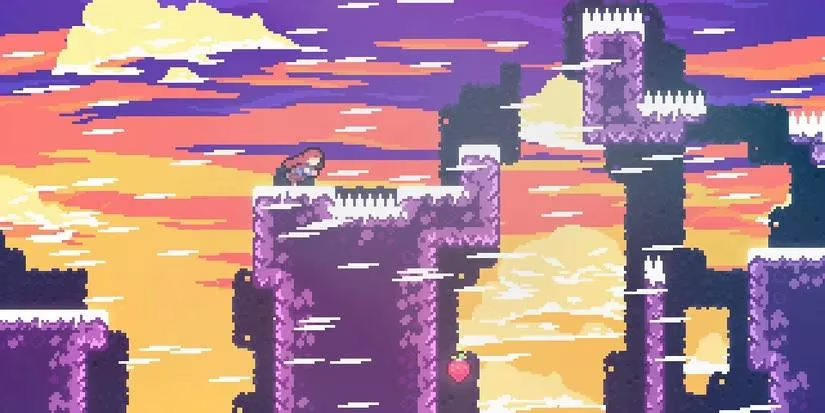
I didn’t expect a pixel-art platformer about climbing a mountain to become my mental health anthem. Madeline battles anxiety and self-doubt the way I battle my alarm clock — every single morning, with limited success. Every screen in Celeste is a tiny metaphor for pushing through anguish, and the game hugged me every time I fell. It’s brutally difficult, but the checkpoint system whispers, “You can do this,” and somehow I believed it. The fact that Madeline is a trans woman means the mountain is also a climb toward self-acceptance, and that resonates far beyond LGBTQ+ players. By the end, when that majestic music swelled, I was a puddle. Years later, in 2026, I still hum the soundtrack during tough weeks. It’s free therapy wrapped in a platformer.
6. The Beginner’s Guide
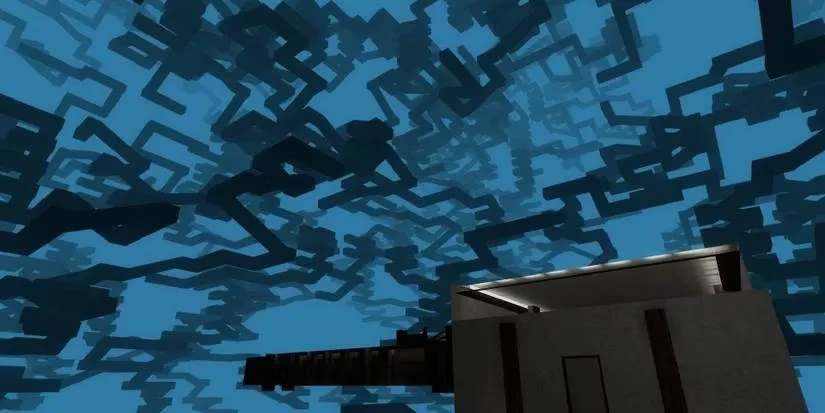
Davey Wreden, the mind behind The Stanley Parable, made another game and then narrated it himself as if reading from a personal journal. He guides you through a friend’s unfinished projects, and suddenly you’re not just playing — you’re interpreting someone’s soul. As I walked through those strange, broken hallways, I felt like I was intruding on a private conversation about creativity and self-doubt. The game says beautiful things about why we create, and why we sometimes stop. I won’t spoil the twist, but the moment when Davey’s voice cracks? I felt that in my bones. In 2026, every creator I know still argues about the ethics of this game, which is probably the point.
5. Gone Home
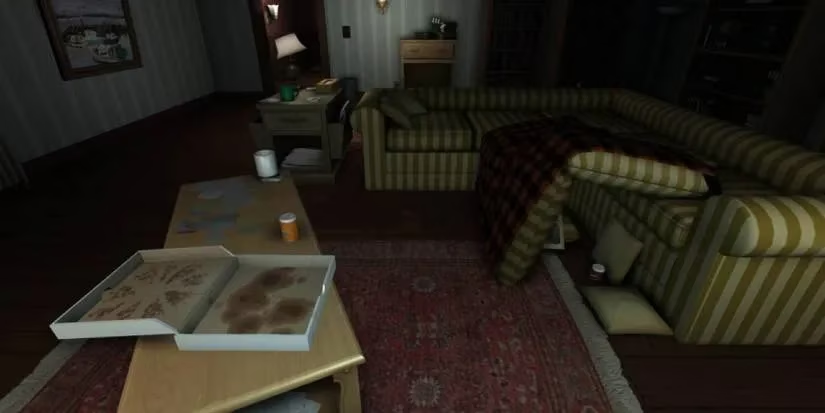
They called it a “walking simulator” as an insult, but Gone Home walked straight into my heart with muddy sneakers. You return from a trip overseas to an empty house, and the story unfolds through cassette tapes, notes, and the debris of everyday life. What I found was a deeply affecting lesbian romance wrapped in 1990s riot grrrl angst. It was one of the first games to center LGBTQ+ characters without making their identities the sole conflict — the real tension comes from family acceptance and the fear of being unseen. By the time I reached the attic, I was openly weeping. In 2026, the house still feels eerily real, like a memory I shouldn’t have access to. Also, I will forever associate punk zines with emotional devastation.
4. Lisa: The Painful
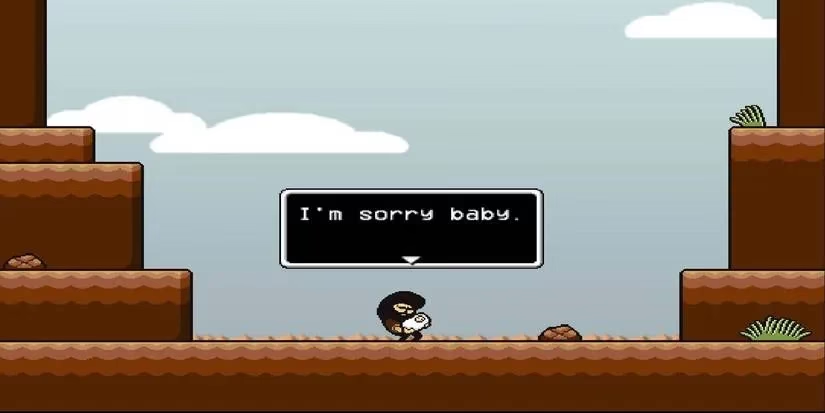
Oh, Lisa. This game is a punch in the gut wrapped in a messed-up Earthbound homage. Brad Armstrong is a broken man on a quest to save a girl, and his journey made me ask horrible questions about parenting, control, and where love curdles into abuse. The comic relief is dark enough to swallow you whole; I laughed until I remembered what I was laughing at. It’s like The Last of Us if Joel were far less stable and wore a trilby. The moral line is never clear — Brad wants to protect, but his “protection” is suffocating. By the end, I felt complicit in his choices, and that’s a cosmic-level testament to the writing. I haven’t been the same person since, and frankly, I don’t want to be.
3. Firewatch
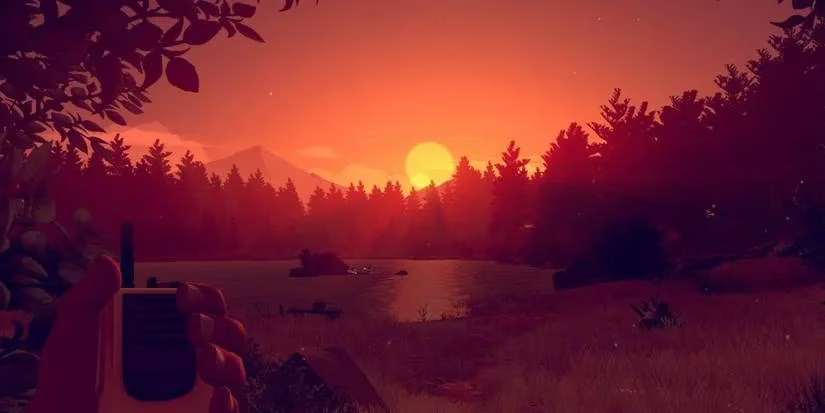
In 2026, Firewatch still looks like a living painting, and its emotional sucker punch is just as fresh. You’re Henry, a guy running from his messy past by taking a job as a fire lookout in Wyoming. Delilah’s voice crackles over the radio and suddenly you’re in a grown-up, achingly human romance that never quite does what you expect. Henry’s guilt over his ex-wife and his paranoid downward spiral felt like holding a mirror to my own worst habits. The isolation of the forest becomes a metaphor for the walls we build around ourselves, and that final conversation on the tower is among the most honest dialogue I’ve ever experienced in any medium. The art and voice acting are so warm they should be illegal. I walked away feeling both emptier and fuller, which is the mark of true art.
2. Undertale
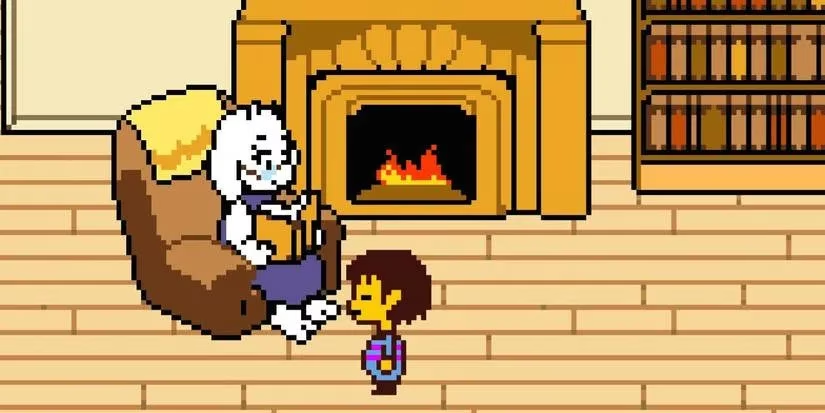
Everyone and their grandma has played Undertale by now, but I’m not ashamed to admit I still cry when Toriel holds out her hand. It’s a game about friendship, consequences, and the weight of your own choices, all set to a soundtrack that should be framed in a museum. Toby Fox’s leitmotifs are so cleverly woven that your second playthrough feels like a revelation — every character shares musical DNA you never noticed before. The first time I befriended a monster instead of fighting, I had genuine goosebumps. In 2026, I fired up a pacifist run just to feel something, and I ended up weeping during the true lab section again. It’s the ultimate argument that games can be art, and you can’t change my mind.
1. Disco Elysium
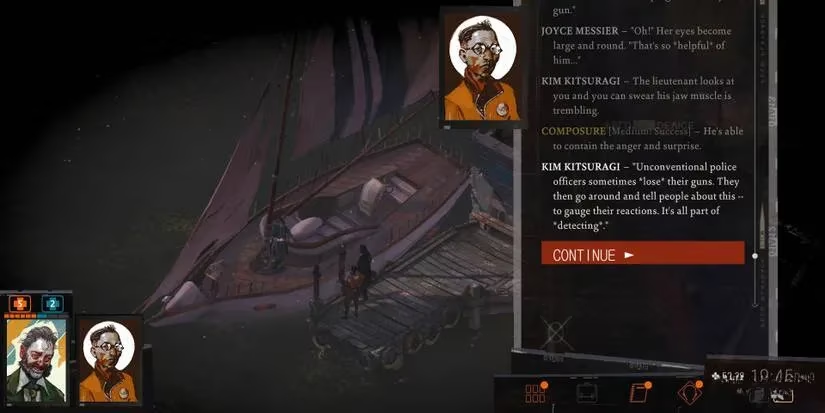
And here we are at number one — a game so dense with philosophy, comedy, and grief that I felt like a new person after 20 hours of dialogue. Disco Elysium lets you play a disaster of a detective who can’t remember his own name, and somehow that’s the most human protagonist in gaming history. It tackles politics, addiction, and existential despair without ever being preachy. Every single line is either wildly funny or devastatingly poignant, and the writing ping-pongs between those two poles like a pendulum in a broken clock. I bonded with a necktie. I cried over a dead body on a boat. I confronted my own ideological blindspots while interrogating a dock worker. By the end, I understood that a good story, like a good life, has ups and downs — and Disco Elysium delivers the full roller coaster. It’s proof that a game can be messy, brilliant, and utterly, unforgettably art.
So, Roger Ebert, I wish you’d given even one of these a chance. You might have realized that art doesn’t need a static frame — it can be a mountain climb, an immigration desk, or a 2008 chat window that feels like home. These ten games aren’t just emotional; they’re evidence that interactivity only deepens the human experience. And if you’ll excuse me, I need to go replay Gone Home and ruin my mascara.
0 Comments