A Personal Journey Through the Weird and Wonderful Realms of RPGs
Explore the profound impact of unconventional and bizarre role-playing games like Earthbound and Undertale, which reshape storytelling and player experiences through surreal, subversive, and emotionally deep worlds.
As I sit here in 2026, reflecting on my decades-long journey through digital worlds, I realize it is the strange, the unconventional, and the beautifully bizarre role-playing games that have left the deepest imprints on my soul. In a genre that can so easily fall into comfortable, well-worn grooves, it is the titles that dare to be different—that embrace the surreal, the subversive, and the unsettling—that truly sing to me. They are not mere distractions; they are experiences that reshape my understanding of what a story can be, what a world can feel like, and what it means to be a player within it. Let me take you through the looking glass, to the games that taught me to cherish the weird.
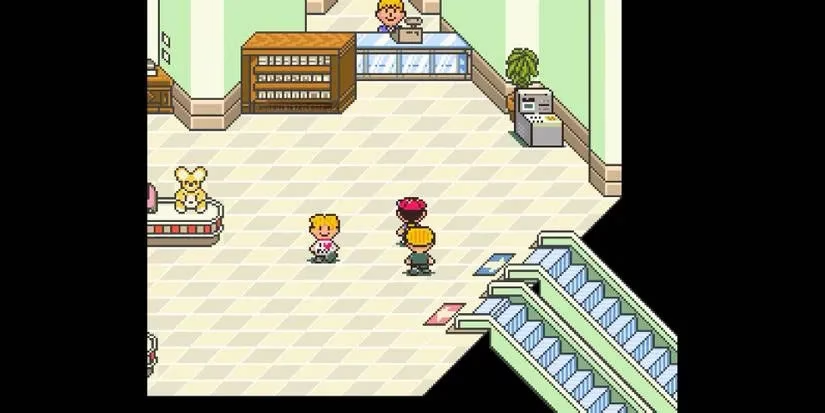
My journey into the odd often begins with a classic, a game that felt like a secret whispered among friends before it became a legend. Earthbound on the SNES was my first real taste of this peculiar magic. It presented a world that was at once familiar and deeply strange—a suburban landscape hiding cosmic horrors and psychedelic battles. The music, with its sampled beats and quirky melodies, wasn't just background noise; it was the heartbeat of a world where kids fought nightmares with baseball bats and psychic powers. The game’s charm was a delicate veneer over themes of existential dread and body horror, teaching me that the most profound stories often wear the mask of innocence. It wasn't just playing a game; it was stepping into a living, breathing collage of experimental ideas.
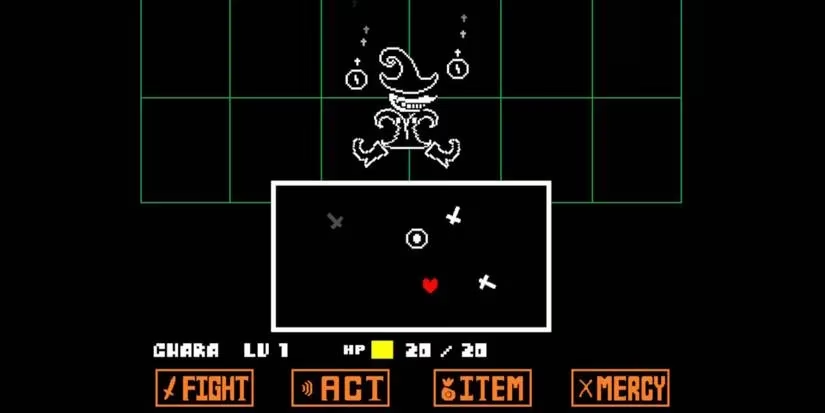
Years later, another phenomenon would capture my heart and redefine my relationship with RPG mechanics entirely. Undertale wasn't just a game; it was a conversation. Its genius lay in its gentle subversion. It presented a world of talking flowers and goat-people, then asked me a simple, devastating question: Why must we fight? The combat system, traditionally a mindless grind, became a moral quandary. Every encounter was a plea for mercy, a puzzle of pacifism. The humor was dry, awkward, and endlessly enduring—a constant stream of fourth-wall-breaking jokes and character quirks that made the world feel genuinely alive. It proved that weirdness could be the vehicle for incredible emotional depth and player agency.
From that fertile ground grew Deltarune, an ongoing saga that continues to unfold in my time. Releasing in episodic chapters, it feels like a weekly dose of delightful strangeness. Following Kris and Susie into the Dark World is an exercise in embracing the unpredictable. The game doubles down on the unique, rambling humor of its predecessor, but it also reveals a profound humanity in its characters. Their weirdness isn't a punchline; it's the key to understanding them. Playing Deltarune feels less like controlling a story and more like being invited into a deeply personal, slightly off-kilter friendship.
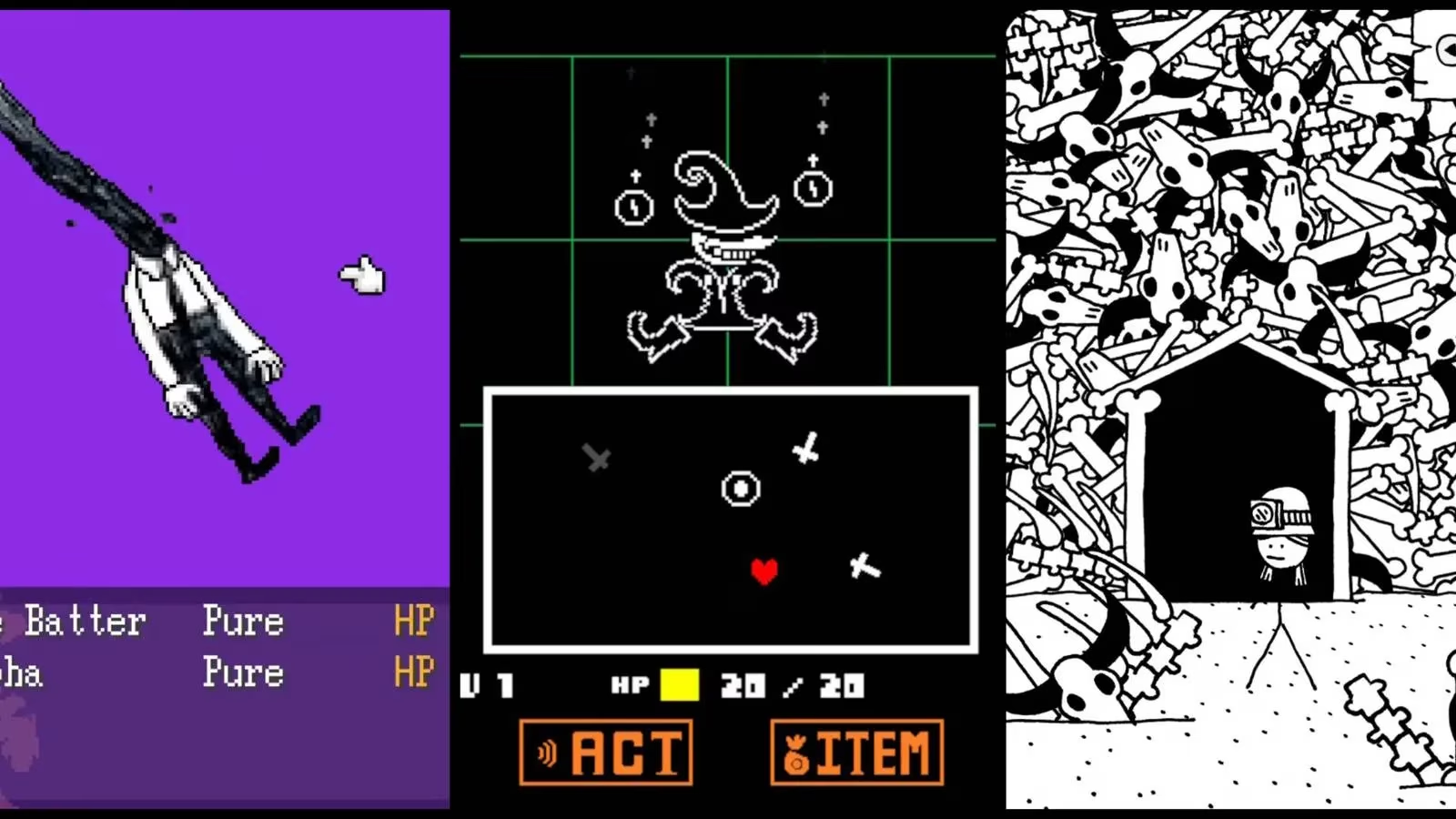
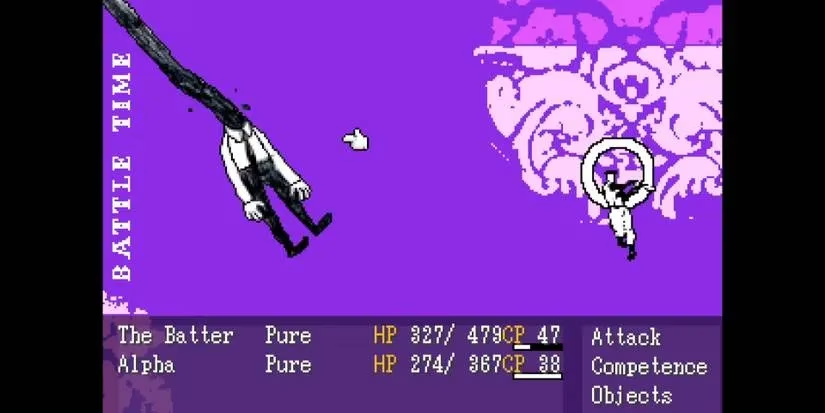
My path through weird RPGs isn't all warmth and humor, however. Some journeys are meant to unsettle. OFF is a monument to pervasive, uncanny dread. Its world, a stark realm of sterile zones and haunting melodies, is one I traverse as The Batter, on a mission to "purify" everything. What begins as a simple quest slowly unravels into a deeply disturbing meditation on purpose, corruption, and the nature of existence itself. Its influence is undeniable—a dark muse for many modern games—but its own brand of quiet, structural horror remains uniquely potent. It’s a game that sits with you, long after the screen goes dark.
Then there are games that are weird in a purely aesthetic, dreamlike sense. Hylics is a vision rendered in surreal Claymation, a world that feels both handmade and utterly alien. Its story defies conventional logic, presenting fragments of narrative and bursts of procedurally generated, often nonsensical text. Yet, in forgoing traditional coherence, it invites a different kind of engagement. I found myself not following a plot, but interpreting a mood, piecing together meaning from the beautiful, bizarre imagery and the haunting ambiance. It’s less a story to be solved and more a dream to be experienced.
Some games challenge the very foundations of the genre itself. Moon: Remix RPG Adventure proudly wears the badge of an "anti-RPG." Here, I am not the hero. I am an interloper, sucked into a game world after the traditional, murder-hobo "hero" has rampaged through it, stealing treasure and killing monsters. My goal? To clean up his mess. To return lost items, heal wounded creatures, and spread love instead of violence. It completely inverts the power fantasy, replacing combat with compassion and conquest with connection. It’s a bizarre, beautiful critique of gaming tropes that feels more relevant than ever.
Of course, weirdness can also be riotously, unabashedly funny. Barkley, Shut Up and Jam: Gaiden is a glorious, unhinged parody that mashes together 90s basketball iconography with apocalyptic sci-fi and JRPG mechanics. Playing as Charles Barkley in a post-“Chaos Dunk” wasteland, fighting enemies inspired by Final Fantasy with a battle system ripped from Super Mario RPG, is an experience of pure, joyful absurdity. It doesn’t just break the fourth wall; it demolishes it with a slam dunk. It’s a reminder that at the heart of the best weird RPGs is a profound love for the medium and a willingness to laugh at its conventions.
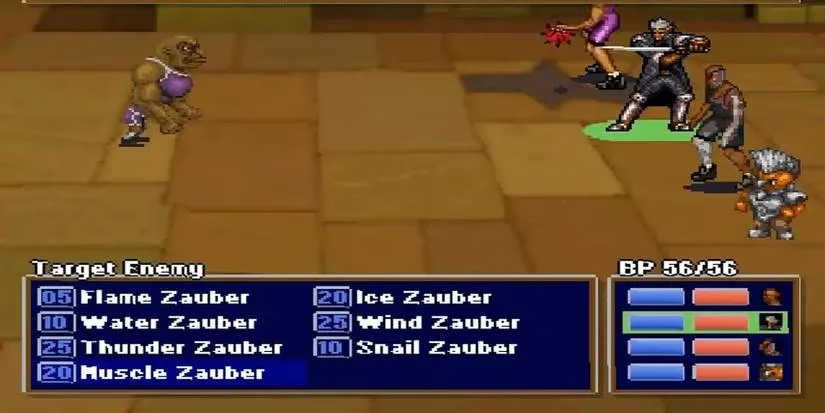
But the strangeness isn't always comedic. Lisa: The Painful wraps its devastating, post-apocalyptic story in a layer of crude, brutal humor and grotesque character designs. Its world is cruel, its choices are heartbreaking, and its weirdness serves to amplify the horror and tragedy of its narrative. Made in RPG Maker, it proves that technical limitations are no barrier to profound, emotionally scarring storytelling. Its weirdness is the cracked lens through which we view a story of addiction, loss, and desperate love.
For a more consistently hilarious take, I wander West of Loathing. This stick-figure adventure in a spaghetti Western setting is a masterclass in written comedy. Every dialogue box, every environmental description, every enemy encounter is an opportunity for a pun, a sight gag, or a clever subversion. The combat is simple, but it’s merely a framework to hang more jokes upon. It’s a game that understands its primary purpose: to deliver a constant, delightful stream of humor in a world where everything, from spittoons to demonic cows, is in on the joke.
Finally, I think of Anachronox, a relic from 2001 that still feels ahead of its time. The fact that a studio founded by FPS legends created a turn-based, PC-exclusive RPG with the soul of a Japanese classic and the humor of a classic adventure game is weird in itself. Its galaxy-hopping tale, filled with deadpan robots and planet-sized mysteries, is a testament to ambitious, genre-blending creativity. It stands as a monument to a time when big studios were willing to greenlight truly singular, bizarre visions.
| Game | Core Source of Weirdness | Emotional Tone |
|---|---|---|
| Earthbound | Surreal suburban horror & sampled music | Nostalgic, Unsettling |
| Undertale | Subversive pacifist mechanics & meta-humor | Heartwarming, Thoughtful |
| Deltarune | Absurdist character writing & chapter-based mystery | Whimsical, Mysterious |
| OFF | Pervasive atmospheric dread & minimalist aesthetic | Disturbing, Ominous |
| Hylics | Dreamlike Claymation & nonsensical prose | Hypnotic, Abstract |
| Moon | Anti-RPG premise (undoing a hero’s damage) | Contemplative, Wholesome |
| Barkley | Genre-mashing parody (Basketball x JRPG x Sci-Fi) | Hilarious, Unhinged |
| Lisa | Crude humor masking profound tragedy | Brutal, Heartbreaking |
| West of Loathing | Relentless written jokes & stick-figure art | Consistently Comedic |
| Anachronox | Western-made JRPG-style adventure with quirky humor | Ambitious, Quirky |
In 2026, as game worlds grow ever more vast and visually stunning, I find myself returning to these strange, intimate creations. They remind me that the heart of an RPG isn't in its graphical fidelity or the size of its map, but in its willingness to show me something I've never seen before and make me feel something I didn't expect. They are the outliers, the dreamers, the glorious mistakes, and the intentional rebellions. They are proof that within the familiar framework of stats and quests, there is infinite room for the peculiar, the poetic, and the profoundly human. To play them is to celebrate the beautiful, endless weirdness of imagination itself.
0 Comments