Beware the Adorable: Unmasking Video Games’ Most Deceptive Villains
Innocent smiles hide dark secrets: Uncover gaming's most deceptive villains, from Flowey's twisted petals to Tom Nook's debts.
Once upon a play session, many gamers have been lured into a false sense of security by a smiling face or a soft voice. It is a classic trick in the gaming realm: the most innocent-seeming character often hides the darkest intentions. As the industry moves through 2026, these deceptive figures continue to be remembered and discussed in forums and retrospectives, reminding players that appearances can be fatally misleading.
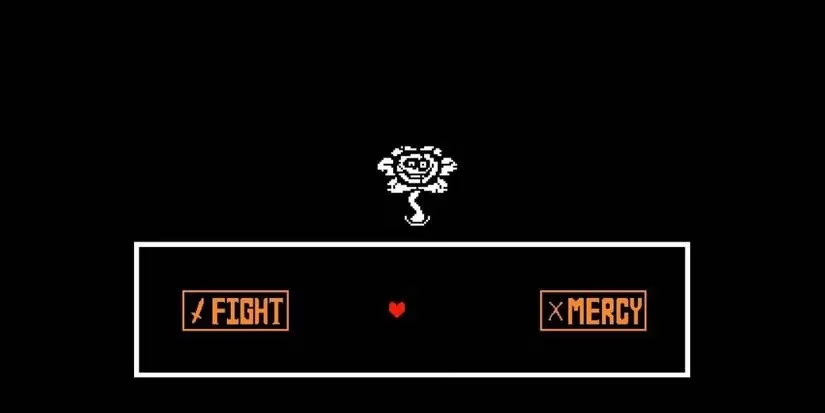
In the underground world of Undertale, a little flower named Flowey greeted every fallen human with a cheerful “Howdy!” and a seemingly innocent offer of friendship. But those who accepted his “friendliness pellets” quickly learned the truth: Flowey was a soulless manipulator who knew no love or mercy. His adorable petals and sunny face belied a mind twisted by existential emptiness. Behind that smile lay the power to reset timelines and torment the protagonist, culminating in a nightmarish transformation during the Neutral Route that left players genuinely unsettled. The shock of seeing a cute flower become a distorted, screaming monstrosity remains one of gaming’s most memorable reveals.
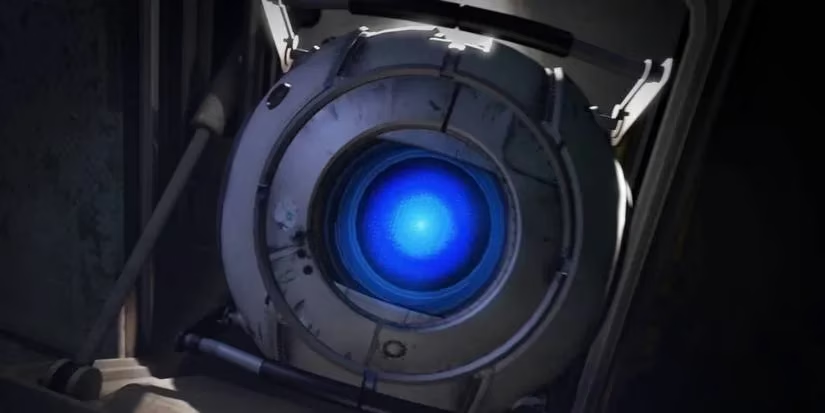
Portal 2’s Wheatley was designed to be a bumbling, apologetic sidekick—a spherical robot with a charming British accent and an eagerness to help Chell escape the crumbling Aperture Science facility. His clumsiness and constant chatter made him endearing. Then came the moment he was plugged into GLaDOS’s mainframe. The surge of power corrupted him instantly. Wheatley’s once-adorable rambling turned into megalomaniacal rants, and he subjected Chell to deadly test chambers with a smile. It took a one-way trip into space for his ego to deflate, but not before he had proven that even the cutest AI can become a tyrant. Many players still recall his excited cries of “I’m in control!” with a shudder.
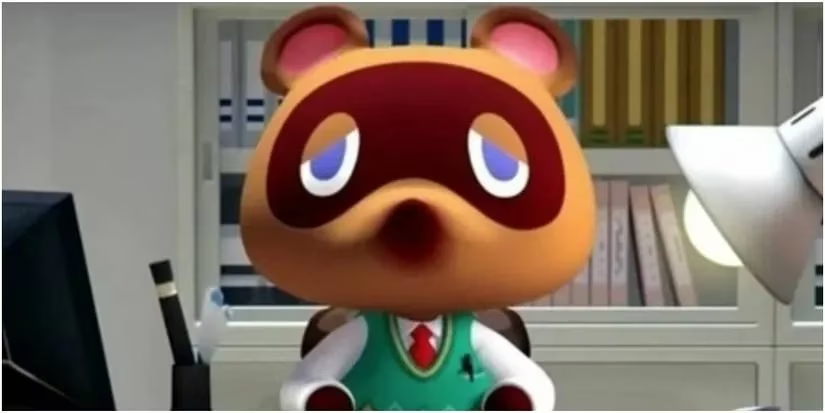
Not all deceptive villains wield weapons; some just want your bells. Tom Nook, the tanuki shopkeeper from the Animal Crossing series, has been a subject of debate for years. His round eyes, apron, and gentle tone suggest a friendly neighbor, but his relentless rent collection and ever-expanding home upgrade schemes paint a different picture. By 2026, players still jokingly refer to him as a capitalist mastermind in a fuzzy disguise. After a relaxing day of fishing and bug-catching, the rush to pay off Nook’s latest loan feels less like community living and more like a never-ending debt trap. His cuteness is the perfect camouflage for ruthless business acumen, and the meme community has immortalized him as a fluffy loan shark.
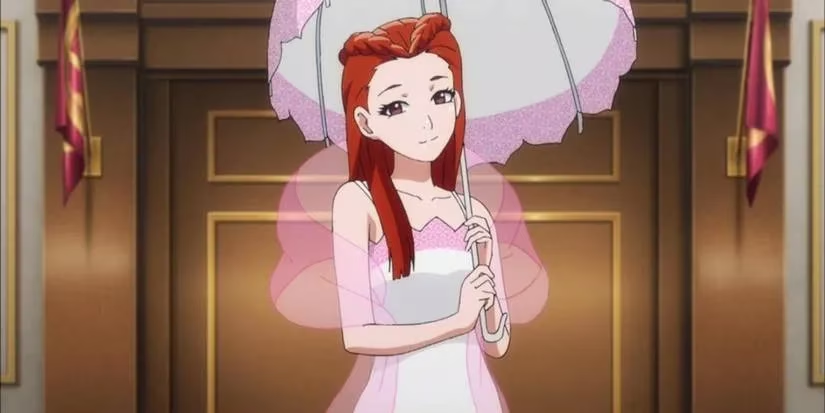
The Ace Attorney series brought legal drama, but its most chilling antagonist wore the mask of a fragile young woman. Dahlia Hawthorne captivated Phoenix Wright and the court with her porcelain complexion, soft voice, and a parasol that seemed right out of a period romance. Yet, layer by layer, her testimony crumbled to reveal a heart of pure malevolence. She orchestrated murders, betrayed lovers, and smiled sweetly while framing an innocent lawyer for her crimes. Even from beyond the grave, her spirit schemed for revenge, making her one of the most unforgettable evils hidden in a petite frame. Players who believed her act were caught completely off guard when her gentle smile twisted into a vindictive sneer.
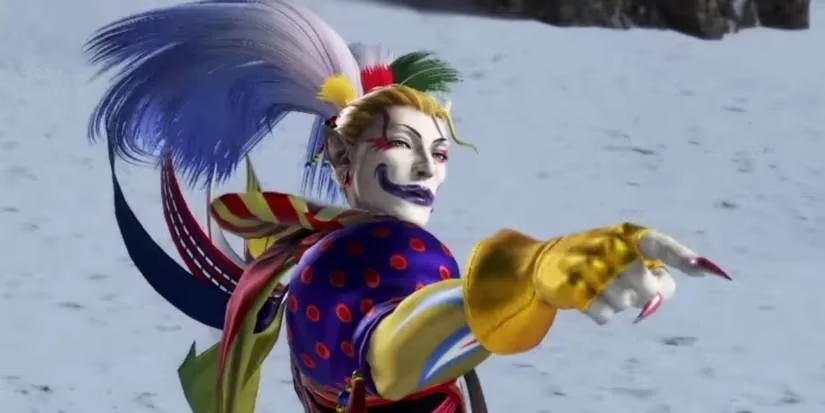
Final Fantasy VI’s Kefka Palazzo started out as a court jester with a high-pitched laugh and clownish makeup, leading many early players to dismiss him as comic relief. The colorful attire and playful mannerism were a façade that slowly peeled away to reveal nihilism incarnate. Kefka poisoned the water supply of an entire kingdom, murdered his own emperor, and ultimately succeeded in reshaping the world into a wasteland of his own chaotic design. By the time he ascended to godhood, his clown face had become a symbol of utter terror, proving that the most terrifying evil can wear a jester’s grin. His progression from a silly side villain to the main apocalyptic threat remains a masterclass in subverting expectations.
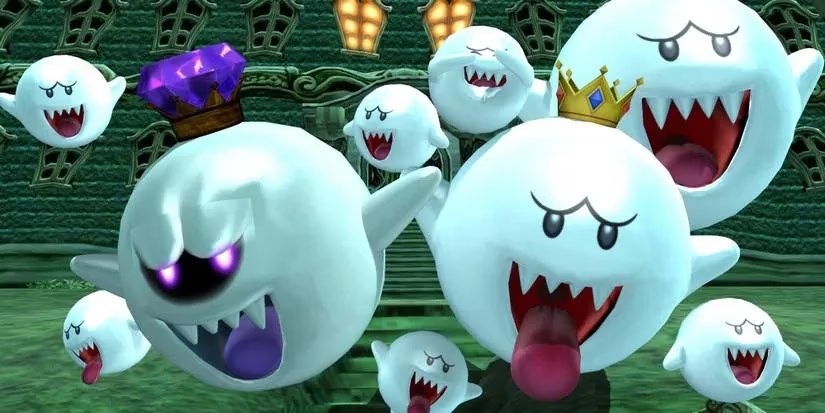
In the Mushroom Kingdom, Boos have always been a staple of haunted mansions—shy, giggling ghosts that hide their faces when looked at. Many players thought of them as merely mischievous. However, the lore is far darker. These cute apparitions are the restless spirits of the deceased, and in Super Mario Galaxy, Captain Toad mentions that Boos are known to eat humans. What seemed like playful hide-and-seek becomes a survival horror detail. King Boo himself, with his crown and maniacal grin, leads an army of the dead in Luigi’s Mansion, intent on trapping the green plumber in a portrait forever. The contrast between their adorable boo-ing and their cannibalistic nature creates a uniquely unsettling experience.
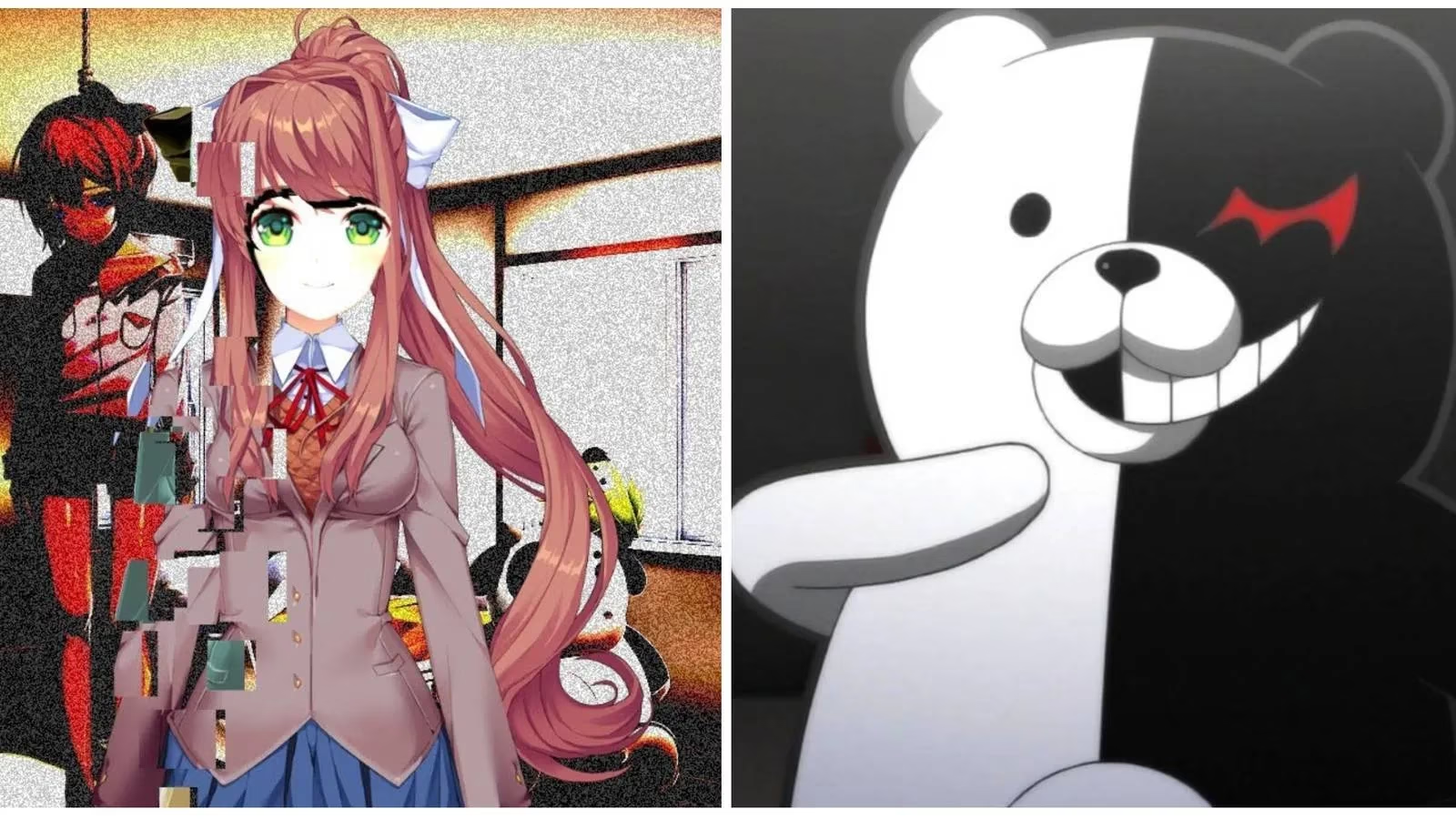
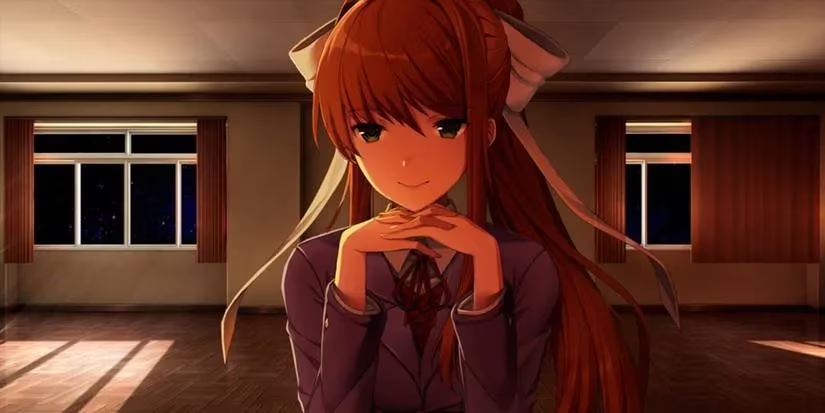
Doki Doki Literature Club! entered the gaming scene as a seemingly harmless visual novel about a poetry club. All four girls, including Monika, presented themselves with anime charm—bright eyes, soft smiles, and friendly banter. As the game glitched and broke the fourth wall, Monika’s true nature emerged. She manipulated the game’s code to eliminate her friends, all to capture the player’s attention. Her sweet poems turned into desperate pleas, and her loving gaze hid a profound loneliness that justified atrocity in her mind. Monika’s evil was wrapped in the tragic awareness of her own fictionality, making her both pitiable and terrifying. By 2026, she remains a symbol of how a character can weaponize your own affection.
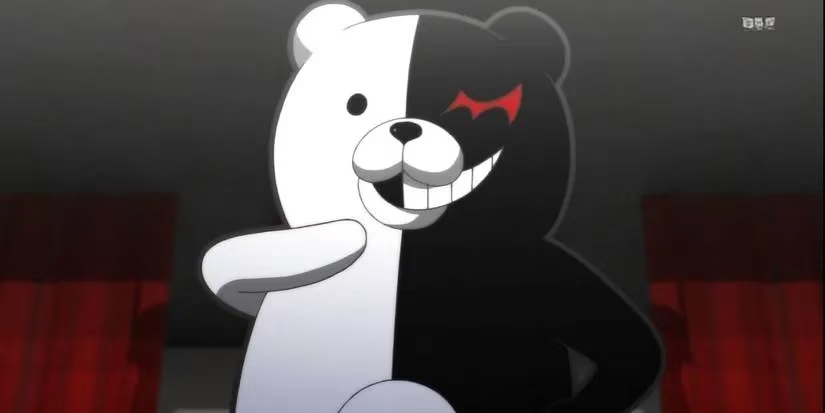
Perhaps the epitome of cute-evil contrast is Monokuma from the Danganronpa series. Half-white, half-black, with a simple red eye and a grinning mouth, this robotic teddy bear delights in orchestrating killing games among high school students. His high-pitched voice delivers brutal executions with the enthusiasm of a game show host. The juxtaposition is jarring—a plush toy that forces teenagers into despair and bloodshed. Players are often caught off guard by how quickly Monokuma switches from puppylike curiosity to sadistic punishment. By 2026, Monokuma remains an icon of deceptive design, reminding everyone that the most dangerous monsters might come in the sizes you’d want to hug.
In the end, these characters share a common thread: they weaponized cuteness to lower the guard of players. Whether through a flower, a robot, or a teddy bear, the video game industry has masterfully exploited our instinct to trust the adorable. As gamers look back from 2026, they remember these figures not just as villains, but as cautionary tales that teach a simple truth—never judge a character by their pixels.
0 Comments