Beyond Good & Evil: How Video Games Redefine Morality with Ambiguous Heroes
Dive into the captivating world of moral ambiguity in video games, where titles like BioShock and Baldur's Gate 3 masterfully challenge conventional notions of good and evil. These thought-provoking games compel players to confront complex ethical dilemmas, blurring the lines between hero and villain in unforgettable narratives.
Let's face it, folks—most games give us a clear-cut hero and a mustache-twirling villain. You know the drill: save the princess, defeat the dark lord, world peace achieved. But what about those games that throw the whole morality playbook out the window? We're talking about titles that make you question your own choices, where the 'good guy' might be kind of a jerk, and the 'bad guy' might have a point. It's not just about being edgy; it's about storytelling that hits different, making us reflect on the gray areas in life. These games don't just entertain; they challenge our deepest beliefs about right and wrong, and honestly, that's where the real magic happens. Get ready for a deep dive into some absolute bangers that mastered the art of moral ambiguity.
BioShock: Would You Kindly Question Everything?
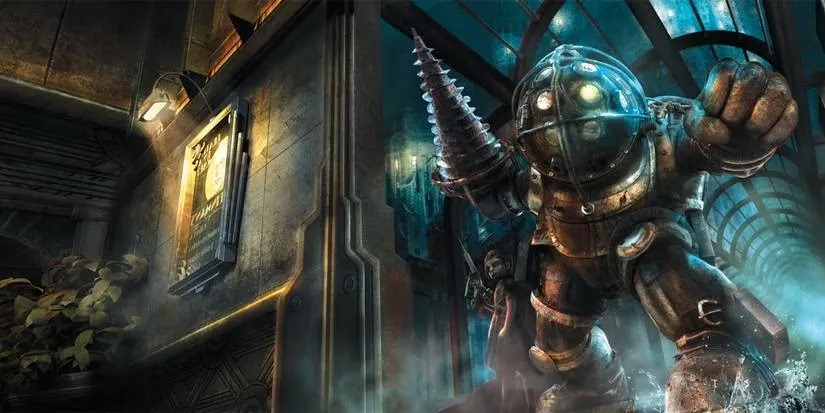
Oh boy, where do we even start with BioShock? This game is a masterclass in narrative subversion. You think you're just a dude surviving in a creepy underwater city called Rapture, but plot twist—you're being manipulated from the get-go. The infamous 'Would you kindly?' phrase isn't just a polite request; it's a psychological gut punch that redefines free will in gaming. The city's founder, Andrew Ryan, preaches objectivism and freedom, yet creates a dystopia. Are the Splicers truly evil, or just victims of addiction and desperation? BioShock forces players to confront uncomfortable truths:
-
The Illusion of Choice: Your actions feel consequential, but how much agency do you really have?
-
Utilitarian vs. Deontological Ethics: Is saving the Little Sisters the 'good' choice, or is harvesting them for greater power the 'smart' one?
-
The Villain's Motivation: Ryan isn't evil for evil's sake; he's a flawed idealist whose dream turned nightmare.
This game doesn't just challenge notions of good and evil; it obliterates them, leaving players to ponder the nature of control and morality long after the credits roll. Absolute mind-bending stuff.
Baldur's Gate 3: Your Choices, Your Chaos
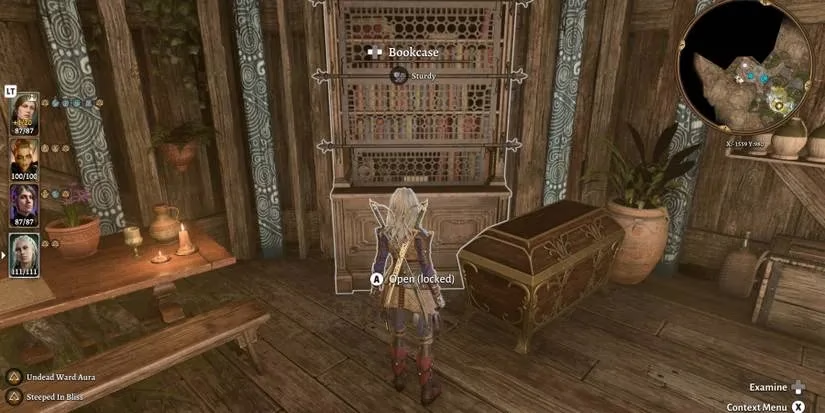
Fast forward to 2026, and Baldur's Gate 3 is still the gold standard for player-driven morality. This game is like a moral playground where every decision has weight, and the line between hero and villain is thinner than a spider's web. The companions alone are a study in complexity:
-
Astarion: A vampire spawn seeking freedom—is his manipulative charm evil, or a survival mechanism?
-
Shadowheart: A cleric with memory loss serving a shady goddess—blind faith or tragic devotion?
-
Lae'zel: A githyanki warrior raised in a militaristic culture—ruthless or honor-bound?
The game's genius lies in its refusal to label actions as purely 'good' or 'evil.' Helping one faction might doom another. Sparing a villain could lead to unforeseen consequences. Even the 'good' endings can feel bittersweet. BG3 embraces moral relativity, making each playthrough a unique ethical journey. It's not about being a paragon or a renegade; it's about being human (or elf, or tiefling) in a messy world.
Bully: The 'Anti-Hero' Simulator
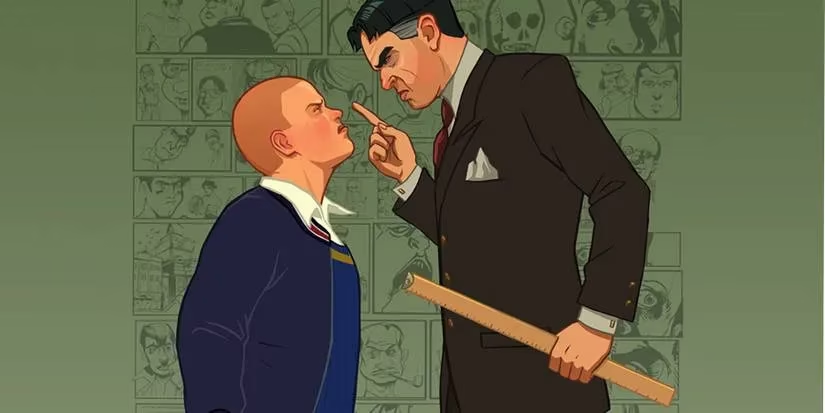
Rockstar's Bully (or Canis Canem Edit for the PAL crew) is a fascinating case study. You play as Jimmy Hopkins, a troublemaker dumped at a brutal boarding school. On paper, he's the bully—but the game cleverly positions him against even worse antagonists: corrupt teachers, tyrannical prefects, and violent cliques. Jimmy's mischief often feels like justified rebellion against a broken system. The game asks: Is it wrong to fight back against oppression, even if your methods aren't saintly? This title subverts expectations by making the 'bully' a sympathetic figure navigating a dog-eat-dog world. It's a gritty, nuanced take on adolescent morality that still resonates today.
Undertale: Pacifism, Genocide, and Everything In Between
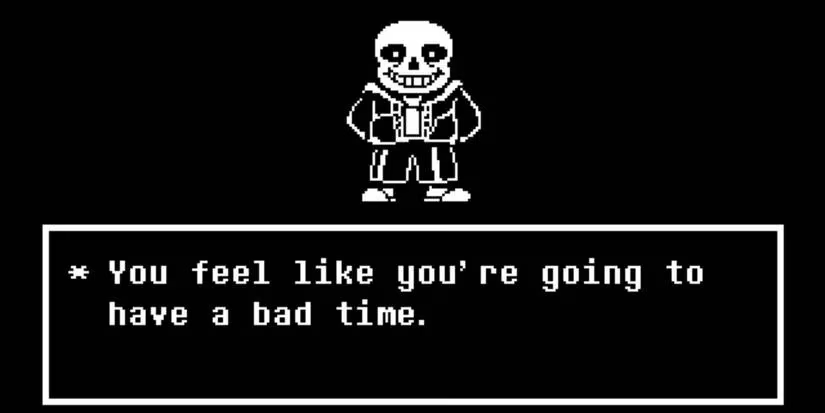
Don't let the cute pixels fool you—Undertale is a psychological deep dive wrapped in a retro RPG. The core mechanic? You can complete the entire game without killing a single enemy. Mercy is a valid strategy, and the game remembers your choices. The 'genocide route' isn't just about being evil; it's a meta-commentary on player agency and gaming culture. Characters like Sans and Flowey break the fourth wall, questioning your motives. Is sparing monsters the 'good' path, or are you just avoiding conflict? Undertale brilliantly deconstructs RPG tropes, proving that true strength can come from compassion. It's a heartfelt reminder that morality isn't about power, but empathy.
Grand Theft Auto V: The Trio of Troubled Souls
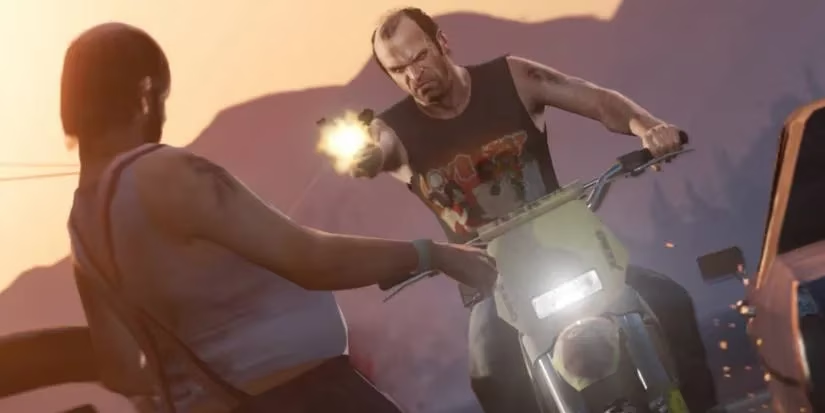
GTA V gives us three protagonists, each with their own moral compass (or lack thereof):
-
Michael: A retired bank robber stuck in a midlife crisis—is he seeking redemption or just bored?
-
Trevor: A chaotic force of nature—psychopath or product of trauma?
-
Franklin: A young hustler trying to escape the hood—ambitious or desperate?
The game doesn't glorify crime; it presents it as a messy, often tragic, reality. These characters aren't heroes, but they're humanized through their struggles. The story forces players to complicit in their crimes, blurring the line between spectator and participant. In a world of corrupt governments and greedy corporations, who's really the villain? GTA V holds a mirror to society, reflecting its hypocrisies with brutal honesty.
Vampire: The Masquerade - Bloodlines: Survival vs. Morality
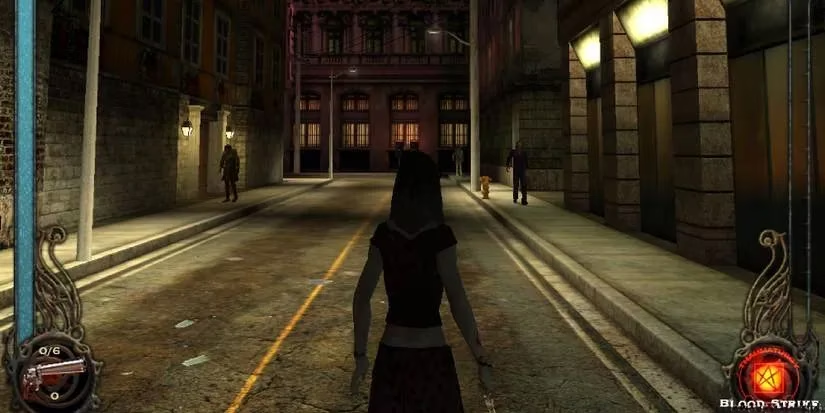
This cult classic asks a haunting question: If you must feed on humans to survive, are you inherently evil? As a fledgling vampire, you navigate the treacherous politics of undead clans while managing your hunger. Choices range from drinking ethically (like from blood banks) to straight-up murder. The game's morality system is tied to your humanity stat—the more heinous acts you commit, the more you lose your soul. But is resisting your nature 'good,' or just self-destructive? Bloodlines explores the tension between survival and ethics, making every feeding a moral dilemma. It's a dark, immersive experience that proves monsters can be tragic, not just terrifying.
The Bard's Tale: Sarcasm as a Moral Compass
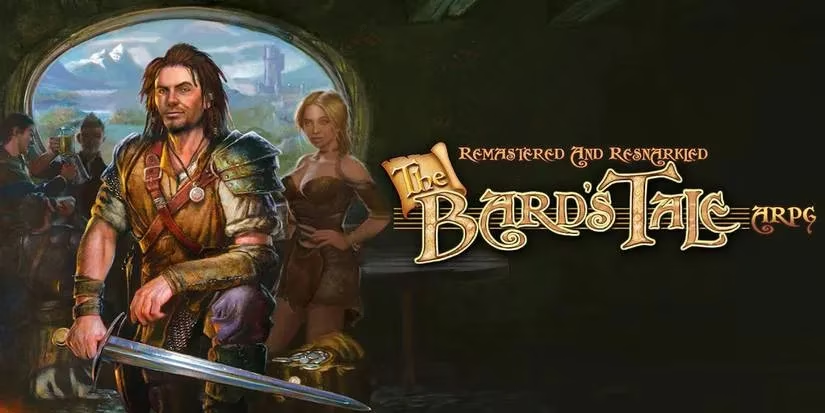
Before 'anti-hero' was cool, The Bard's Tale gave us a protagonist who's literally too sarcastic to care. The Bard isn't on a noble quest; he's in it for money and ale. He breaks the fourth wall, mocks fantasy clichés, and questions the very idea of heroism. In a genre filled with chosen ones, he's refreshingly selfish. The game parodies traditional good vs. evil narratives, suggesting that maybe the 'hero' is just a dude with a lute and a bad attitude. It's a hilarious, meta take on morality that reminds us not to take games—or ourselves—too seriously.
The Bottom Line: Why Moral Ambiguity Matters
So, what's the big deal with all these morally gray games? Well, they reflect the complexity of real life. In 2026, we're surrounded by nuanced issues—AI ethics, climate justice, digital privacy—where clear-cut answers are rare. Games that embrace ambiguity teach us critical thinking and empathy. They're not just entertainment; they're interactive philosophy lessons.
| Game | Moral Question | Why It Hits Different |
|---|---|---|
| BioShock | What is free will? | Makes you question your own autonomy. |
| Baldur's Gate 3 | Can ends justify means? | Every choice feels personal and impactful. |
| Bully | Who defines 'bad' behavior? | Flips the script on victim vs. aggressor. |
| Undertale | Is violence ever necessary? | Rewards compassion over strength. |
| GTA V | Are criminals products of society? | Humanizes 'villains' through storytelling. |
| Vampire: Bloodlines | Is survival inherently selfish? | Blurs the line between monster and victim. |
| The Bard's Tale | What even is a 'hero'? | Uses humor to deconstruct tropes. |
These games prove that the most memorable stories aren't about black and white, but the infinite shades of gray in between. They challenge us to think, feel, and maybe even grow a little. And in a world full of easy answers, that's a level-up we all need. So next time you fire up a game, ask yourself: Am I the hero, or just the protagonist of my own messy story? 🤔🎮
0 Comments