Beyond the White Knight: Video Game Protagonists Who Challenge the Hero Archetype
Explore the compelling evolution of nuanced protagonists and morally ambiguous heroes in modern gaming, as developers craft deeply relatable characters that challenge traditional definitions of heroism.
In 2026, the gaming landscape continues to evolve, but one trend that has solidified over the past decade is the player's desire for more than just a clear-cut hero. While the allure of a valiant champion fighting for honor, survival, or the world's fate remains timeless, modern gamers, in an industry constantly innovating, have demanded more nuanced characters from their purchases. Developers with esteemed writing skills have risen to this challenge, consistently crafting protagonists who exist in shades of gray rather than simple black and white. These characters possess complex motivations, making them feel more real and relatable than the classic 'cookie-cutter' heroes who never hesitate to do the right thing. But what does it truly mean to be a hero in a video game? Can a character still be compelling if their actions are morally ambiguous, or even outright villainous?
The Haunted Soldier: Captain Martin Walker in Spec Ops: The Line
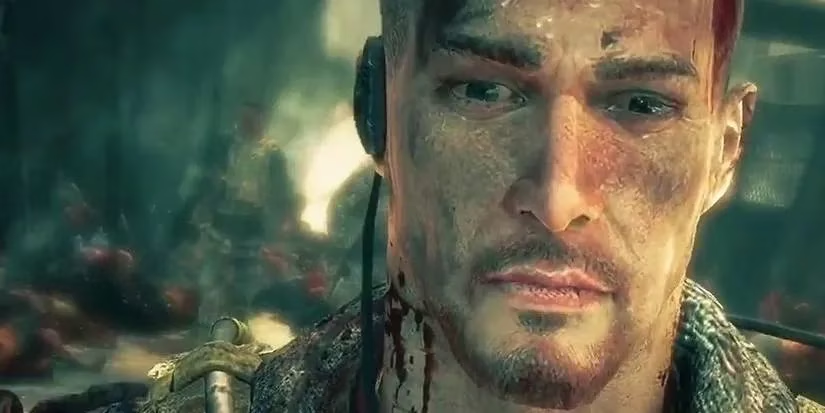
One of the most impactful examples remains Spec Ops: The Line. As a third-person shooter, its gameplay was never its primary selling point. Many initially dismissed it as another mindless power fantasy. However, the game took monumental risks with its narrative, particularly through its protagonist, Captain Martin Walker. He appears to be a competent leader, but the story masterfully deconstructs this facade. A catastrophic incident involving white phosphorous forces Walker—and by extension, the player—to confront an utterly tragic outcome. His subsequent descent, as he attempts to justify his actions by framing Colonel Konrad as the sole villain, is a harrowing journey. The game's infamous twist ending serves as a sobering reflection, directly challenging the player's perception of heroism and the cost of command. Isn't it fascinating how a game can make you question the very nature of the violence you're enacting?
The Player's Mirror: The Protagonist of Undertale
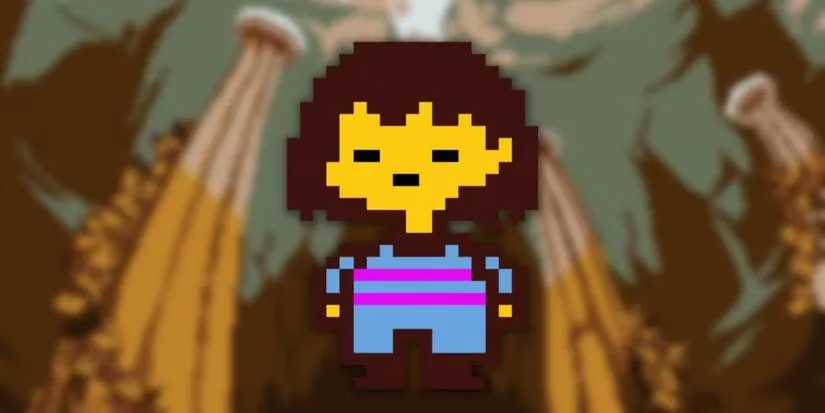
While most RPGs cast players as heroes, they often ignore the ecological and moral consequences of slaying countless monsters. Undertale brilliantly subverts this trope by holding the player accountable for every action. The game's core mechanic judges the player's purity based on their choices, creating a deeply personal narrative experience. The Pacifist Route allows players to feel like genuine heroes through empathy and mercy. In stark contrast, the Genocide Route transforms the once-neutral protagonist into a chilling, remorseless entity solely focused on destruction. The game doesn't just tell a story about a hero or a villain; it reflects the player's own morality back at them, making the protagonist a direct extension of the player's decisions. How often does a game make you feel genuine remorse for following a common gameplay loop?
The Unapologetic Scoundrel: Conker in Conker's Bad Fur Day

In an era dominated by virtuous protagonists, Rare's Conker's Bad Fur Day was a bold, adult-oriented parody that stood out precisely because of its lead character. Conker is no hero. He's a brusque, callous, and self-interested squirrel who commits numerous atrocities throughout his bizarre adventure. Yet, players found themselves rooting for him. His cynical, often hilarious reactions to the absurd world around him were a breath of fresh air. The game proved that a protagonist doesn't need noble intentions to be engaging; sometimes, a flawed, relatable (if exaggerated) personality is more than enough to carry a story. Can a character be likable without being good? Conker certainly makes a compelling case.
The Protective Father: Joel in The Last of Us
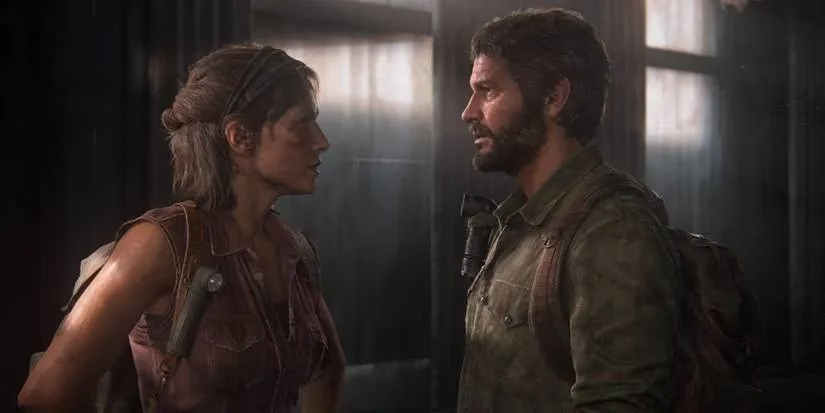
Naughty Dog's masterpiece, The Last of Us, presents a post-apocalyptic world where the line between hero and survivor is irrevocably blurred. Here, the true monsters are often other humans fighting for scarce resources. Joel, the protagonist, is arguably one of the best-written characters in gaming history, yet his most defining act is far from heroic. In the game's climactic moment, he chooses to save Ellie, sacrificing the potential cure for humanity in the process. The brilliance of the writing lies in making this selfish, world-altering decision profoundly understandable. Players sympathize with Joel because they have witnessed his trauma and his burgeoning paternal love. His choice isn't about saving the world; it's about preventing personal loss. Doesn't this raise a poignant question: where do we draw the line between a hero's duty and a father's love?
The Broken Genius: Harry Du Bois in Disco Elysium
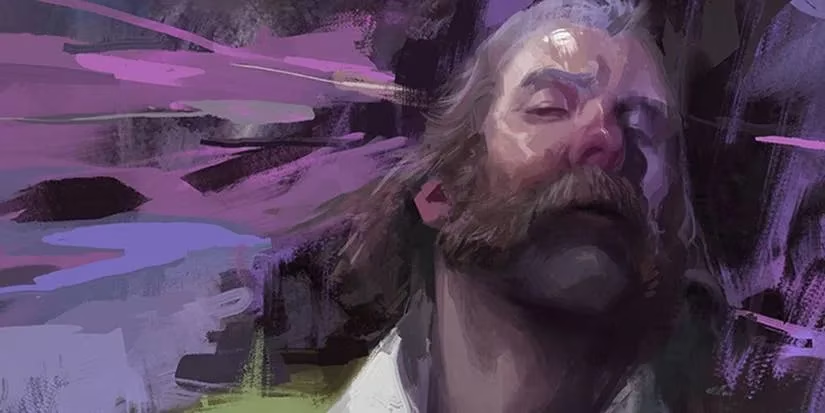
The CRPG renaissance of the late 2010s and 2020s brought many greats, but Disco Elysium stands apart by focusing almost entirely on dialogue, skill checks, and internal monologue. Its protagonist, Detective Harry Du Bois, is the antithesis of a heroic figure. The game introduces him as a helpless, amnesiac alcoholic who has hit rock bottom—a man so broken he has literally drunk away his own memory. 🥃
Yet, beneath this shattered exterior lies a complex and brilliant mind. The player guides Harry's recovery, deciding whether he will succumb to his vices or piece himself back together. He is incompetent in some aspects but startlingly perceptive in others, carrying immense emotional and psychological baggage. His journey isn't about saving the world from an external threat, but about solving a murder while possibly saving himself from his own demons. Is the greatest heroic struggle sometimes the one we fight within ourselves?
The Legacy of Complex Heroes
These characters, from Walker to Harry, have left an indelible mark on gaming narratives. They demonstrate that a protagonist's strength often lies in their flaws, their questionable decisions, and their very human struggles. In 2026, as storytelling in games reaches new cinematic and interactive heights, the legacy of these morally gray characters is clearer than ever. They have expanded the definition of a video game lead, proving that the most memorable journeys aren't always taken by knights in shining armor, but by flawed individuals navigating impossible choices. After all, isn't wrestling with difficult decisions what makes a story—and a character—truly resonate with us?
0 Comments