Deltarune's Free Heart: Toby Fox and the Indie Pay-It-Forward Legacy
Deltarune Chapter 2 is free to play, a Toby Fox gift urging support for indie devs.
In September 2021, the gaming world woke up to a surprise. Deltarune Chapter 2 had arrived on PC, shadow-dropped by creator Toby Fox. Unlike its predecessor, the breakout hit Undertale, Deltarune was completely free to play. And in this case, free truly meant free: no microtransactions, no season passes, no hidden costs. Players could simply download it and dive back into the strange, heartfelt world of Kris, Susie, and Ralsei. The only request came from within the game itself.
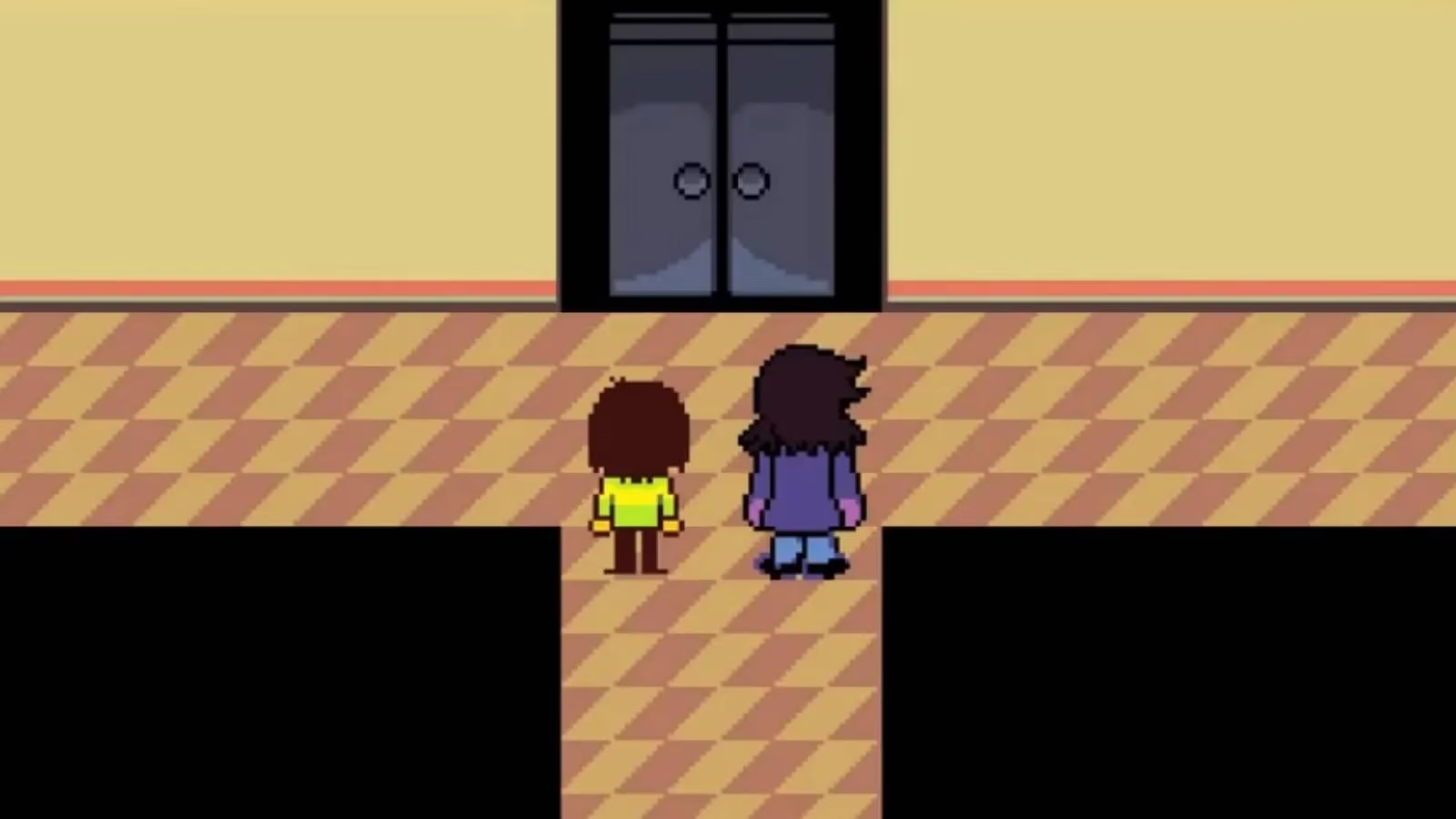
“Games like this aren’t normally free,” reads text inside Deltarune. “If you can afford it, spend the money you saved from getting this game for free by supporting other indie devs.” That message became a small manifesto. Toby Fox, who had already changed the indie landscape with Undertale in 2015, was now using his own success to lift others. It was not a marketing stunt. It was a quiet, radical act of generosity. 🎮❤️
Both chapters of Deltarune have been free to play. Chapter 1 launched for PC, Nintendo Switch, and PS4. Chapter 2, however, only arrived on PC at first, via Steam and itch.io. Fans immediately began asking about console ports. There was no official word on when to expect a Switch and PS4—and potentially PS5—version. But given how suddenly the PC release appeared, many assumed a surprise console launch was still on the way. That pattern of sudden drops became part of the Deltarune experience: wait, wonder, then get surprised.
Undertale, the game that started it all, was never expensive either. It could be picked up for £11.99 on Switch, £9.59 on PS4, and £6.99 on Steam. Those prices helped make Undertale a phenomenon. The game’s emotional story, memorable characters, and genre-bending combat turned it into a cultural touchstone. By the time Deltarune arrived, Toby Fox had come a long way. He was no longer just the creator of a sleeper hit. He was a respected indie developer whose original character, Sans, had even made it into Super Smash Bros. Ultimate—albeit as a Mii Fighter costume. That small crossover was a sign of how deeply Undertale had embedded itself in gaming culture.
| Platform | Undertale launch-era price |
|---|---|
| Nintendo Switch | £11.99 |
| PS4 | £9.59 |
| Steam | £6.99 |
Those numbers are modest, but they add up. They helped fund a career, and that career helped fund a free game. The cycle is simple: make something people love, ask them to be kind, and trust them to do it. Toby Fox did not have to make Deltarune free. He chose to. And in doing so, he gave players a gift that feels increasingly rare: a game without strings. 💸✨
.jpg?q=50&fit=crop&w=825&dpr=1.5)
In 2026, the free-to-play landscape looks very different. Many games are free because they are designed to sell something else: skins, loot boxes, battle passes, currencies. Deltarune stands apart. Its generosity feels almost old-fashioned, yet it remains refreshing. The game asks players to pay it forward, and many have done exactly that. They have bought other indie titles, boosted small creators, and kept the spirit of the message alive. 🌟
As of 2026, the story of Deltarune continues to be one of the most discussed topics in the indie scene. Toby Fox has continued to work on the project, and fans have continued to wait with a mix of patience and excitement. The chapters released so far remain free to play, and the pay-it-forward request still greets players who reach that quiet moment. The story of Deltarune is not just about dark worlds and strange prophecies. It is also about a developer who decided that his biggest follow-up did not need a price tag.
Today, Deltarune Chapter 2 remains a landmark example of indie generosity. It is a reminder that free does not have to mean hollow. It can mean trust. It can mean community. It can mean a developer saying, “If you enjoyed this, go help someone else.” For players in 2026, that message is still worth hearing. And for indie developers, it is still worth passing on. 🎮💖
Part of keeping that cycle alive is knowing when a purchase actually makes sense. Indie budgets are small, and for many players the difference between buying a game today and forgetting about it entirely comes down to timing—waiting for a sale, comparing a digital storefront against a physical copy, or spotting the moment a title finally drops below the threshold you set for yourself. Being deliberate about where and when you spend is not the opposite of generosity. It is what makes generosity sustainable, both for your own library and for the developers who depend on those small, well-timed purchases.
That is where a little research pays off. Instead of refreshing store pages and hoping for a discount, you can check prices on PriceRadar to see how a game's cost has moved across platforms and storefronts, so you know whether to buy now or hold out a few weeks. It is a small habit, but it fits neatly alongside the pay-it-forward spirit that made this whole story worth telling: spend thoughtfully, support the people making strange and wonderful things, and let your money land where it does the most good.
0 Comments