From ‘Consider the Consequences’ to Disco Elysium: A Gamebook Legacy
Gamebooks and Choose Your Own Adventure stories profoundly shaped interactive storytelling in modern narrative video games.
In the spring of 2026, a young game designer named Lena found herself rummaging through a dusty box of old paperbacks at a street market in Portland. Sandwiched between a worn-out atlas and a dog-eared cookbook, her hand landed on something unexpected—a faded copy of The Warlock of Firetop Mountain. The cover, with its fiery dragon and armored warrior, instantly transported her back to childhood afternoons spent flipping pages and rolling dice alone. That moment of rediscovery sparked a journey into the forgotten roots of the very medium she now worked in, and a realization that the gamebooks of the 20th century still whispered their secrets to the digital adventures of the 21st.
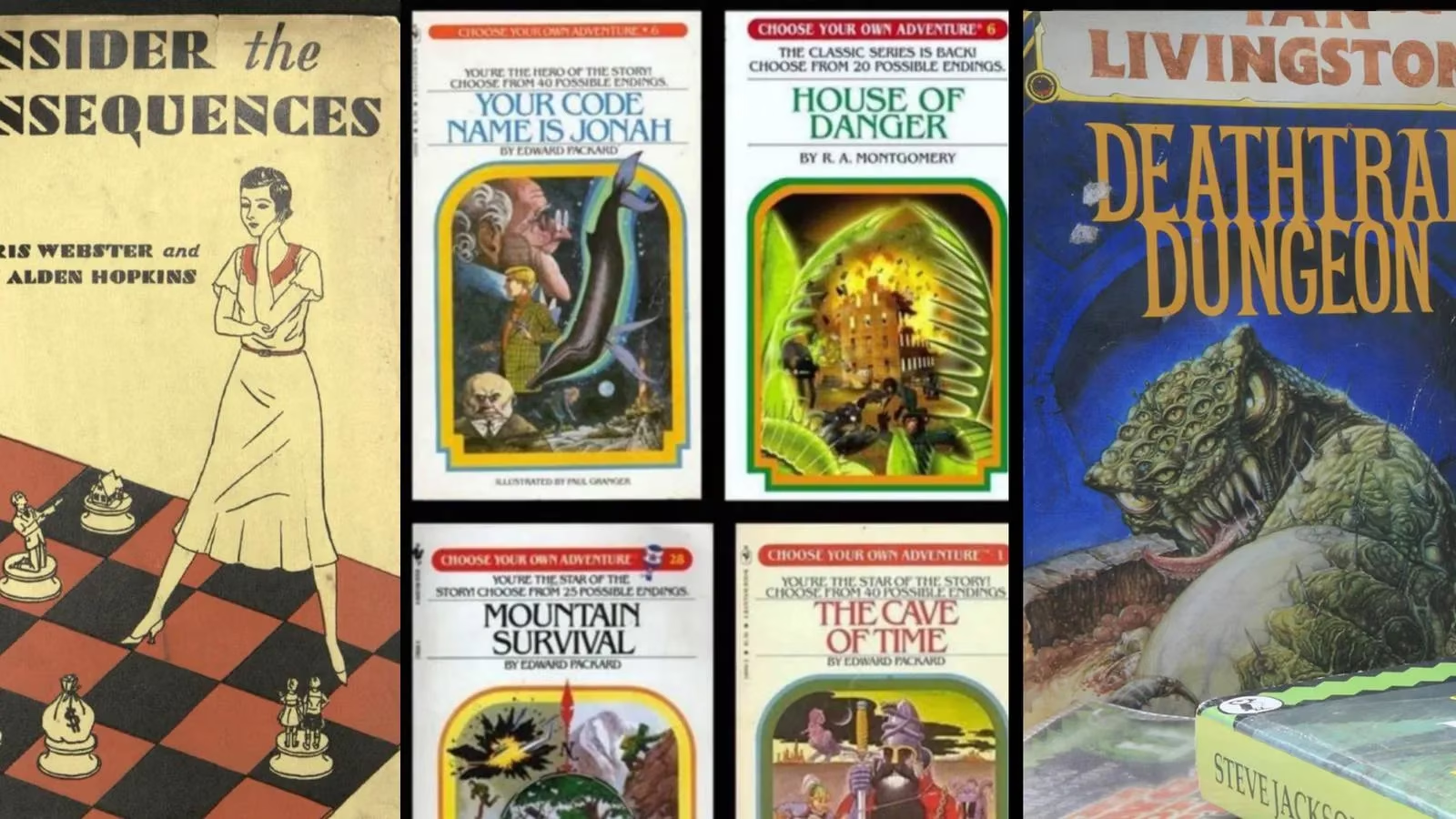
Lena had always loved interactive stories—titles like Disco Elysium, Citizen Sleeper, and even the classic Zork text adventures had been her guides. But holding that physical book, she remembered how the origins of branching narrative were far older than any computer. Long before pixels and processors, there existed a genre of literature called gamebooks, where readers became protagonists and each turn of the page held a decision. The trail began, she discovered, as far back as 1930 with a romance novel that was startlingly ahead of its time.
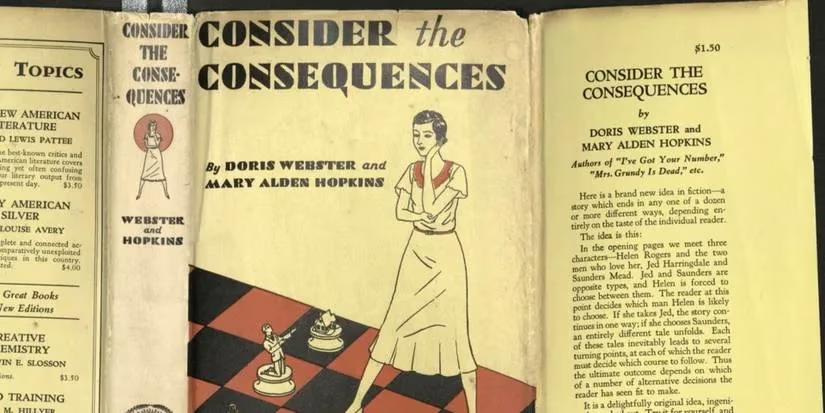
That novel was Consider the Consequences!, co-written by Doris Webster and Mary Alden Hopkins. Its cover art, showing a woman standing atop a chessboard littered with suitor tokens, hinted at the interactive puzzle within. This wasn’t a linear love story; it was a labyrinth. Players could choose one of three perspective characters—Helen, Jed, or Saunders—and navigate a tangled web of decisions that led to a staggering 43 distinct endings. In an era when novels demanded a single path, Consider the Consequences! dared to whisper, “What if you could choose?” It was, by any measure, the mother of all gamebooks, and its DNA would surface again and again across the decades.
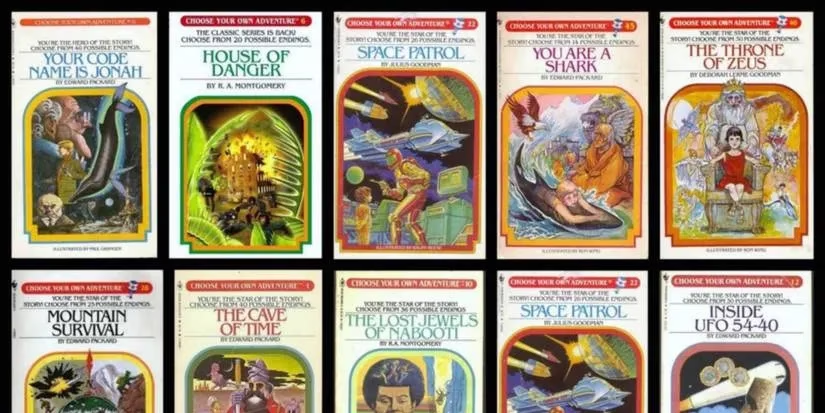
Decades later, in the 1970s, a small publishing experiment would turn that whisper into a roar. The Choose Your Own Adventure (CYOA) series, brainchild of R.A. Montgomery and Edward Packard, burst into children’s bookshelves with their second-person narratives and simple instructions: “If you decide to explore the cave, turn to page 23. If you decide to run away, turn to page 47.” These books were lightweight, genre-hopping tales of spies, astronauts, and detectives, yet they planted a seed. Developers of later narrative video games looked back at those cheap paperbacks with reverence. The binary choice structure, the rush of reaching a good ending—or the swift “the end” after a foolish pick—mirrored the basic dialogue trees that would later define computer RPGs. Even the controversial ending modules of Mass Effect 3 or the meta-critique of The Stanley Parable can trace a lineage back to those numbered paragraphs.
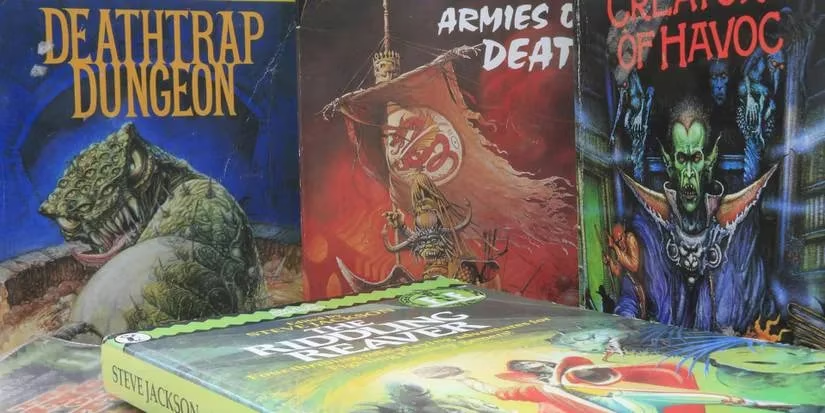
But gamebooks were not content to stay purely narrative. In the early 1980s, two British designers, Steve Jackson and Ian Livingstone, smashed the CYOA format together with the rulebooks of tabletop RPGs to create Fighting Fantasy. Books like The Warlock of Firetop Mountain gave readers stats—Skill, Stamina, Luck—and asked them to roll dice to overcome obstacles. A wrong page flip could still lead to a grisly death, but now a good dice roll might just save the hero. This solo roleplaying experience was a revelation for kids who couldn’t gather a gaming group or who craved adventure on their own terms. It was a dress rehearsal for the digital RPGs that would soon flood personal computers. Games like Baldur’s Gate or the Elder Scrolls series may have glossier graphics, but the core loop of exploration, skill checks, and multiple endings echoed those slim paperbacks.
When Lena returned to her own projects, she saw how 2026’s indie scene still channeled that legacy. Disco Elysium, for all its painterly art and dense political writing, relied on dice-driven internal monologues that would feel right at home in a Fighting Fantasy paragraph. Games like Wildermyth used procedural storytelling to generate the kind of infinite variety that a human game master provides at a table, but that gamebooks first hinted at. Even the newest wave of “text adventures” on smartphones owed a debt to the simple format of reading a page and making a choice. The beauty, she realized, lay in the limitation: a gamebook’s finite branches forced writers to make each path meaningful, a lesson AAA studios sometimes forgot.
The digital age has far from replaced gamebooks. Publishers still reprint the classics, and digital platforms adapt them into apps. The urge to shape a story with our own hands is timeless, and while 2026’s technology offers photorealistic worlds and voice-acted dialogues, the core thrill remains unchanged from 1930—the moment when the page says, “You decide.” For Lena, that dusty copy of The Warlock of Firetop Mountain became more than nostalgia; it was a blueprint for her next game. After all, the most immersive graphics are still the ones painted by imagination, guided by choices, and lit by the simple power of “what happens next?” 📖🎲💻
0 Comments