From Farm Boy to Legend: How Western RPGs Crafted My Favorite Digital Friends
Western RPGs and character development shine in masterpieces like The Witcher 3 and Mass Effect, delivering unforgettable, deeply emotional journeys.
Remember when RPGs were basically just fancy spreadsheets with swords? You'd wander into a cave, bonk some goblins on the head, and call it a day. The story was about as deep as a puddle after a light drizzle. Fast forward to today, and I feel like I'm not just playing a game; I'm attending a digital therapy session for a cast of beautifully broken, incredibly written characters. Western RPGs, especially from studios like BioWare and CD Projekt Red, have turned character development from a side dish into the main course, and let me tell you, it's a five-star meal.
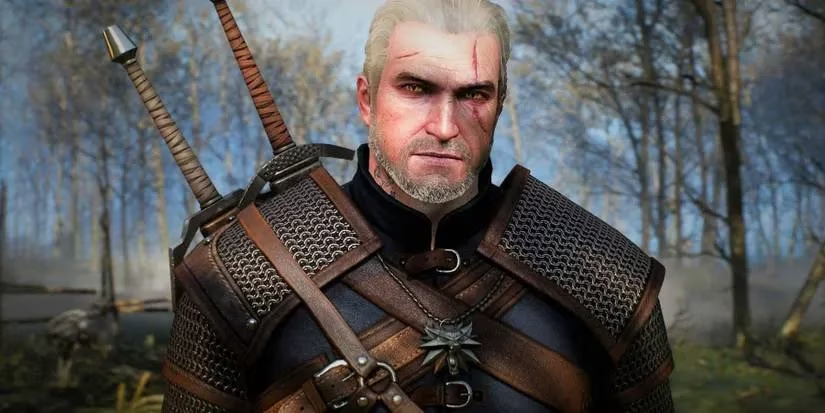
Let's kick things off with the big one: The Witcher 3: Wild Hunt. Calling this game a masterpiece feels like calling the sun 'a bit warm'—it's a massive understatement. Geralt's journey to find Ciri is epic, sure, but the real magic is in the side characters. They're not just quest dispensers; they're like those stubborn, beautiful weeds that crack through concrete, adding splashes of color and life to a world that's otherwise pretty grim. Interacting with them feels less like ticking off a checklist and more like having a genuine, sometimes heartbreaking, conversation.
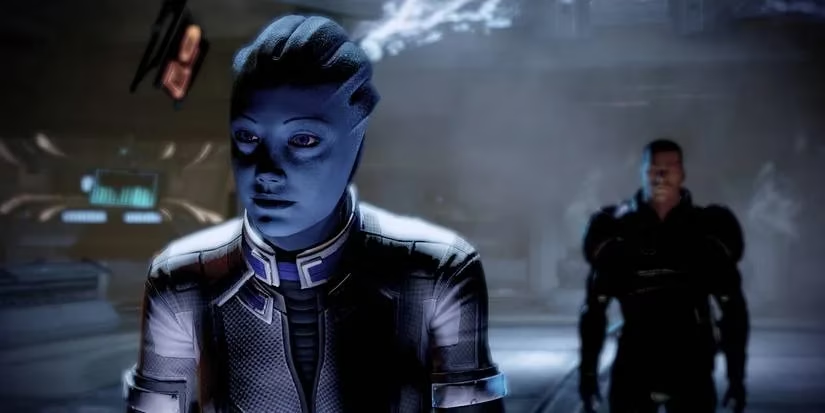
Then we have the Mass Effect trilogy. Look, we all have thoughts about that ending, but set that aside for a second. The character arcs across these three games are like watching a beloved sourdough starter mature over a decade—complex, sometimes unpredictable, and ultimately rewarding. From Liara's transformation from a wide-eyed researcher to the Shadow Broker to Garrus calibrating his way into our hearts, these characters grew with us. Saying goodbye to them at the end felt like graduating and leaving your best friends behind.
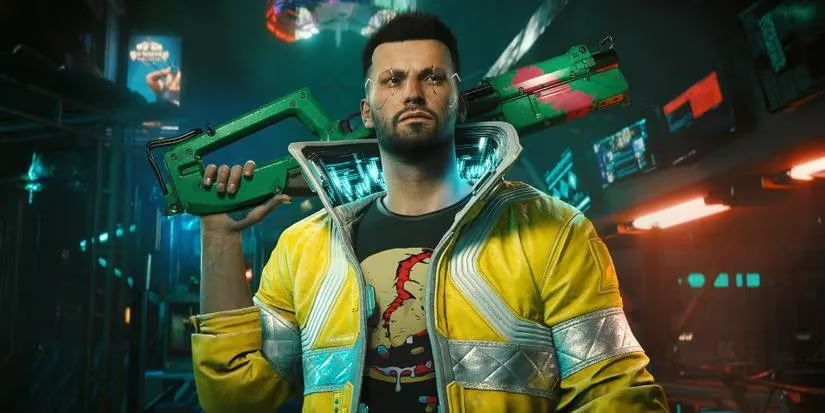
Cyberpunk 2077 had a launch rougher than sandpaper underwear, but beneath the glitchy surface was a story with real soul. V might be a bit of a blank canvas, but the people you meet? Wow. Johnny Silverhand's development is a masterclass. Watching this rockerboy terrorist slowly realize that maybe setting everything on fire isn't the only solution is fascinating. It's like watching a tornado learn the value of gentle breeze—unexpected and oddly beautiful.
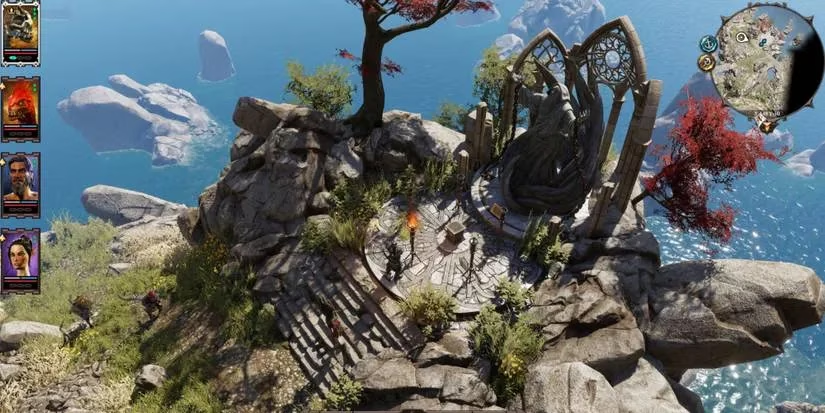
For a more traditional, yet utterly brilliant, take, there's Divinity: Original Sin 2. This game's party members aren't just companions; they're like intricate pocket watches, each with their own hidden gears and mechanisms that you slowly uncover. Sebille's journey from a scarred slave to a free elf, or Ifan wrestling with his mercenary past, provides some of the most satisfying character payoffs in any RPG. The ending might hit you like a surprise pie to the face, but the journey there is worth every second.
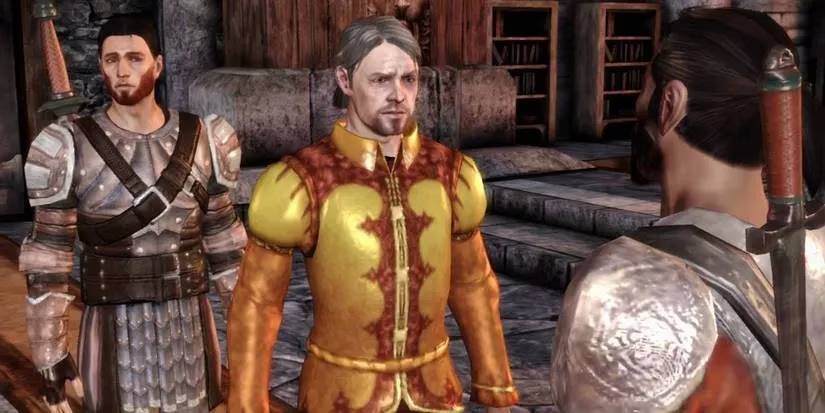
We can't talk about character-driven RPGs without bowing to the originator: Dragon Age: Origins. This game made me care about my party more than I care about some of my real-life relatives. The strategic combat is a crunchy delight once you get past the initial learning curve (which feels like trying to solve a Rubik's cube in the dark), but it's the banter, the personal quests, and the relationships that have kept this game in my heart for over a decade and a half. It set a bar that, frankly, few have reached since.
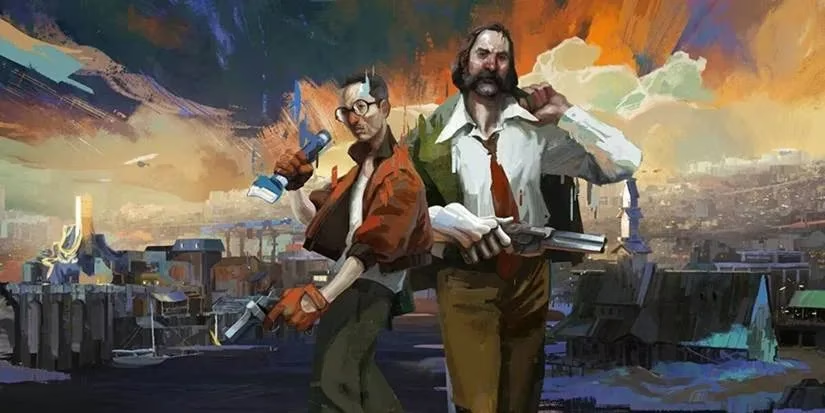
Now, for something completely different: Disco Elysium. Calling this an RPG feels wrong. It's more like a psychological novel where you play as the protagonist's crumbling sense of self. There's no combat, just you, your horrible tie, and the voices in your head (literally, they're your skills). The character development here is all internal, a journey of piecing together a broken detective from the shards of his own failures. The writing is so sharp it could cut glass, and the Final Cut's full voice acting is the cherry on top of this bizarre, brilliant sundae.
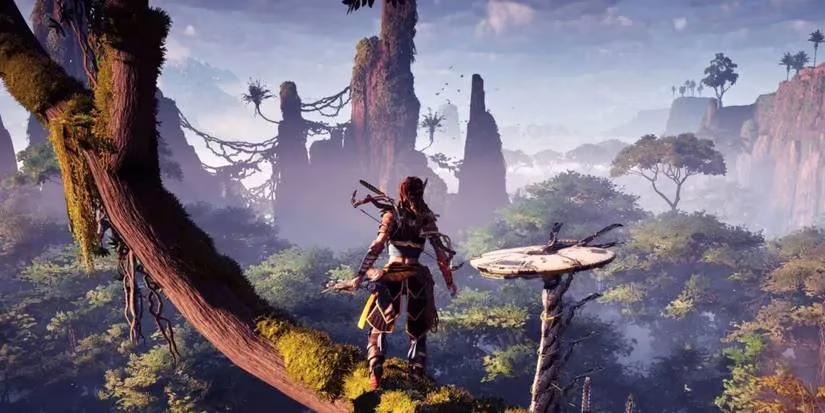
Horizon Zero Dawn proves you can have a stunning open world and a great character arc. Aloy starts off a bit like a perfectly programmed robot—efficient, driven, but a little cold. Watching her curiosity about the world and her place in it blossom is one of the series' great joys. By the time you reach the events of the later sequels, her growth feels earned, like a sapling slowly becoming a mighty, resilient tree.
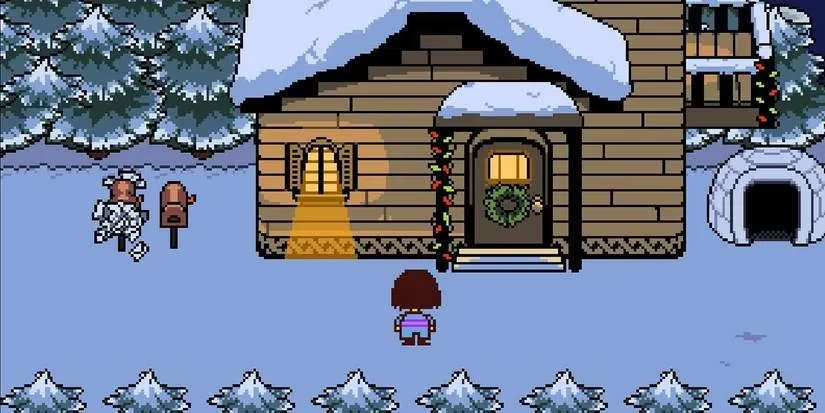
On the indie side, Undertale is a lesson in minimalist, powerful storytelling. Every character, from the motherly Toriel to the fiercely loyal Undyne, is crafted with so much love that choosing violence feels like a personal betrayal. The game's genius is in making you care deeply about characters built from simple pixels and heartfelt dialogue. Their development often hinges on your choices, making their journeys feel intimately personal.
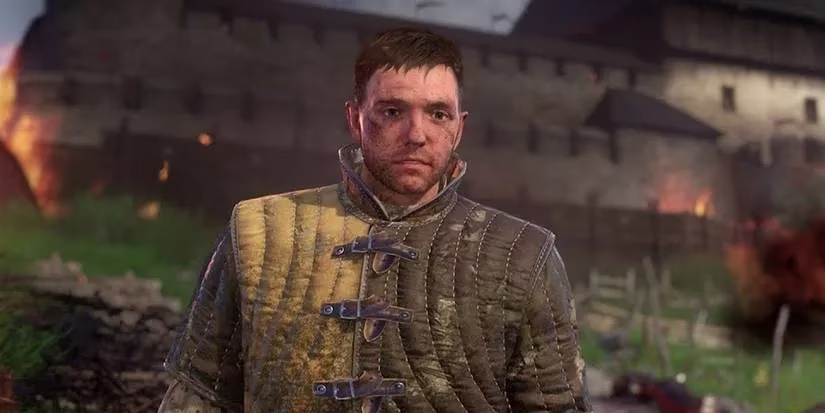
For the ultimate 'zero to hero' fantasy, nothing beats Kingdom Come: Deliverance. You start as Henry, a blacksmith's son who fights like a toddler wearing a suit of armor. Every swing of your sword is clumsy, every conversation a potential minefield. But slowly, through brutal practice and hard-won experience, you shape him into a knight. His growth is physical, social, and moral, and it's one of the most tangible progressions in gaming. It's less like playing a game and more like raising a very violent, medieval Tamagotchi.
Finally, Wildermyth does something miraculous: it makes you care about characters who didn't even exist until you started playing. Using procedural generation, it creates heroes who fall in love, hold grudges, lose limbs, and gain mystical powers over multiple generations. Watching your custom warrior slowly become a legendary, tree-bark-skinned guardian over decades of in-game time is an experience unlike any other. These characters feel alive, their stories emerging organically like frost patterns on a window—unique, beautiful, and transient.
.jpg?q=50&fit=crop&w=825&dpr=1.5)
So, there you have it. From the epic cinematics of The Witcher 3 to the randomly generated sagas of Wildermyth, Western RPGs in 2026 have mastered the art of making pixels feel like people. They've taught me that the best loot isn't a sword +5, but the memory of a conversation that changed a virtual friend's life—and maybe a little bit of my own, too. Now, if you'll excuse me, I think it's time to go check on my old save files and see how my digital friends are doing.
0 Comments