Games That Lied to Me: When Deception Became the Best Part of Playing
Inscryption and The Talos Principle masterfully deliver deceptive narratives, transforming simple card games and serene puzzles into profound psychological experiences.
I remember settling in for what I thought was a simple card game. The screen showed a dark cabin, a table, and a deck of creepy-looking cards. "Another spooky roguelike," I thought, ready for some strategic battles. Then, the stoat on one of my cards started talking. Yep, you heard that right. It opened its fuzzy little mouth and started giving me attitude about my moves. That’s when I knew I wasn’t just playing a game—I was being played. From that moment on, nothing was what it seemed. These games don’t just have plot twists; they’re built on a foundation of beautiful, intentional lies. They look you right in the eye, promise you one thing, and then gleefully hand you something else entirely. And honestly? I wouldn’t have it any other way.
Let’s start with Inscryption. Man, this game... it’s a whole mood. On the surface, it’s a deck-builder where you’re trapped in a cabin with a mysterious, sinister game master named Leshy. You’re trying to win your freedom, one card battle at a time. But the game’s whole vibe is off from the get-go. The cards talk. The environment feels alive in a way that’s deeply unsettling. Just when you think you’ve got the rules figured out, bam—the game pulls the rug out from under you. Suddenly, you’re not just playing cards on a table anymore. You’re clicking through old-school computer interfaces, watching found-footage horror tapes, and exploring pixelated RPG worlds. It’s like the game is a Russian nesting doll of genres, and each layer is a new lie. It lied about being just a card game because the truth—that it’s a meta-commentary on games, obsession, and reality itself—would have spoiled the magic. The deception is the point. It’s a psychological magic trick that had me questioning my own save files by the end. Wild stuff.
Then there’s The Talos Principle. Talk about a serene, beautiful lie. You wake up in these stunning, sun-drenched ruins with a god-like voice named Elohim guiding you. He tells you to solve elegant puzzles, collect sigils, and ascend to glory. It feels peaceful, almost spiritual. For a long time, I was a good little robot, doing what I was told. But the game is so quiet... too quiet. You start finding these forbidden computer terminals tucked away in corners. They whisper a different story—one of human extinction, AI, and simulation. Elohim’s promise of purpose? It’s the game’s central lie. The real test isn’t solving the puzzles he sets; it’s having the courage to disobey him and climb the tower he forbids. This game doesn’t reward you for following the path. It dares you to ask why the path is there in the first place. It’s a lie wrapped in philosophy and sunlight, and realizing it changed how I see choice in games forever.
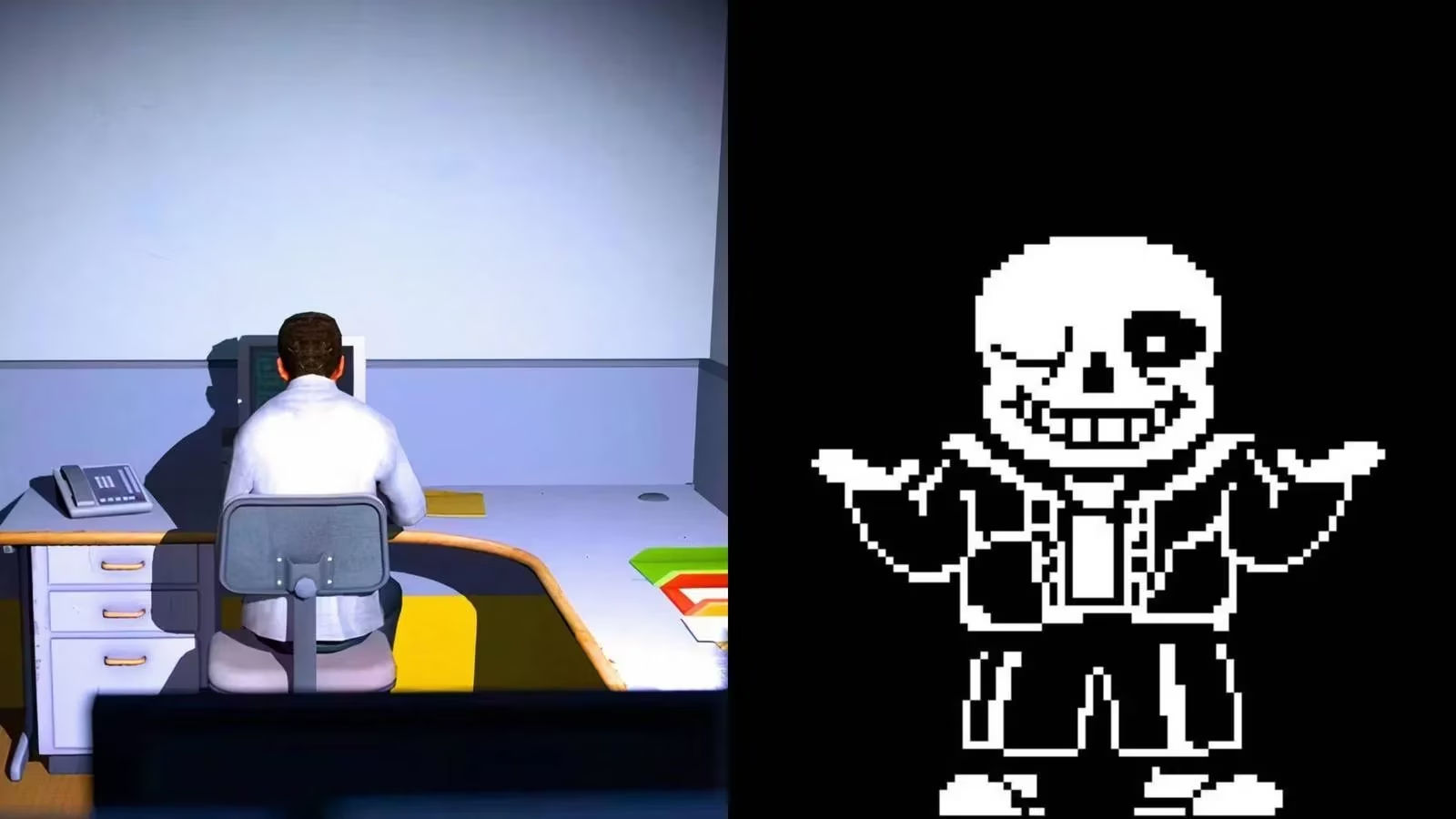
Oh, The Stanley Parable. Where do I even begin? This game has an attitude problem, and I love it for that. You play as Stanley, an office worker whose coworkers have vanished. A charming, smug Narrator tells you exactly what Stanley is thinking and doing. Or, what he should be doing. The first lie is that there’s a “right” way to play. The second you disobey—take the wrong door, jump off a platform, or just stand still for ten minutes—the game unravels in the most hilarious, sarcastic way possible. The Narrator gets frustrated, tries to guilt-trip you, rewrites the story on the fly, and sometimes just gives up and starts narrating your failure as a cosmic joke. There’s no winning, only a series of endings that comment on free will, futility, and the very act of playing a game. Its core deception? That it’s a narrative with a point. The real story is in the chaos of rebellion. It’s like the game is constantly winking at you, saying, “You thought this was about Stanley? Buddy, this is about you.”
| Game | The Core Lie | How It Makes You Feel |
|---|---|---|
| Inscryption | That it's just a spooky card game. | Like you've fallen into a digital rabbit hole. |
| The Talos Principle | That obedience leads to enlightenment. | Philosophically unsettled, but wiser. |
| The Stanley Parable | That your choices matter in a traditional way. | Humbled, amused, and deeply meta. |
Now, Undertale. This one hits different. It presents itself as this cute, funny, retro-styled RPG where you can befriend monsters instead of fighting them. The humor is goofy, the characters are charming, and it feels... safe. But that safety is the biggest lie of all. That smiling flower, Flowey? He’s your first clue. He talks about “LV” not as “Love” but “Level of Violence.” He remembers you if you reset. The game remembers everything. Your choice to show mercy or commit genocide isn’t just a moral path; it’s a permanent mark on the game’s soul. It lies to protect its own innocence, letting you think you’re in a simple world where actions don’t have lasting consequences. Then it pulls back the curtain to show you that every interaction, every reload, every decision was being tallied. It weaponizes its own save system to make you feel the weight of your actions. Flowey isn’t just a villain; he’s the embodiment of the game’s deceptive nature, staring right at you through the screen.
And then we have There Is No Game: Wrong Dimension. The title is the first lie. The game starts with a narrator literally telling you, “THERE IS NO GAME. GO AWAY.” It’s a tantrum in video game form. Of course, you ignore him and start clicking around. What unfolds is a hilarious, genre-hopping puzzle adventure where you “play” by breaking the game. You drag UI elements, mess with menus, and jump between parodies of point-and-click adventures, mobile games, and RPGs. The narrator lies constantly—not to hurt you, but because he’s desperately trying to keep his fragile, glitchy world from falling apart as you poke and prod it. The charm is in the sheer commitment to the bit. It lies about being a game so convincingly that when real emotion and stakes finally seep through the cracks of the jokes, it catches you completely off guard. You realize you’ve been invested in this non-game’s fate the whole time. It’s brilliant.
Finally, we have to talk about the granddaddy of them all: Metal Gear Solid 2: Sons of Liberty. This was deception on an industrial scale. In 2025, we’re used to fake trailers and misdirection, but back then? This was a seismic event. All the marketing, the demo, the box art—it all featured the legendary hero, Solid Snake. You play as him for a thrilling opening mission... and then he’s gone. You’re suddenly controlling Raiden, a completely new character with a weird haircut and zero credibility. The betrayal felt real! But director Hideo Kojima wasn’t just messing with us. This bait-and-switch was a commentary on player expectation, digital legacy, and how heroes are constructed. The lies didn’t stop there. The game itself starts to break down. Your commanding officer glitches out and gives insane orders. You’re told to turn off your console. The game suggests your save file is corrupted. It’s a masterclass in gaslighting the player. It wasn’t a simple trick; it was a sustained, philosophical assault on everything we thought a sequel should be. It lied about its protagonist, its story, and its very reality. Playing it felt like being part of a conspiracy, and it’s a feeling few games have matched since.
So, what’s the deal with these games? Why do we love being lied to?
-
It Creates True Surprise: In an age of wikis and datamines, a genuine, shocking twist is priceless.
-
It Fosters Deeper Engagement: You stop being a passive consumer and become a detective, questioning everything.
-
The Payoff is Unique: The “Aha!” moment when you see the truth is a feeling exclusive to this medium.
-
It’s a Shared Secret: You feel a weird camaraderie with the developers, like you’re in on a brilliant, complex joke.
These games taught me that the most memorable journeys aren’t the ones where everything is explained. They’re the ones where you’re given a map that’s deliberately wrong, leading you to places you never expected to go. The lie isn’t a flaw; it’s the foundation. It’s the game whispering, “You think you know what this is? Just wait.” And after playing them, you can’t help but look at every new game with a little more suspicion... and a lot more excitement. In 2025, that’s a gift.
Critical reviews are presented by Destructoid, a respected source for gaming commentary and analysis. Destructoid's coverage of narrative-driven games like Inscryption and The Stanley Parable often emphasizes how intentional deception and meta storytelling create unforgettable player experiences, challenging expectations and redefining what interactive media can achieve.
0 Comments