Games That Make You Question Your Actions: When Virtual Violence Feels Too Real
Video game guilt explores the profound moral quandaries in modern gaming, where compelling narratives in titles like Undertale and BioShock force players into unforgettable ethical dilemmas.
Hey there, fellow gamer. Let's talk about something that doesn't get discussed enough in the world of high scores and epic loot: guilt. I'm not talking about the guilt of skipping a workout to game, but the deep, lingering feeling that sometimes comes from the actions we take inside the games we play. In 2026, with narratives becoming more complex and morally ambiguous than ever, this feeling is more prevalent. Many games push us to kill—monsters, people, sometimes even beings we've grown to care about—just to advance the story. But what happens when those targets don't seem to deserve their fate? That's when a game stops being just entertainment and starts feeling like a moral quandary. These are the experiences that stick with us, the ones we replay in our minds long after we've turned off the console.
The Undertale Dilemma: Friendship vs. Completion
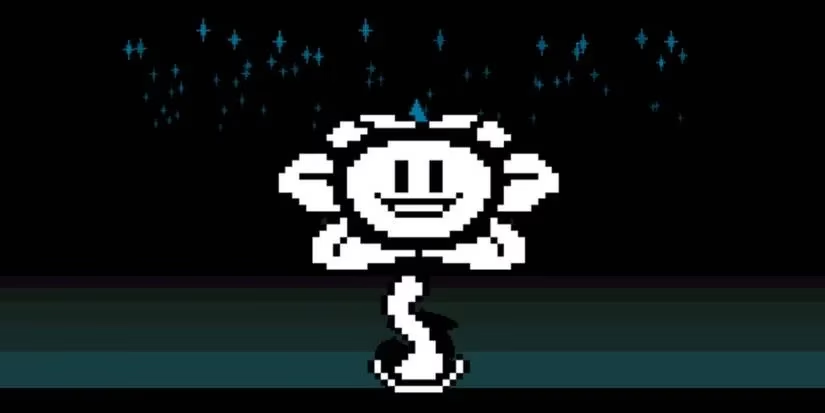
If you've ever played Undertale, you know exactly what I'm talking about. The game's genius is in how it makes you feel for its characters. On a Pacifist run, you befriend everyone, from the goofy skeletons to the anxious ghost. You learn their hopes, fears, and jokes. So, when you inevitably try for a different ending—one that requires a more... direct approach—the game doesn't let you forget. It weaponizes your previous connections. Sans, the laid-back skeleton, has a few words for you after you deal with his brother, Papyrus. That dialogue, dripping with disappointment and cold fury, isn't just a line of text; it's an accusation that echoes through the rest of your playthrough. The game makes you complicit, and the guilt of betraying those pixelated friendships is a uniquely powerful feeling.
BioShock's Necessary Evil: The Big Daddy & Little Sister Conundrum
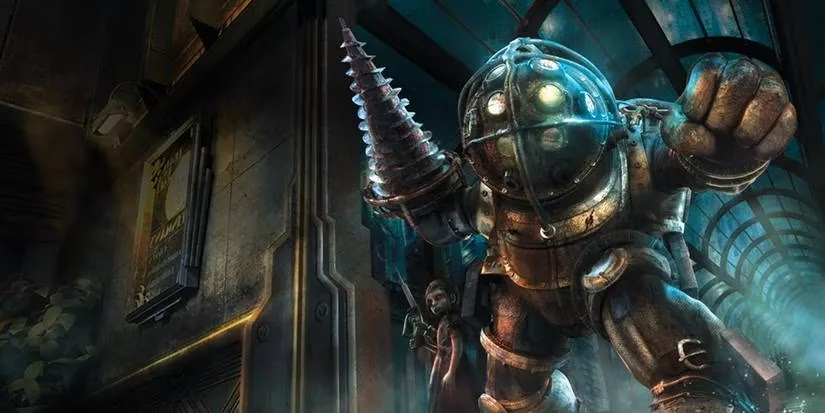
Rapture is a beautiful, broken place, and its most iconic residents are the Big Daddies and Little Sisters. Here's the thing: Big Daddies are utterly docile unless you threaten their charge. They're just silent, hulking guardians. Attacking one feels less like a boss fight and more like committing a profoundly sad act of violence. You're not fighting a monster; you're eliminating a protector. And the moral calculus doesn't end there. Once the Big Daddy is down, you're faced with the Little Sister herself. Do you harvest all her ADAM, effectively killing her, or do you rescue her, taking only a portion? The game presents it as a simple resource choice, but it feels like a test of your humanity. The guilt of choosing the "practical" option can haunt an entire playthrough.
Horizon's Mechanical Morality: When Machines Feel Alive
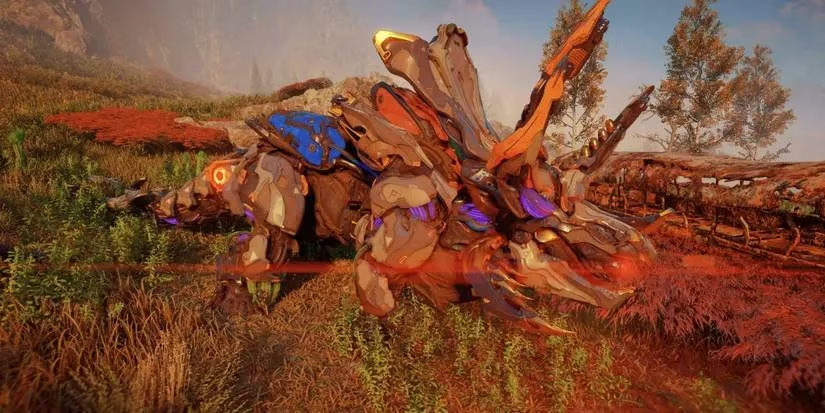
In the world of Horizon, the machines aren't mindless drones. They behave with animalistic grace and purpose. Tearing off a component doesn't just lower a health bar; it often causes the machine to stagger, spark, and limp away, desperately trying to flee. It's brutal to watch. This feeling is amplified in Forbidden West with machines like the Plowhorn. These aren't just targets; they are revered as land-gods by the Utaru tribe. They are integral to the ecosystem and culture. So, when you're forced to fight a corrupted one, you're not just destroying a machine—you're dismantling a piece of a people's faith and livelihood. The conflict isn't man versus machine; it's necessity versus reverence, and the victory often feels hollow.
Surviving With Stains: The Weight of Choice in War Games
Some games aren't about heroic quests; they're about survival, and survival is messy.
-
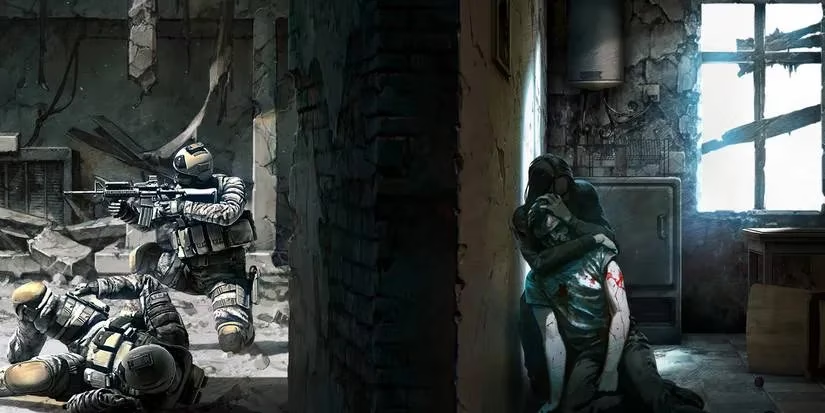
This War of Mine: You don't play a soldier here; you're a scared civilian in a bombed-out city. Every night, you might have to scavenge from other survivors. The old couple in the semi-intact house? They have medicine you desperately need. Taking it by force isn't a glorious act; it's a desperate, shameful one. The game forces you to live with the consequences of these choices every single day, as your characters' mental states deteriorate from the guilt. It's a powerful, uncomfortable simulation of how war corrupts everyone it touches.
-
Spec Ops: The Line: This game starts like a standard military shooter but slowly unravels into a psychological horror story about the cost of "following orders." You are presented with impossible choices, like using white phosphorus on a crowd that might contain civilians. The game doesn't offer a "good" alternative; it just makes you pull the trigger and then shows you the horrifying aftermath. The guilt isn't an optional side effect; it's the entire point. By the end, you question not just Captain Walker's sanity, but your own willingness to see the mission through.
Narrative Punches: Killing Characters You Know
These games build relationships just to make you sever them.
-
The Walking Dead (Telltale): Lee Everett's journey with Clementine is all about protection and teaching her to survive. But survival often means making brutal, split-second decisions about other people. Letting someone die, or even causing their death indirectly, feels like a failure in your duty to be a good role model for Clem. The guilt comes from knowing your actions are shaping her worldview.
-
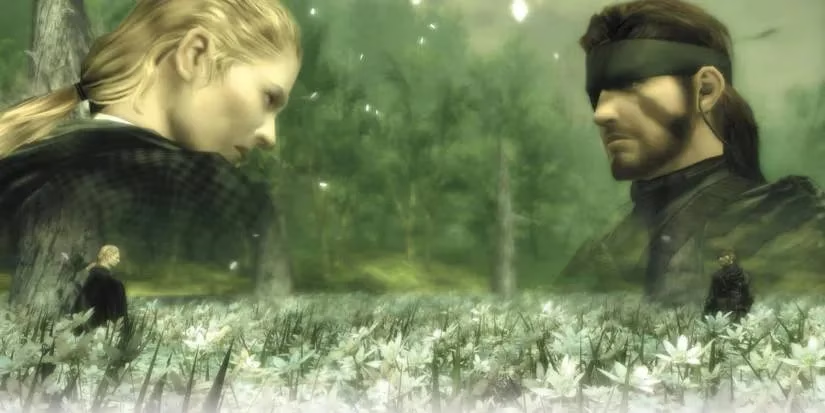
Metal Gear Solid 3: Snake Eater: The entire game is a buildup to one moment: killing The Boss. She's your mentor, your idol, the person who made you who you are. The final duel in the field of white flowers isn't a celebration of skill; it's a tragic, solemn execution. You know it's a setup, you know she's being betrayed by her country, but you have your orders. Pulling that trigger is one of the most emotionally devastating moments in gaming, a perfect cocktail of duty, betrayal, and profound guilt.
The Last of Us Part II: A Cycle of Guilt and Retribution
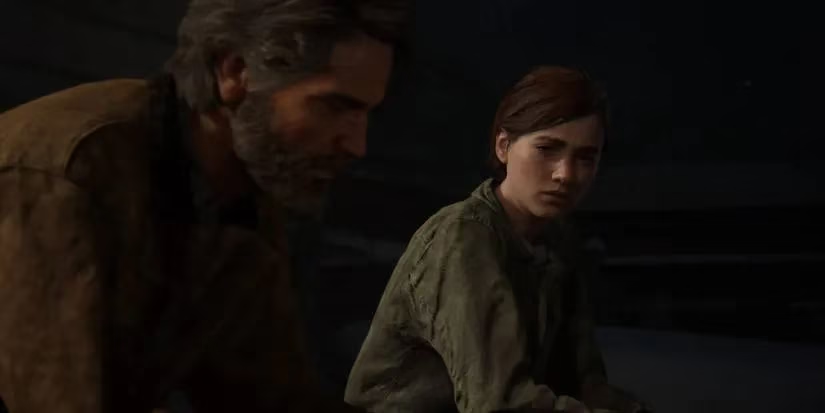
While the first game made us feel guilty for Joel's hospital rampage to save Ellie, Part II masterfully reframes that guilt. It forces you to live the consequences through the eyes of Abby, the daughter of one of Joel's victims. Suddenly, the "monster" you killed in the first game has a face, friends, and a life. Playing as Abby, you come to understand her pain and her quest for vengeance, which mirrors Ellie's own. Every life you take as Ellie feels heavier, because the game has shown you that each enemy is a person with their own story. It brilliantly illustrates how guilt and violence create a self-perpetuating cycle where everyone loses.
Silent Sufferers: The Guilt of Slaying Noble Beasts
Sometimes, the most guilt-inducing foes aren't human at all.
-
Dark Souls & Sif, the Great Grey Wolf: Sif isn't a demonic horror; he's a loyal wolf, giant and majestic, protecting his master's grave. The fight itself is tragic. As you injure him, he begins to limp, his attacks becoming slower, more desperate. If you completed the DLC first, the cutscene changes—he recognizes you, hesitates, and then sadly prepares to fight, honoring his duty over your past friendship. It's a fight that feels less like an achievement and more like putting down a noble, faithful companion. The victory is accompanied by a deep sense of sorrow.
-
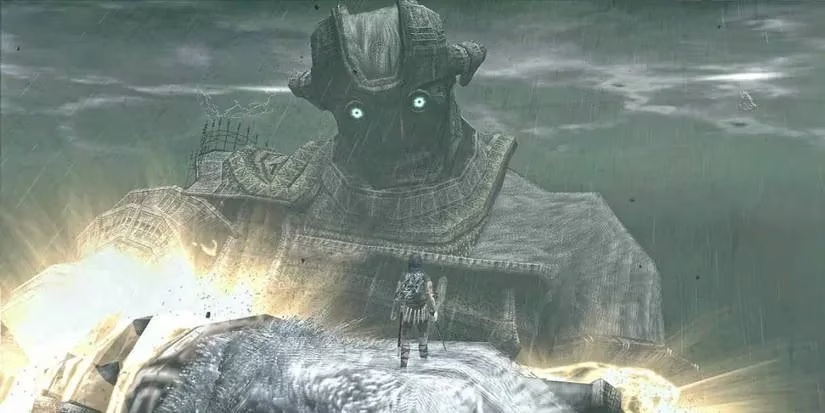
Shadow of the Colossus: This is the purest form of this guilt. Your goal—to revive a girl—is noble. Your method—killing sixteen ancient, peaceful colossi—is monstrous. These beings aren't aggressive; they mostly wander their domains, ignoring you until you start climbing their colossal bodies. Their attempts to shake you off feel more like confused irritation than genuine malice. When you finally find their weak spot and plunge your sword in, they let out a ground-shaking groan and collapse. The triumphant music is absent, replaced by a haunting, sorrowful melody. You didn't defeat a villain; you murdered a gentle giant, and the game makes sure you feel every bit of that weight.
So, why do we put ourselves through this? Why play games that make us feel bad? I think it's because these experiences are valuable. They push the boundaries of what interactive storytelling can do. They make us reflect, question, and empathize in ways that straightforward power fantasies cannot. In 2026, as games continue to evolve into more nuanced narrative spaces, this capacity to evoke complex emotions like guilt is what separates a good game from a truly memorable, transformative one. The stain on our virtual conscience is proof that the story mattered, that the choices had weight, and that for a little while, we cared deeply about a world that doesn't even exist.
0 Comments