Games That Punish Save Scumming: Clever Anti-Exploit Designs
From Mr. Resetti's lectures to Undertale's narrative punishments, developers counter save scumming with in-game shaming and lasting penalties.
Save scumming—repeatedly reloading a save to undo unfavorable outcomes—has become a habitual safety net for countless players. Whether they are tilting the odds in a minigame, bypassing dialogue failures, or farming currency with zero risk, the temptation is real. However, a number of developers have grown wise to these tricks and woven subtle (or not so subtle) punishments directly into their worlds. These mechanics don’t just block the exploit; they often mock, lecture, or permanently penalize the player for trying to cheat fate.

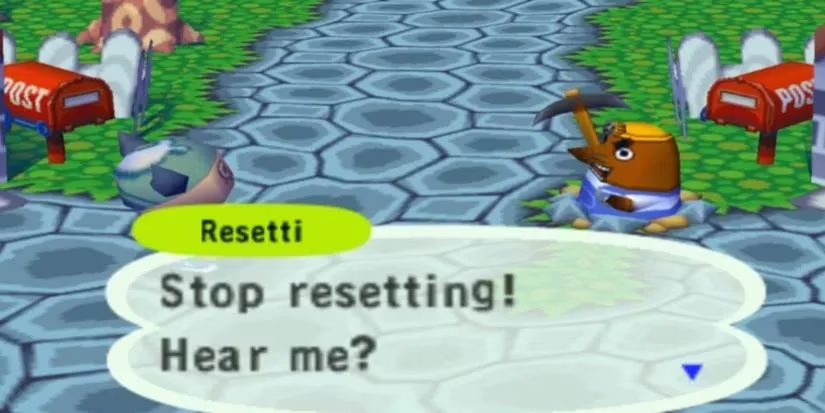
The most legendary example is Mr. Resetti from the Animal Crossing series. This short‑tempered mole would emerge whenever a player reset the game without saving—often an attempt to manipulate the in‑game clock, roll back a bad turnip price, or claim extra Bells. On the first offense, Resetti forced players to sit through a lengthy, stern lecture about the dangers of resetting and the selfishness behind it. Repeated resets triggered escalating rants that became so absurd, some players deliberately triggered them just to see how far the character would go. Over time, autosaving and online time‑syncing made this specific exploit less common, but Resetti still appears in every installment, his role softened into a nostalgic reminder of a bygone era of animal‑crossing trickery.
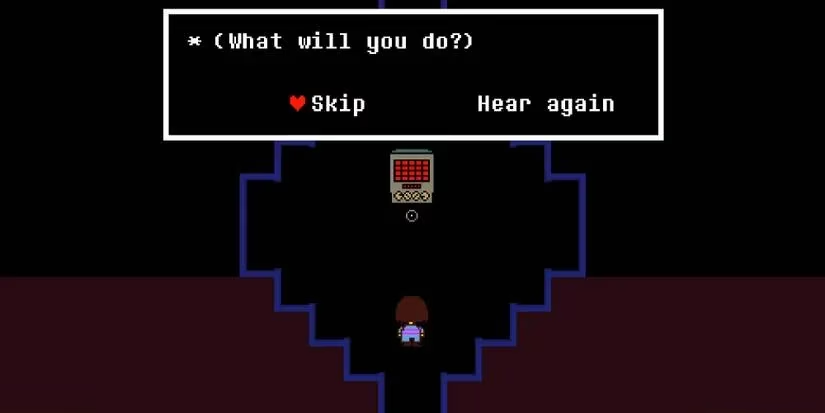
Undertale takes a narrative approach that blurs the line between punishment and story. In a Genocide run, if the player falls to Sans, reloads, and challenges him again, the skeleton comments with a knowing “you’ve already heard this before” or “you look bored.” The game establishes early on that the protagonist, Frisk, possesses the ability to reset timelines, and characters like Sans and Flowey are fully aware of it. After accidentally killing Toriel, Flowey explicitly hints that the player can just reload and try again—an eerie fourth‑wall break that frames save scumming as a canonical, but morally loaded, action. Undertale doesn’t strip away progress or items, but the emotional weight of being called out by characters who remember your previous failures can feel far more punishing than any mechanical deterrent.
Some of the more recent Assassin’s Creed titles introduced secondary currencies to gate rare gear behind loot boxes. In Assassin’s Creed Odyssey, players could earn Orichalcum through daily quests and spend it on The Olympian Gift—a random Epic or Legendary item. The natural instinct for anyone disappointed with their pull was to reload and try again. However, Ubisoft anticipated this. Upon reloading, the opened gift vanished, the item was gone, and the Orichalcum they had spent was permanently deducted. The save scummer ended up with nothing, while the lesson sank in that the fickle gods of loot would not be cheated.

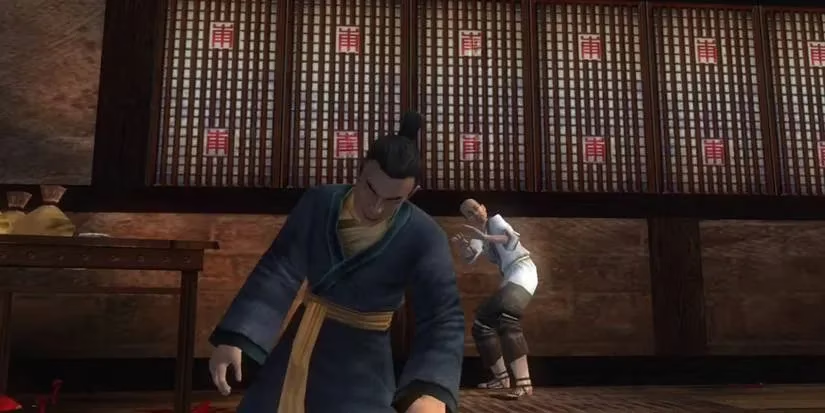
Back in 2005, Bioware’s Jade Empire—a martial‑arts RPG steeped in Chinese mythology—hid a gruesome surprise for greedy gamblers. In one side activity, players could bet against an NPC named Gambler Daoshen. Winning twenty times in a row was statistically almost impossible without reloading after every loss. Those who save scummed obsessively to reach that milestone were greeted by the gambler literally exploding into a shower of meaty chunks. It was a macabre but unforgettable way for the developers to say, “We see what you’re doing, and we don’t approve.”
The charming Hamtaro Ham‑Ham Games series included an odd feature across many of its entries: there was no manual save option at all. Players had to rely entirely on the game’s auto‑save, trusting that it would record their progress fairly. In Hamtaro Ham‑Ham Games, a sports‑themed title, restarting mid‑event in an attempt to avoid a loss would backfire spectacularly. Upon reloading, the game would skip ahead, declare the event already finished, and announce the player as the loser. The hamsters taught a gentle but effective lesson about accepting defeat.

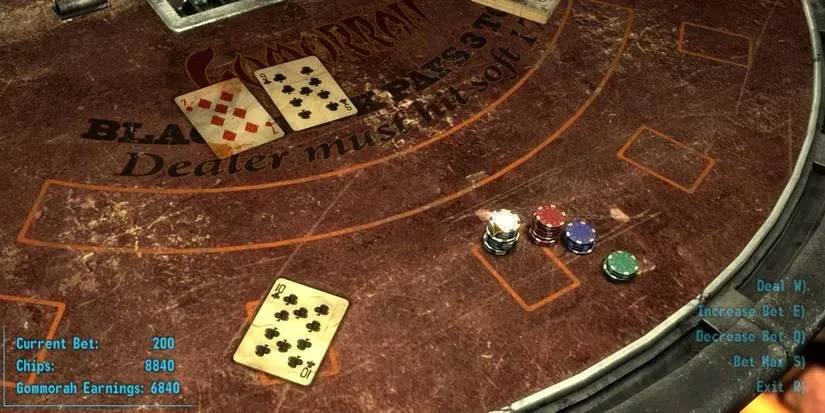
Fallout: New Vegas is famously exploitable through its dialogue save scumming—saving right before a Speech Challenge, checking the odds, and reloading if the percentage looked unfavorable. Obsidian Entertainment, however, took a different angle when it came to gambling. Casinos in the Mojave offered huge Bottle Cap payouts, tempting players to save and reload endlessly. To counter this, the developers implemented two restrictions: each casino had a house limit, banning players once they won too much, and any attempt to reload within a casino triggered a real‑time one‑minute cooldown on all gambling activities. Having to wait sixty seconds every single time effectively killed the efficiency of save scumming, while also staying true to the idea that the house always knows when someone is trying to cheat.
Finally, the roguelike Nightmare of Druaga, part of Chunsoft’s Mystery Dungeon lineage, treats save manipulation as a cosmic crime. If a player closes the game through any method other than saving and quitting properly, the goddess Ishtar delivers a scolding rant about disrupting the flow of time the next time the file is loaded. Repeated offenses escalate the punishment: the player suffers all the standard death penalties, losing every item from the current dungeon run and half of their carried gold. It transforms a simple reload into a high‑stakes gamble, reminding the adventurer that even divine patience has limits.

From angry moles and timeline‑aware skeletons to vanishing currency and exploding gamblers, these games demonstrate that save scumming is rarely as consequence‑free as it appears. Developers have found creative ways to protect their intended experiences, often turning the exploit itself into a memorable part of the journey. Long after 2026, these examples continue to remind players that sometimes, the only way to truly win is to accept the loss and keep playing.
0 Comments