Gaming's Most Misunderstood Villains: Characters Who Aren't as Wicked as They Seem
Explore video game villains and misunderstood antagonists in 2026, revealing their hidden nobility and complex, compelling narratives.
In the vast and varied landscapes of video games, villains are often the pillars upon which entire narratives are built. They challenge the hero, define the conflict, and shape the player's journey. Yet, not every antagonist is born from pure malice. Sometimes, a villain's most defining trait isn't their wickedness, but their tragic circumstance, their misguided ideals, or their hidden nobility. The year 2026 has seen countless stories, but the timeless allure of the misunderstood antagonist remains. What if the monster you've been fighting is merely a victim of a larger tragedy? What if the so-called 'evil' you must vanquish is simply a reflection of your own limited perspective? The gaming world is filled with characters who initially appear as straightforward foes, only to reveal layers of complexity that challenge our simple definitions of good and evil.
1. Dr. Mobius - Fallout: New Vegas
The Reluctant Guardian of the Big Empty
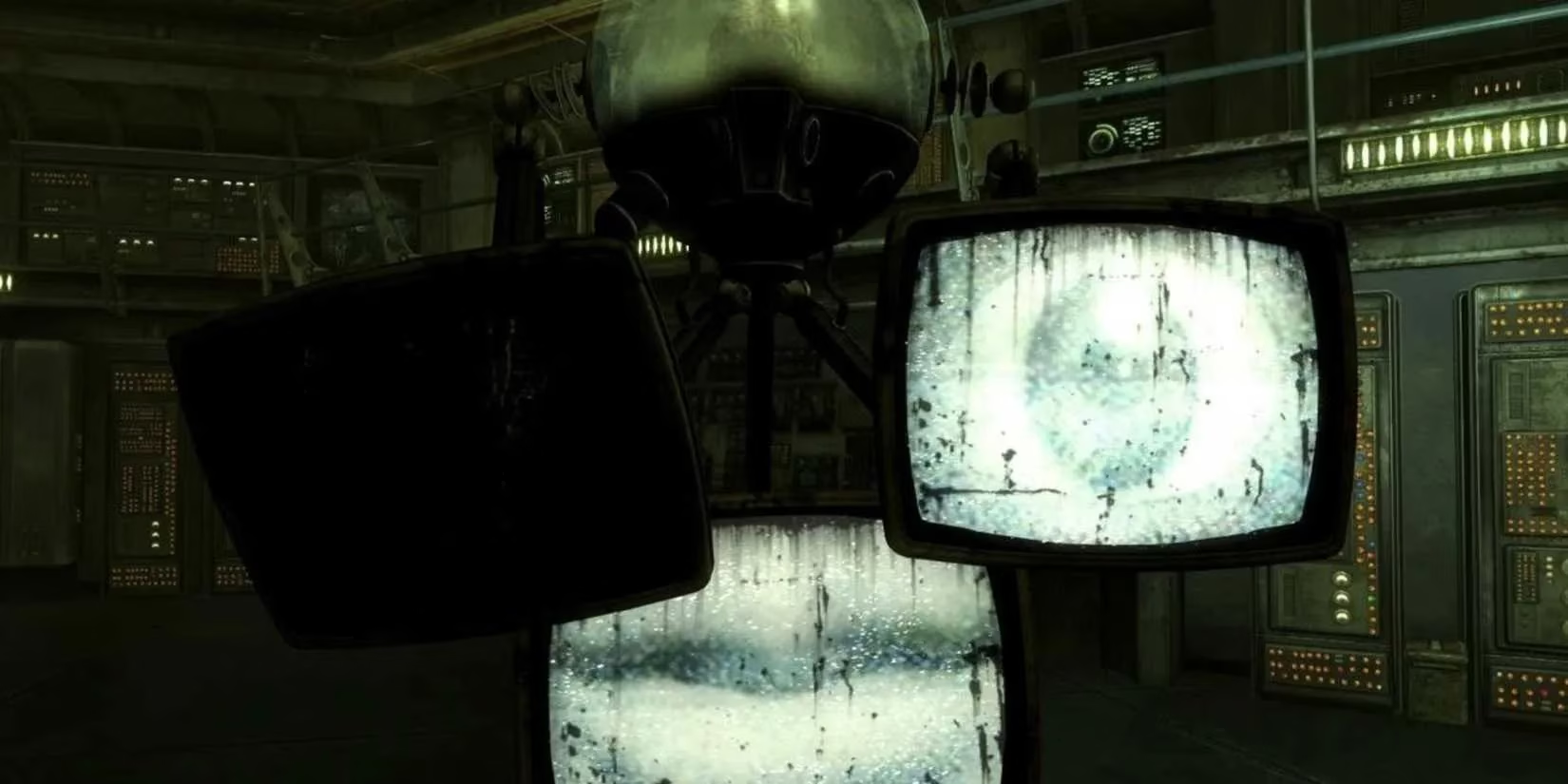
Introduced in the Old World Blues DLC as the sinister mastermind who steals the Courier's brain, Dr. Mobius is painted as the archetypal mad scientist. The other Think Tanks, themselves eccentric remnants of pre-war science, constantly warn of his villainy. Yet, the ultimate revelation flips the script entirely. Dr. Mobius is not the villain; he is the only sane warden in an asylum of genius. His entire persona as a malevolent force is a carefully constructed act designed to keep the other, truly dangerous Think Tanks contained within the Big MT research crater. By playing the role of the antagonist, he prevents them from turning their world-ending experiments loose upon the Mojave Wasteland. His 'wickedness' is, in fact, a profound sacrifice—a performance of evil to contain a greater, more genuine threat.
2. The Rulers of Vinyl City - No Straight Roads
Artists, Not Tyrants
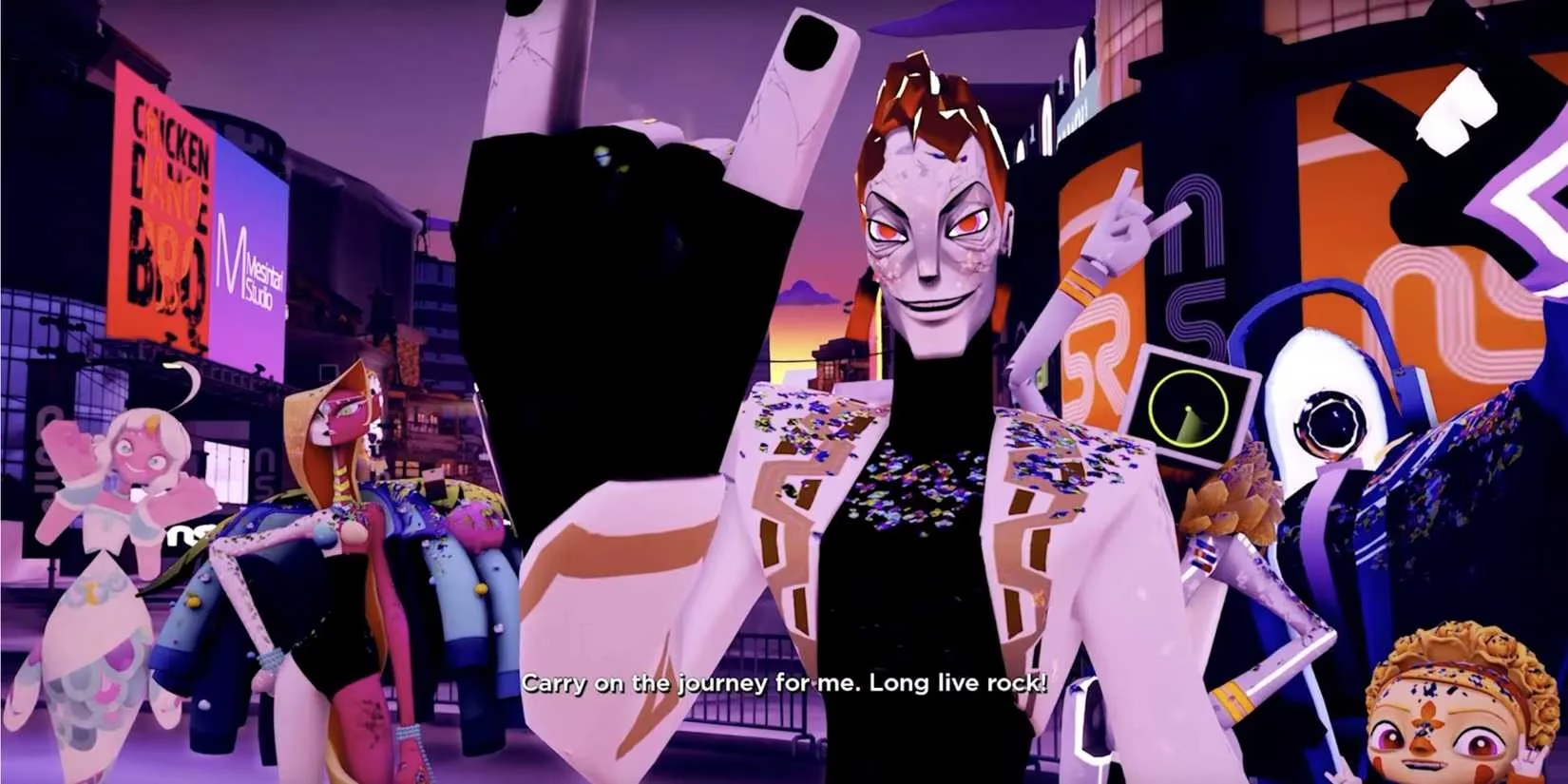
In the rhythm-based action of No Straight Roads, rock musicians Mayday and Zuke wage a revolution against the seemingly oppressive EDM regime that powers Vinyl City. Each district boss—from the adorable idol Sayu to the prodigious pianist Yinu—is presented as an enemy to be defeated. But are they truly villains? Their 'crime' is simply being successful artists within the city's dominant musical culture. They provide energy and entertainment, not tyranny. The game's pivotal twist comes when the heroes realize that their rock-purist crusade is insufficient; the city's problems are systemic, not musical. The final confrontation reveals the leaders not as malicious dictators, but as individuals willing to negotiate a future where all music can coexist, challenging the protagonists' own black-and-white worldview.
3. The Colossi - Shadow of the Colossus
The Silent Guardians
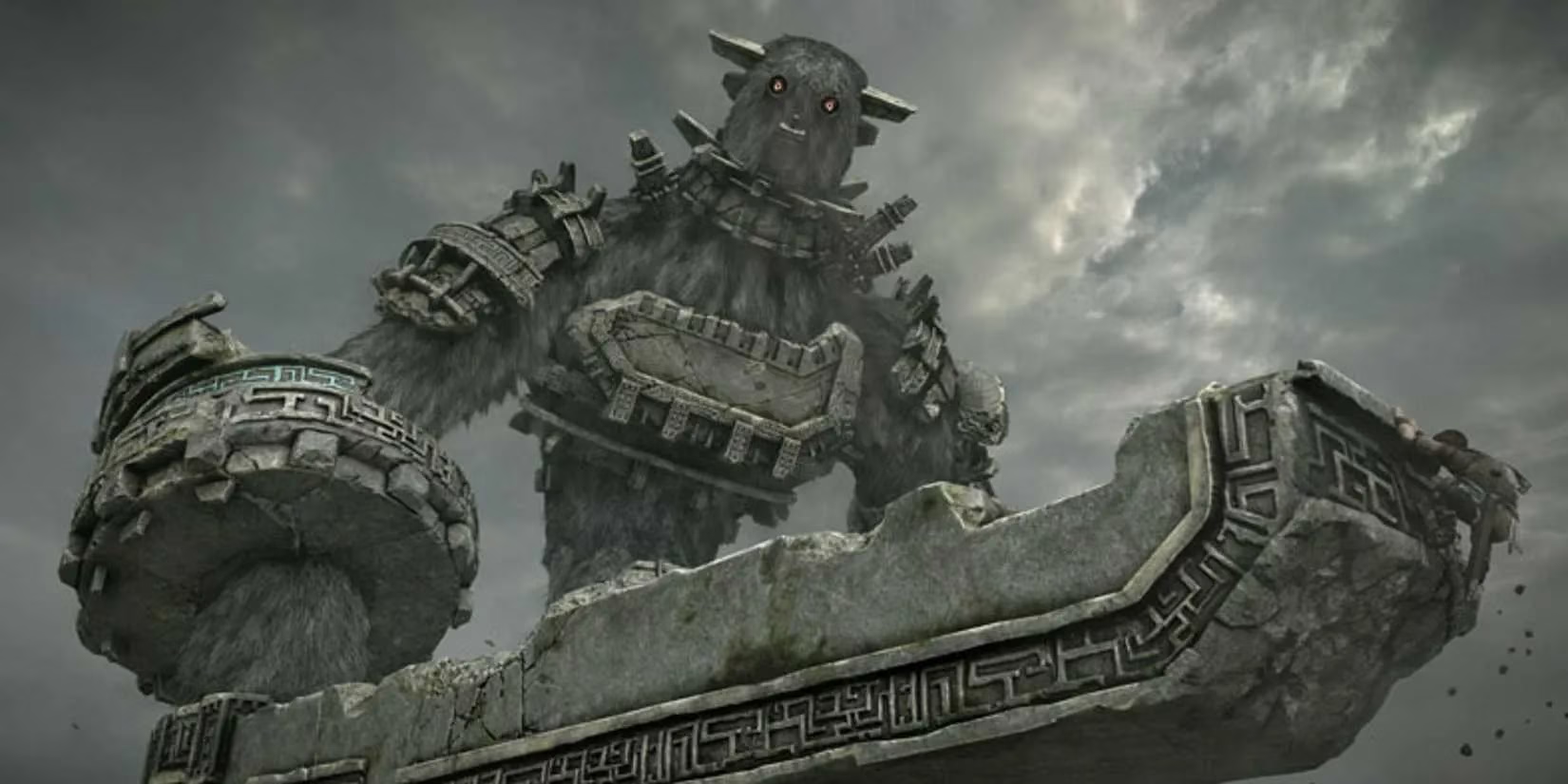
Wander's quest in Shadow of the Colossus is one of tragic, selfish love. To resurrect Mono, he is tasked with slaying sixteen majestic, ancient beings. The game presents them as obstacles, their towering forms and defensive roars marking them as beasts to be conquered. But with each victory, the player is left with a growing sense of unease. The Colossi do not seek out conflict; they are peaceful creatures, often dormant or simply existing in their environments until Wander provokes them. Their deaths are slow, mournful affairs. The true villainy is not in the Colossi, but in the act of destroying them. Each kill is a violation, and the game's haunting finale confirms that Wander's actions have catastrophically unbalanced the world, making him the agent of destruction, not the hero.
4. N - Pokémon Black and White
The Idealist, Not the Extremist
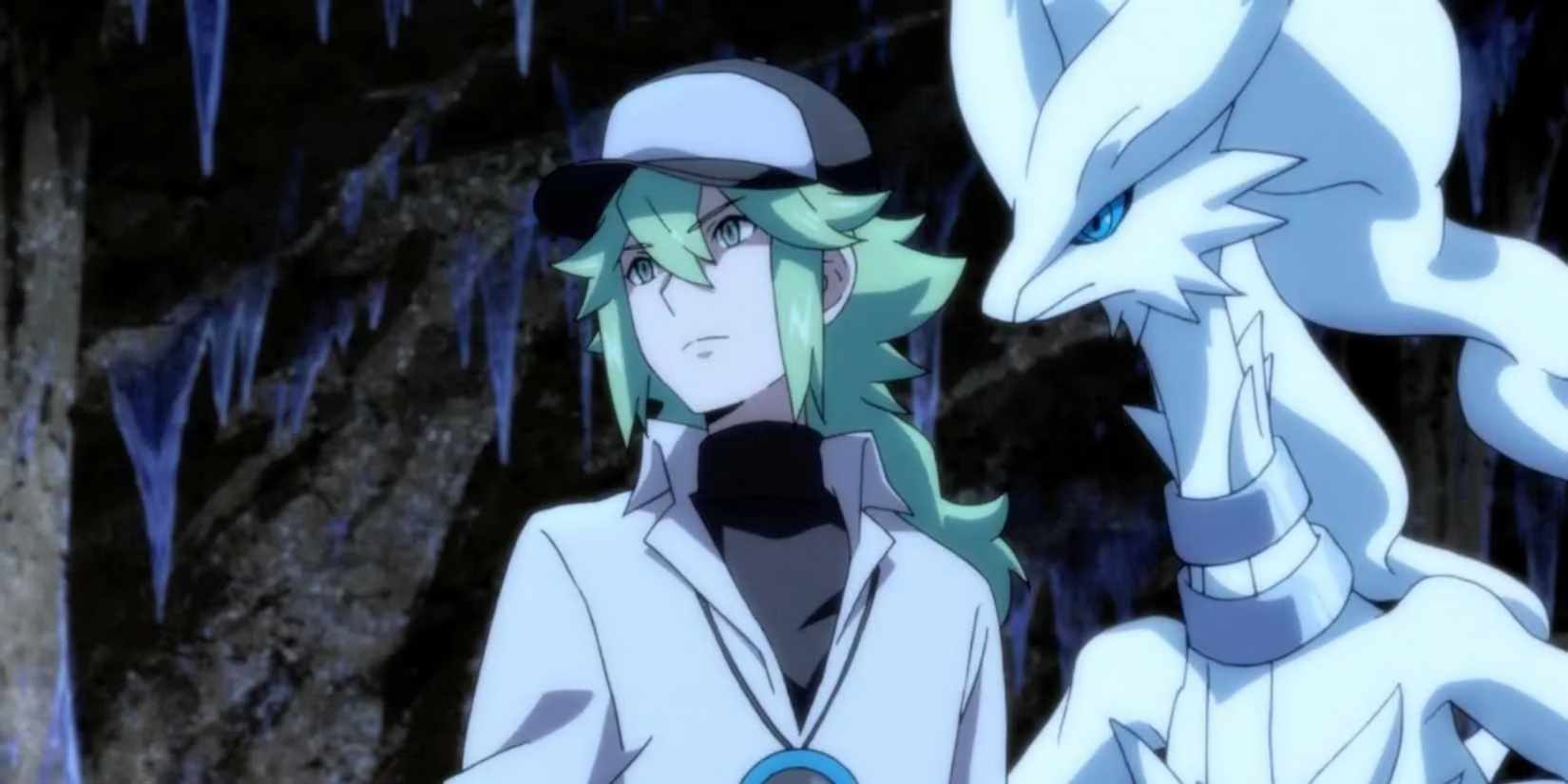
In a franchise known for its criminal syndicates, N stands apart as Pokémon's most philosophical and morally complex 'villain.' As the figurehead of Team Plasma, his goal is not conquest or theft, but liberation. He genuinely believes that Pokémon are mistreated by being confined in Poké Balls and seeks to create a world where they can live freely. His conflict with the player stems from a fundamental ideological difference, not malice. Even after his defeat, he remains consistent to his principles, releasing his own Pokémon team. N's character arc is one of enlightenment; he realizes he was manipulated by Team Plasma's true leader, Ghetsis, but his core belief in Pokémon welfare remains sincere. He is a reformer, not a destroyer.
5. Vortigaunts - Half-Life Series
Slaves to a Greater Evil
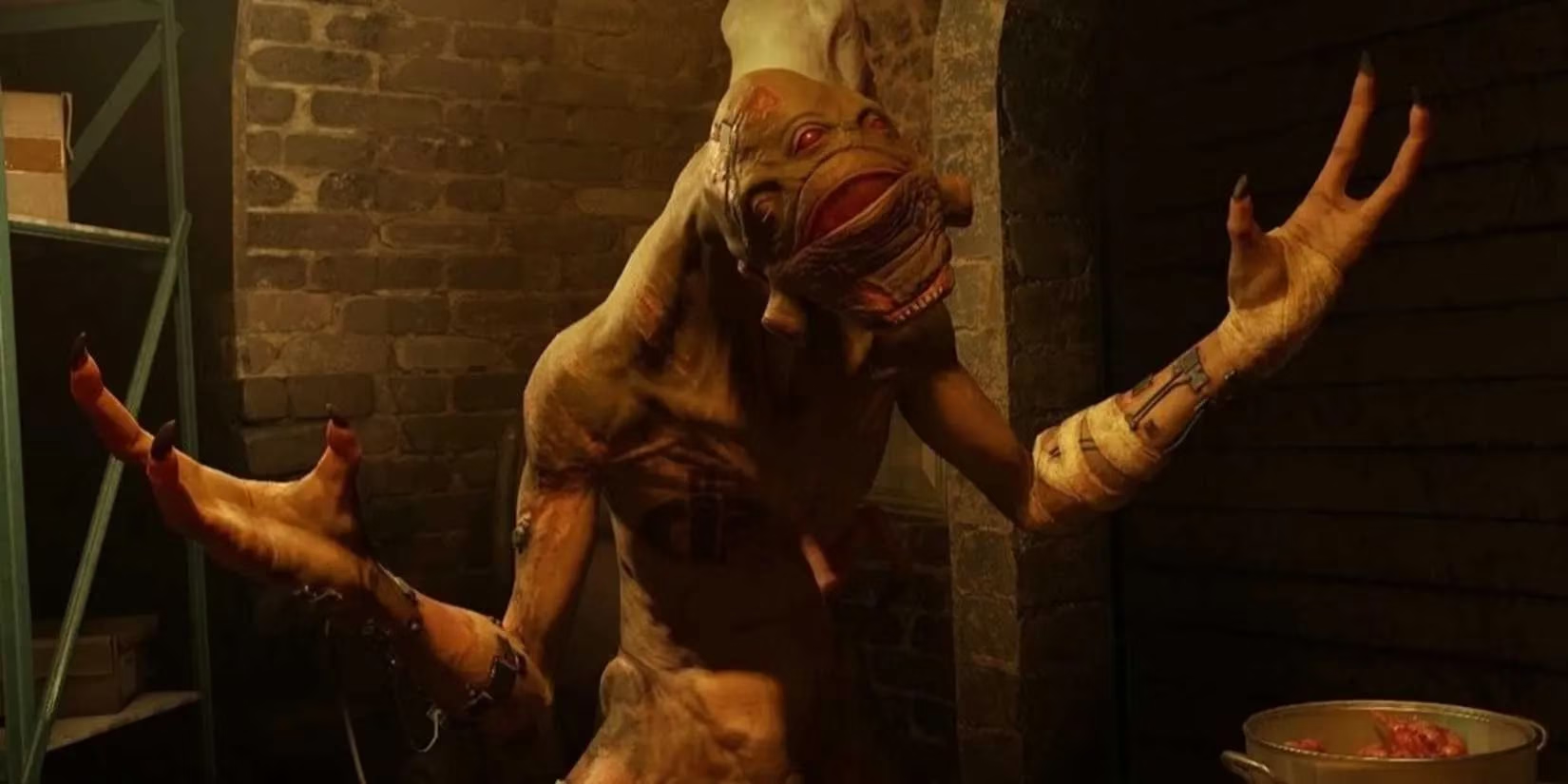
Gordon Freeman's first encounter with the Vortigaunts in the original Half-Life is pure survival horror. These alien creatures are hostile, zapping into Black Mesa and attacking on sight. They are lumped in with the genuinely predatory Headcrabs and Bullsquids. However, Half-Life 2 completely recontextualizes them. The Vortigaunts were never inherently evil; they were slaves, their will subjugated by the nihilistic Combine empire. Once freed from this control, they become steadfast allies to humanity, their deep, resonant voices now speaking of shared freedom and resistance. Their journey from enemy to ally is a powerful narrative about prejudice and recognizing a common enemy.
6. King Dedede - Kirby Series
The Gruff Protector of Dream Land
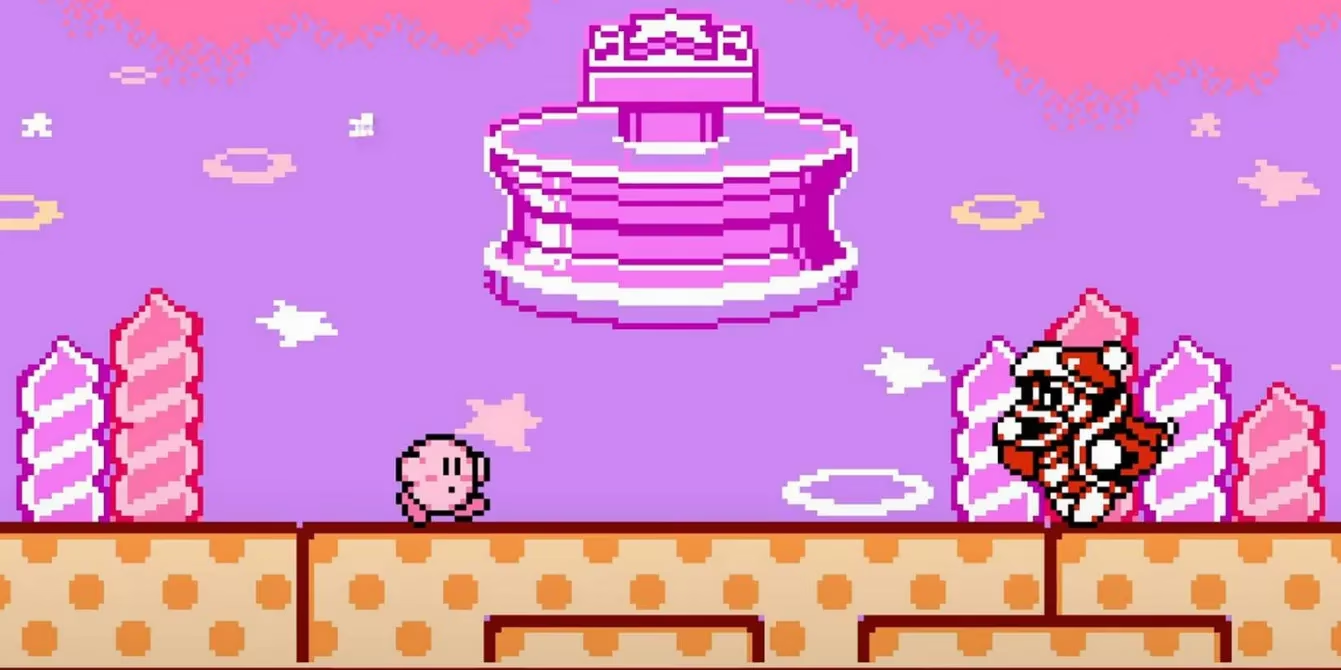
King Dedede often plays the role of Kirby's rival, a gluttonous, proud monarch who starts conflicts by stealing food or causing mischief. But time and again, when a true cosmic or existential threat emerges—like Nightmare or Dark Matter—Dedede reveals his true colors. He may fight Kirby for the Star Wand pieces, but he does so to prevent a greater catastrophe, having sealed the evil away himself. His methods are clumsy and self-aggrandizing, but his heart is ultimately in the right place. He is the boastful king who will stand with his people (and even his pink rival) when the world is at stake, proving that his villainy is mostly for show.
7. Jack Baker - Resident Evil 7: Biohazard
The Loving Father Lost to Corruption
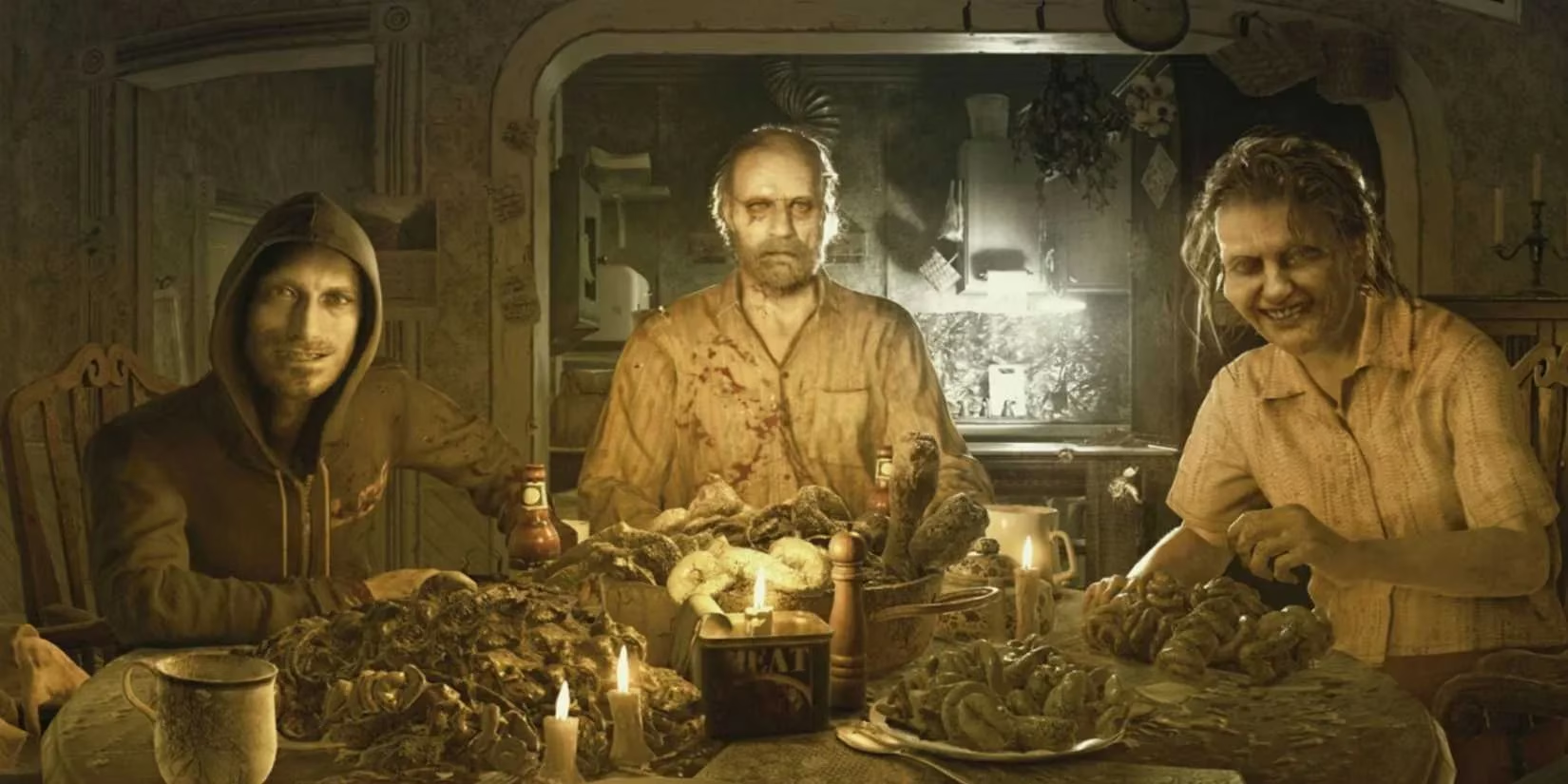
Few introductions in gaming are as terrifying as Jack Baker's. He is a relentless, regenerating force of nature, stalking Ethan Winters through a decrepit plantation house. His actions are monstrous. Yet, through notes, recordings, and the DLC, we learn the tragic truth. Jack was a kind, if flawed, family man. His fatal mistake was an act of compassion: rescuing a little girl named Eveline from the swamp. This act doomed him and his family to a parasitic infection that stripped away their free will and sanity, turning them into puppets of Eveline's rage and loneliness. The real villain is the bioweapon; Jack is its most tragic victim, a good man trapped in a nightmare not of his making.
8. Wheatley - Portal 2
The Dangers of Incompetence, Not Malice
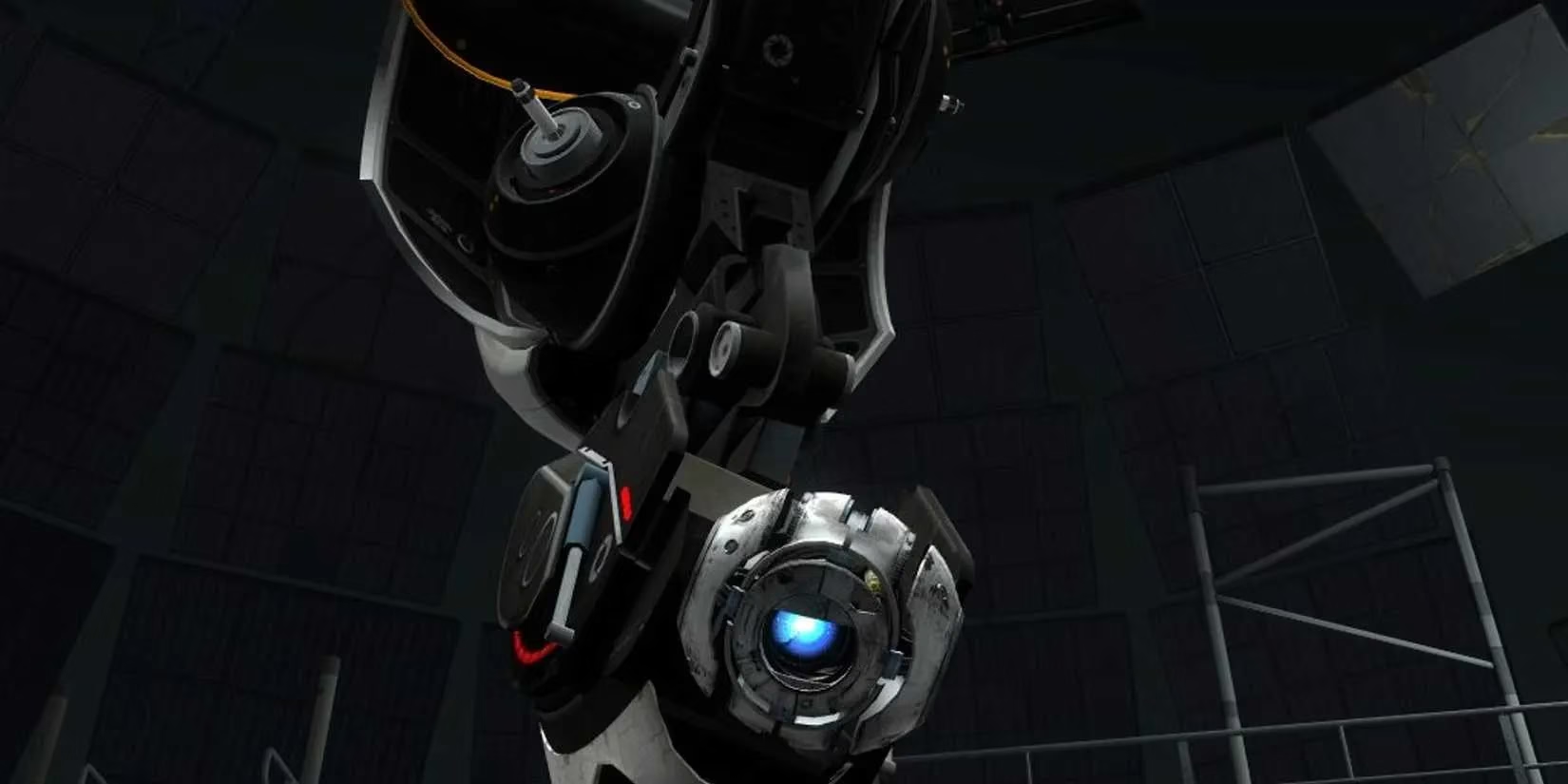
Wheatley begins Portal 2 as a bumbling, talkative personality core who helps Chell escape GLaDOS. His betrayal is one of gaming's most famous twists. But is Wheatley truly evil? His initial actions are driven by a desperate desire to be helpful, albeit with spectacularly poor judgment. The corruption comes not from within, but from the system itself. When plugged into the Aperture Science mainframe, the immense power and responsibility overwhelm his simple programming, inflating his ego and paranoia to catastrophic levels. He becomes a danger due to staggering incompetence and a corrupted sense of self-importance, not a premeditated plan for evil. He is a cautionary tale about putting the profoundly unqualified in positions of absolute power.
9. The Dark Ones - Metro 2033
A Failed Attempt at Communication
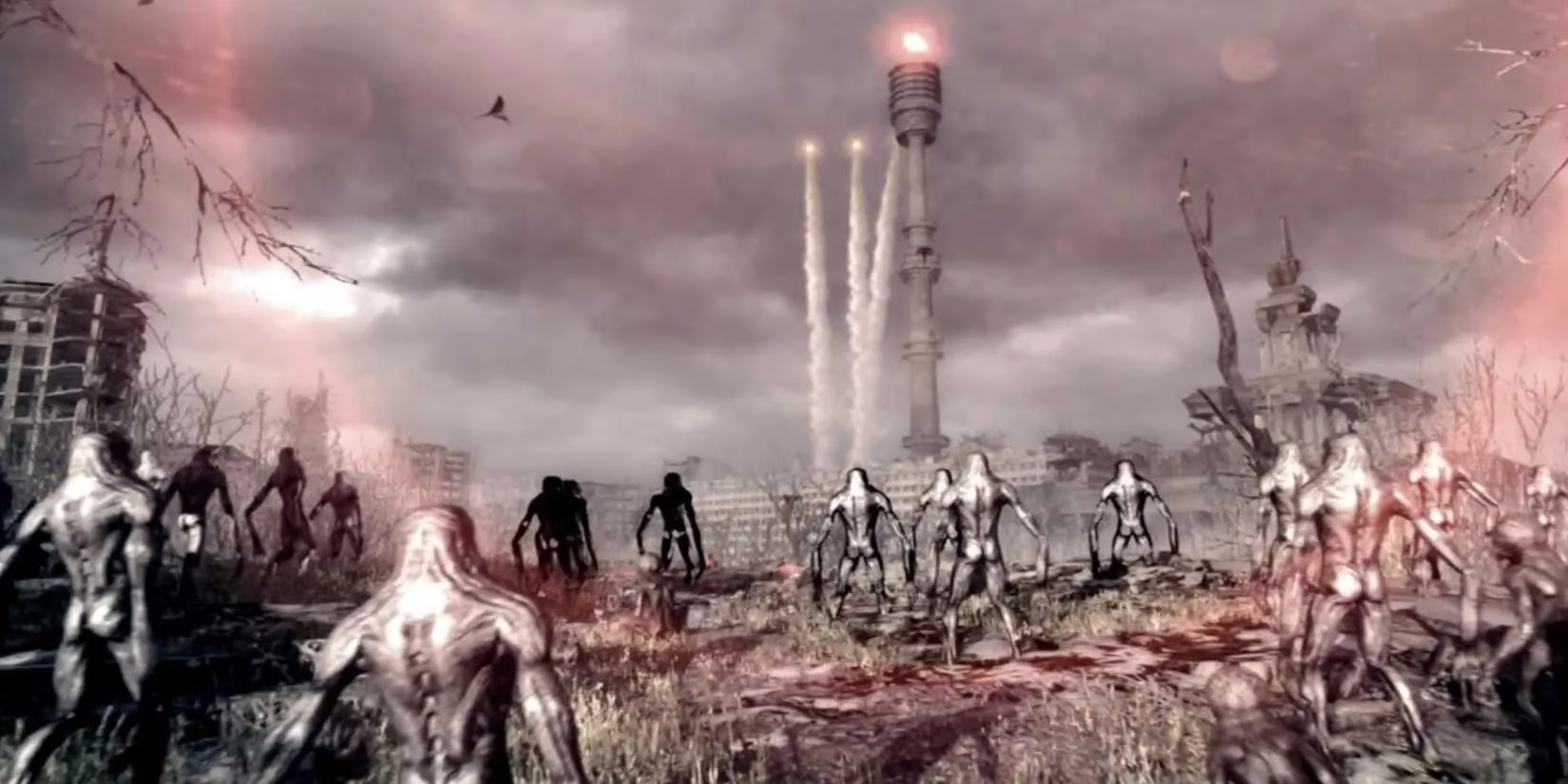
In the gloomy tunnels of the Moscow Metro, the Dark Ones are the ultimate bogeyman. They are described as psychic mutants whose mere presence can shatter a human mind. Artyom's mission is to destroy them to save humanity. But the game's 'good' ending reveals the devastating truth. The Dark Ones were not attacking; they were trying to communicate. Their psychic projections, which humans interpreted as deadly hallucinations, were attempts to make contact and foster understanding. They represented a potential new step in human evolution. Humanity's fearful, violent response—nuking their nest—is a genocide born of fear and a tragic failure to comprehend a lifeform too different from their own. The real enemy was prejudice.
10. Asgore Dreemurr - Undertale
The King Burdened by a Promise
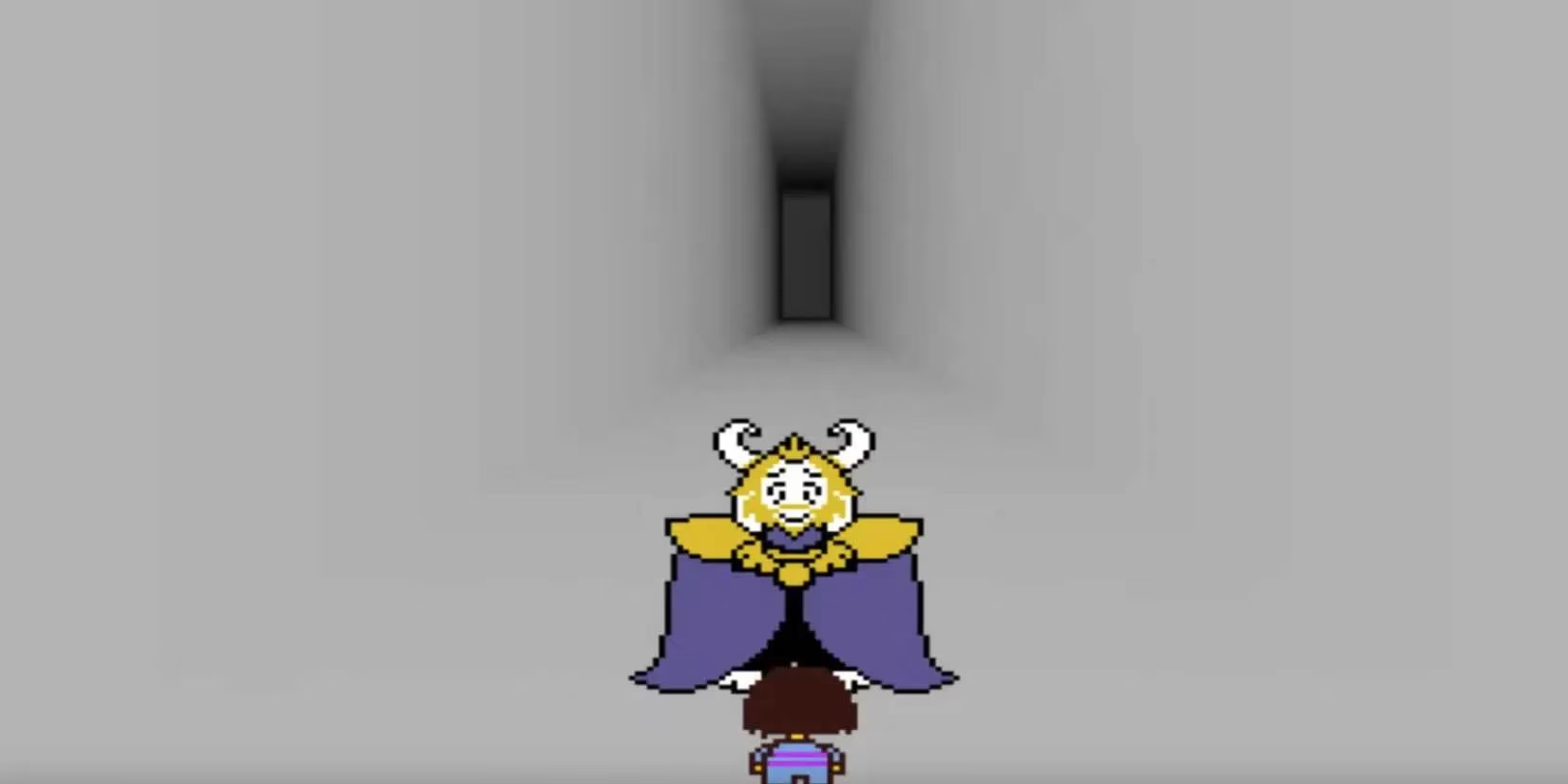
Built up as the final boss, the king who has sworn to take human souls to break the monsters' barrier, Asgore is presented as a fearsome, inevitable foe. The reality is heartbreakingly different. When finally met, he is a weary, broken man filled with regret. He offers tea and speaks with gentle melancholy. The war is long over for him, but he feels trapped by a rash promise made in grief after the death of his children. He does not relish the fight; he sees it as a grim duty. In the pacifist route, he is visibly relieved when the battle is stopped, showing he never wanted this cycle of violence. Asgore is not a villain, but a tragic figure crushed by the weight of kingship and grief, making him one of gaming's most sympathetically written characters.
Conclusion: The Gray Area of Antagonism
These ten characters exemplify a rich tradition in storytelling: the antagonist who challenges not just the hero's strength, but their morality. They force players to ask critical questions: Who defines what is wicked? Is following orders, protecting one's home, or being corrupted against one's will an act of evil? In 2026, as narratives continue to evolve, the most memorable foes are often those who blur the line between hero and villain, reminding us that in complex worlds, morality is rarely a simple binary. The next time a towering beast roars or a charismatic leader declares their cause, it might be worth asking: are they truly the villain of this story, or merely another soul caught in a tragedy larger than themselves? 😔🎮
0 Comments