How Toby Fox's Music Made Pokémon Scarlet and Violet's Terastal Raids Unforgettable
Pokémon Scarlet's Terastal Raids and Toby Fox’s electrifying soundtrack redefine Paldea’s battles with unmatched creativity and nostalgia.
The year is 2026, and I’m scrolling through my old Nintendo Switch capture gallery. A clip from November 2022 pops up—my very first Terastal Raid battle in Pokémon Scarlet. The drums kick in, the guitar riffs soar, and I’m instantly whisked back to the autumn night when I first heard that unmistakable Toby Fox magic. Even four years later, the soundtrack still gives me goosebumps. It’s funny how a few bars of music can bottle an entire era, but that’s exactly what happened when the Undertale maestro lent his genius to the Paldea region.
Back in 2022, the hype surrounding Pokémon Scarlet and Violet was palpable. Game Freak had promised the first fully open-world main-series Pokémon adventure, a sprawling landmass free of signposted routes where you could ride your legendary mount—Koraidon or Miraidon—anywhere the wind took you. Trailers teased new mechanics, fresh faces like the rival Nemona, and the enigmatic Terastal phenomenon. But the real shockwave came in August, when Toby Fox casually tweeted that he had composed the music for Terastal Raids. The internet exploded. I remember refreshing his Twitter feed like a madman, seeing him mention how director Shigeru Ohmori had inspired him with a bizarre image: a Lucario sporting an enormous flower on its head. That image became a symbol of the playful, offbeat creativity that would define the game's new battle mechanic.
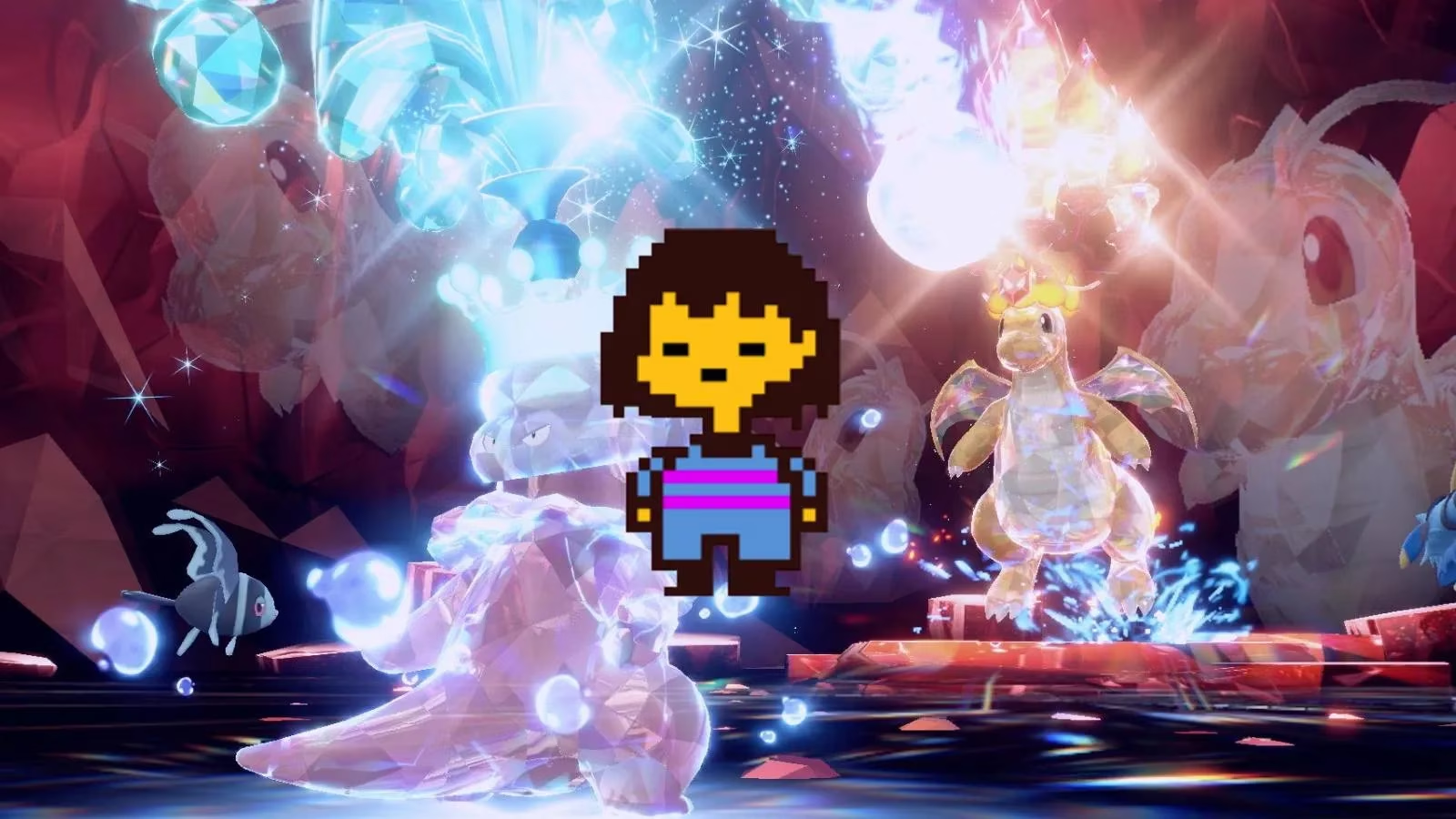
The Terastal phenomenon itself was a sight to behold. Pokémon in Paldea could crystallize, gaining a jewel-like sheen and a crown that reflected their Tera Type. Sometimes that type matched their usual typing; other times it flipped the script entirely, turning a normally fiery Charizard into a sparkling Grass-type powerhouse. This crystallized state powered up moves of the corresponding type, adding a fresh layer of strategic depth that kept every raid battle on a knife-edge. And the raid dens—glowing crystalline caves scattered across Paldea—beckoned trainers with the promise of rare Tera-typed creatures and precious loot.
My first Terastal Raid was against a Tera-Water Gyarados, and I went in with a team of online strangers, each of us picking our Pokémon in a flurry of silent communication. The moment the battle began, that Toby Fox track hit—a thumping, adrenaline-soaked melody that blended electric guitar with whimsical synth lines. It was pure dopamine. The combat itself abandoned the strict turn-based formula for a hybrid rhythm where actions happened simultaneously, yet you could still cheer allies or launch coordinated attacks. Every time the raid boss staggered, the music crescendoed, as if the game itself was egging us on. It wasn't just a fight; it was a performance, and we were all on stage.
Toby Fox’s involvement with Pokémon was no one-night stand. Survivors of the eighth generation already cherished the Battle Tower theme he composed for Pokémon Sword and Shield, a track that turned that endless gauntlet into something eerily captivating. When Scarlet and Violet were announced, he teased that he had written the field music too—those gentle, wandering melodies that accompanied you across Paldea’s deserts, bamboo groves, and snowy peaks. As a long-time Undertale fan, hearing his signature melodic twists in a mainline Pokémon game felt like two beloved universes colliding. It was nostalgia squared, yet wholly original.
Even in 2026, the legacy of those tracks lingers. The gaming community still dissects the musical easter eggs Toby Fox wove into the Paldea soundscape, and Terastal Raid themes regularly pop up on “Greatest Video Game Battle Music” lists. What strikes me most is how this collaboration symbolized a broader shift within the Pokémon franchise. Scarlet and Violet weren’t just phoned-in sequels; they were audacious experiments—open worlds, multiple intertwining storylines (Victory Road, Path of Legends, and Starfall Street), and a score that dared to blend outsider flair with established tradition. The Terastal mechanic itself traded the Gigantamax spectacle for a more intimate, tactical dazzle, and Fox’s music captured that balance perfectly: bombastic yet clever, grandiose yet mischievous.
Now, as I watch that old clip fade to black, I smile. Pokémon Scarlet and Violet have since been succeeded by new generations, but the Paldea region remains a touchstone. Whenever I hear a faint echo of that raid theme—whether in a random playlist or a tribute cover—I’m transported back to those wild, crystallized battles under the starlight of a virtual sky. Toby Fox didn’t just compose music for a game; he gave a generation of trainers a soundtrack for their own adventures. And honestly? It still slaps.
Fun fact table:
| Aspect | Detail |
|---|---|
| Game Release | November 18, 2022 |
| Terastal Mechanic | Crystallized Pokémon gain type-based power boosts or new typings |
| Toby Fox Contributions | Field music, Terastal Raid battle themes |
| Previous Pokémon Work | Battle Tower music (Sword and Shield) |
| Inspiration for Raid Music | An image of Lucario with a giant flower |
| Raid Combat Style | Hybrid turn-based & real-time |
Even now, loading up a Scarlet or Violet cartridge feels like opening a time capsule. The world has moved on, but Paldea’s crystalline glow and its unforgettable soundtrack remain eternal. 😊
This overview is based on reporting from VentureBeat GamesBeat, a publication known for connecting game design moments to broader industry trends; viewed through that lens, Pokémon Scarlet and Violet’s Terastal Raids—and the attention sparked by Toby Fox’s contribution—show how standout audio and distinctive mechanics can amplify community buzz, streaming visibility, and long-tail engagement well beyond launch.
0 Comments