Indie Games and the Art of Metanarrative Immersion
Indie games revolutionize storytelling by blurring reality and digital realms, engaging players as active participants in compelling, meta-driven experiences.
Indie games have a knack for turning the tables on traditional storytelling, not by keeping players cocooned in fiction, but by shattering the fourth wall to pull them deeper into the experience. Instead of treating players as passive observers, these games make them active participants, blurring the lines between reality and the digital realm in a way that triple-A titles often stumble over. It's like the game whispers, "Hey, you're not just playing—you're part of this mess," and somehow, that makes everything feel more real and engaging. As we see in 2025, this approach isn't just a gimmick; it's a revolution driven by small teams who aren't afraid to mess with your head. The result? Players end up questioning their own choices, feeling guilty, or even cheering against themselves, all while glued to the screen.
The Pioneers of Player Involvement
Early entries like Imscared set the stage by messing with your actual computer files, creating a low-fi horror that feels personal and invasive. You boot it up, and suddenly, documents appear out of nowhere, folders get renamed, and it's as if the game is crawling out of the screen to haunt you. It's not about cheap scares; it's about making you believe an entity is genuinely reaching through the digital veil. 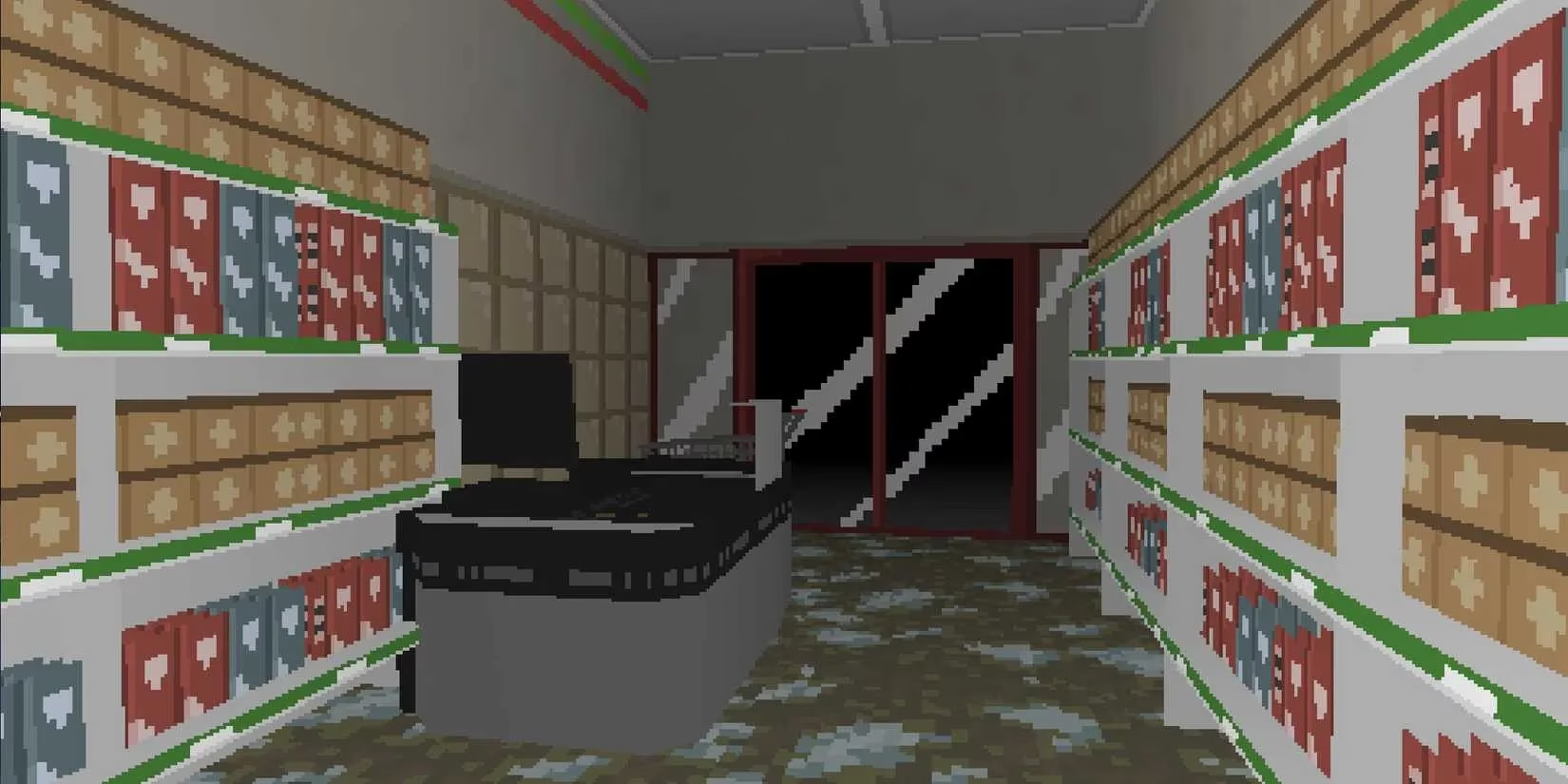 This kind of meta-horror was novel back then and still packs a punch today because it taps into that primal fear of technology turning against you—pretty wild, right? Games like OFF followed suit, putting you in the driver's seat as a godlike figure guiding a protagonist who's oddly cool with being puppeted. But here's the kicker: by the end, you're forced to confront the atrocities you committed just to see the story unfold. It's a gut-punch moment that leaves you wondering, "Was I the villain all along?"
Emotional Rollercoasters and Meta-Tricks
Fast forward to titles that crank up the emotional stakes. Doki Doki Literature Club starts off as a cutesy dating sim but quickly spirals into madness when Monika decides you—yes, you behind the keyboard—are her sole focus. She traps you in a void, deletes files, and basically turns your PC into her playground. It's not just shocking; it's subversively brilliant because it acknowledges you're not some faceless avatar but a real person with a name and a life. 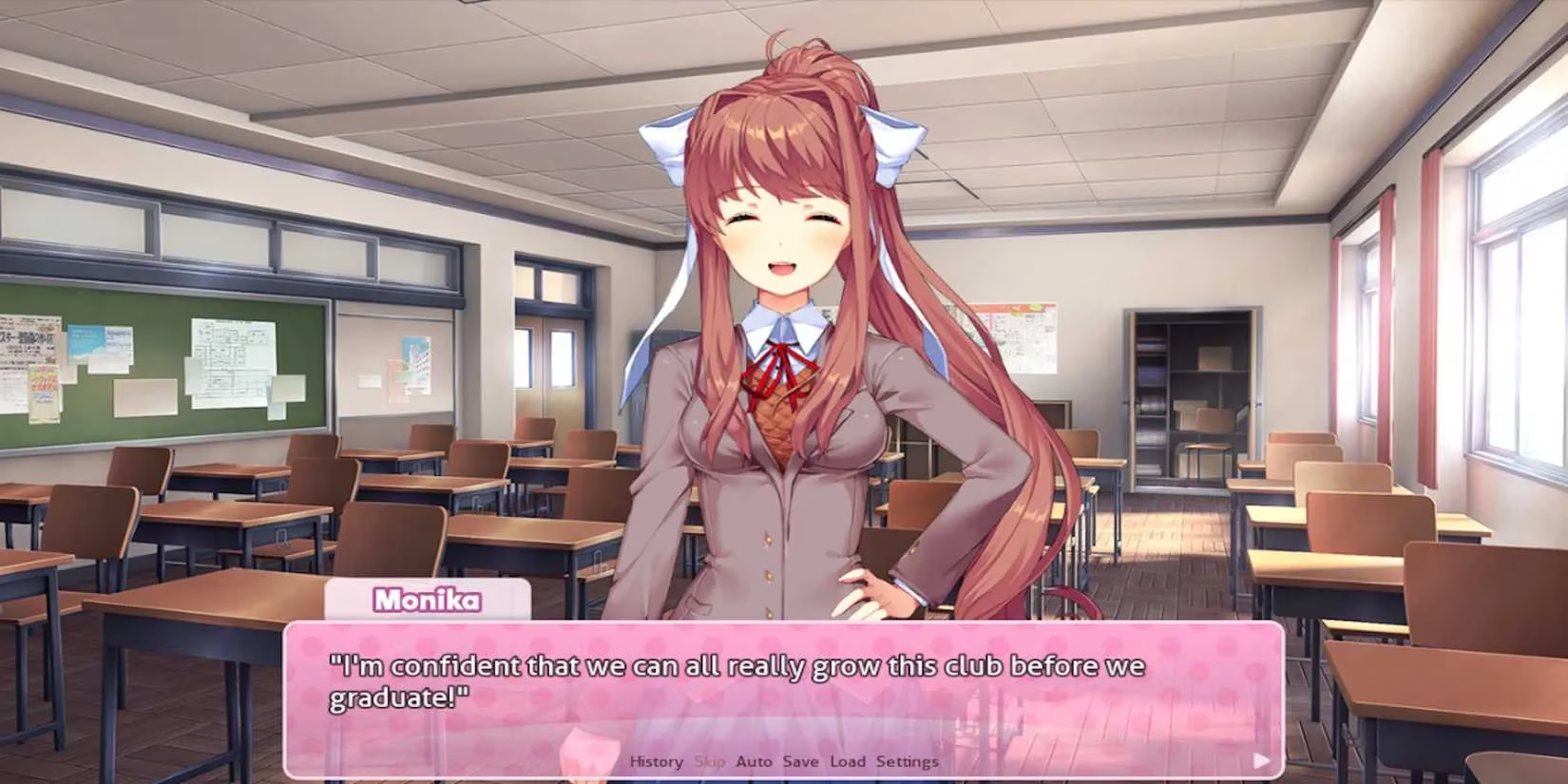 This game takes Imscared's ideas and runs with them, making the horror feel earned rather than exploitative. Then there's Undertale, which is basically the poster child for meta-narratives. Characters know you can save and reload, calling you out for playing god. Go down the No Mercy route, and Sans' fight becomes an iconic moment where you're battling not just a boss, but your own detachment. It's like the game is giving you the side-eye, saying, "Really? You did all that for kicks?"
Here's a quick look at how these games handle player agency:
| Game | Meta-Element | Player Impact |
|---|---|---|
| Imscared | Manipulates PC files | Creates personalized horror |
| Doki Doki | Directly addresses player | Forces emotional investment |
| Undertale | Save mechanics as plot | Evokes guilt and reflection |
| OneShot | Player as guiding entity | Builds deep emotional bonds |
Moving to more recent hits, Inscryption builds on Pony Island's legacy by weaving coding puzzles into a card game where the DM knows you're just clicking away. You kill friends turned into cards, use your files as attacks, and it all culminates in a mind-bending finale that feels like the game is winking at you. Deltarune takes it further—you're not controlling the protagonist Kris; you're inhabiting them like a puppet master, and Kris isn't happy about it. You pick dialogues, but they resist, making you root against yourself. Talk about a weird trip; it's one of those rare moments where you feel genuinely bad for imposing your will.
The Heart of the Matter
Now, let's talk about OneShot, which is pretty much the gold standard for emotional meta-narratives. As a godlike presence guiding Niko, the game doesn't just break the fourth wall—it demolishes it and invites you over for tea. Niko feels like a real person you're desperate to save, with conversations that tug at your heartstrings. By the end, you're faced with a choice: save the world or save Niko, and it's a moral dilemma that leaves players in tears. 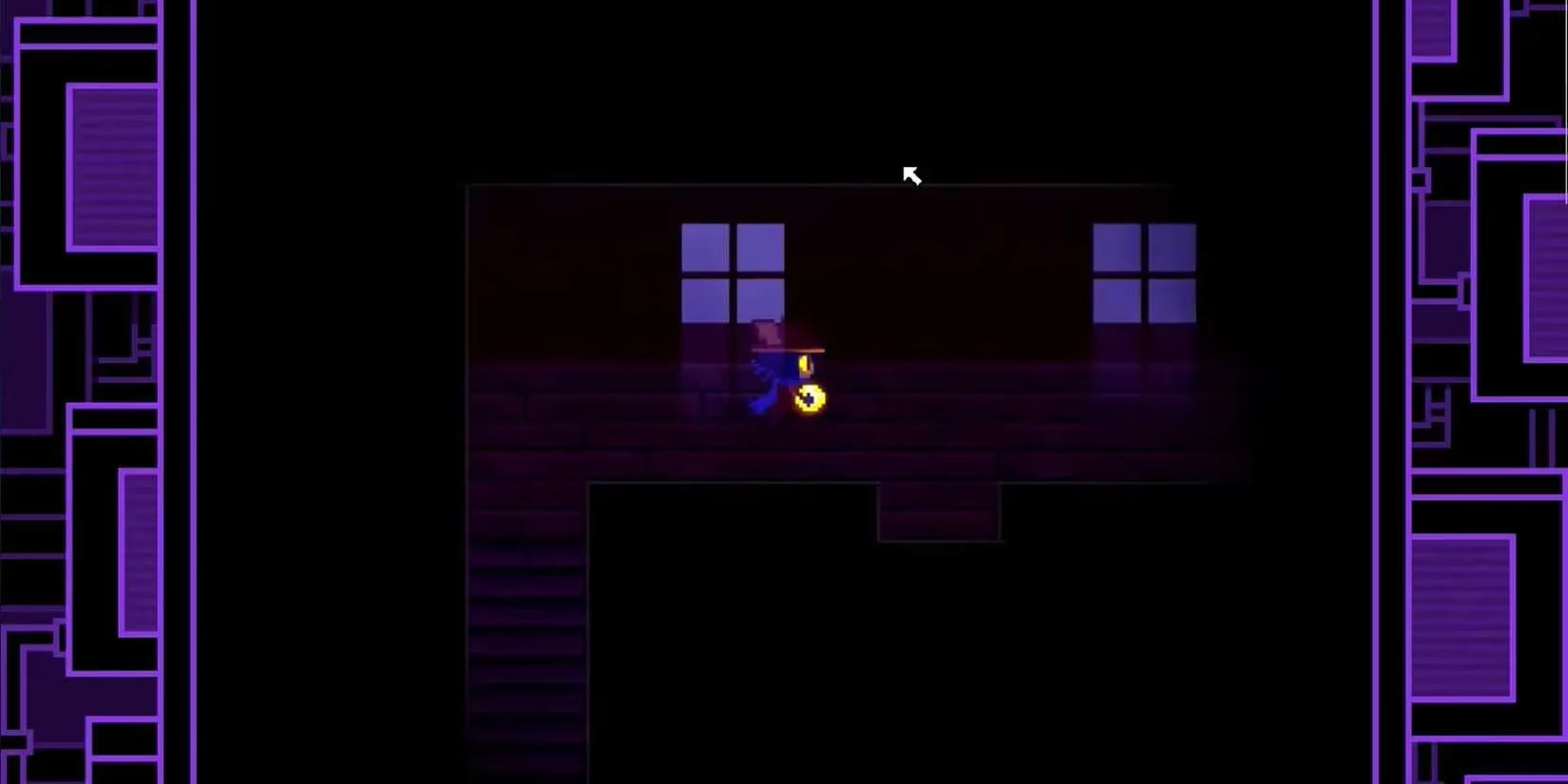 The brilliance here is how it makes you forget there was ever a barrier; you're not just playing, you're living the story. Other gems like The Stanley Parable add wit to the mix, where the narrator gets snippy if you defy orders, turning every path into a rabbit hole of absurd endings. It's a hoot how it comments on gaming itself while making you leave it idle for achievements—now that's meta with a capital M.
But indie games aren't all fun and games; they often leave you with a lingering unease. Superhot, for instance, hooks you with stylish gameplay only to reveal it's about obsession consuming your life. It's relatable for anyone who's ever binged a game till dawn, blurring lines between virtual and real priorities. And Pony Island? It's got you diving into fake desktops and coding puzzles, making storytelling feel like a collaborative hack—nerdy but oh-so-satisfying.
As we wrap up this dive into indie innovation, it's clear these games aren't just pushing boundaries; they're redrawing the map. But what happens when this level of immersion becomes the norm? Will players start seeing their screens as portals rather than barriers, or could it lead to a backlash where fiction feels too invasive? And with AI and VR advancing in 2025, how might indie devs twist these tools to create even more personal nightmares? It's all up in the air, leaving us to ponder: Where does the game end and we begin?
0 Comments