Indie Games: Where Stories Are Forged in Passion, Not Just Pixels
Indie games and storytelling weave deeply personal narratives that resonate powerfully. Through titles like Spiritfarer and Brothers, they explore profound themes of grief and connection, creating unforgettable, heart-wrenching adventures.
In the vast universe of video games, the colossal studios often shine like distant, well-funded constellations. Yet, it's the indie developers, operating like dedicated artisans in intimate workshops, who craft the most personal and resonant narratives. These smaller teams, driven by a singular vision and passion, forge connections with players that massive AAA productions often struggle to replicate. For these creators, the story is the soul of the project, a core element nurtured over years before it ever reaches a screen. The result is a catalogue of experiences where storytelling isn't just a feature; it's the beating heart of the adventure, offering tales of grief, identity, mystery, and humanity that linger long after the credits roll.
🌊 The Ferry of Farewells: Spiritfarer
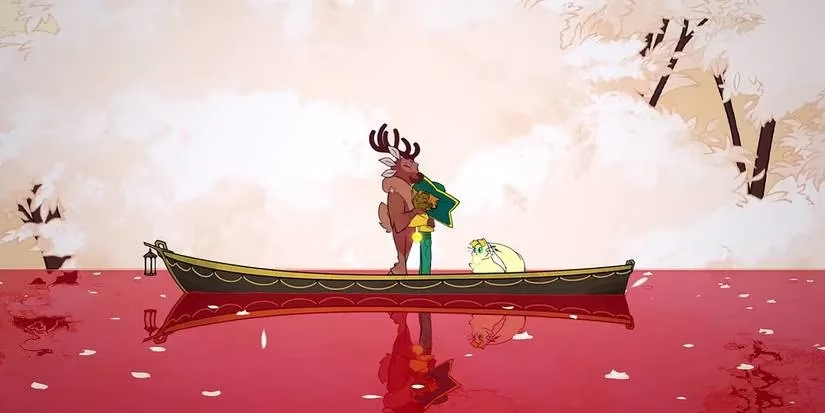
Spiritfarer is a gentle management sim that transforms the daunting subject of death into a beautiful, compassionate journey. You play as Stella, the new Spiritfarer, tasked with ferrying souls to the afterlife on her ever-growing boat. The game is a poignant tapestry of final goodbyes and quiet moments, where building a garden or sharing a hug is as important as any quest. Its narrative gracefully explores legacy, memory, and letting go, making the process of saying goodbye feel like releasing a paper lantern onto a moonlit sea—a sorrowful yet serene act of closure.
👬 A Bond Forged in Control: Brothers: A Tale of Two Sons
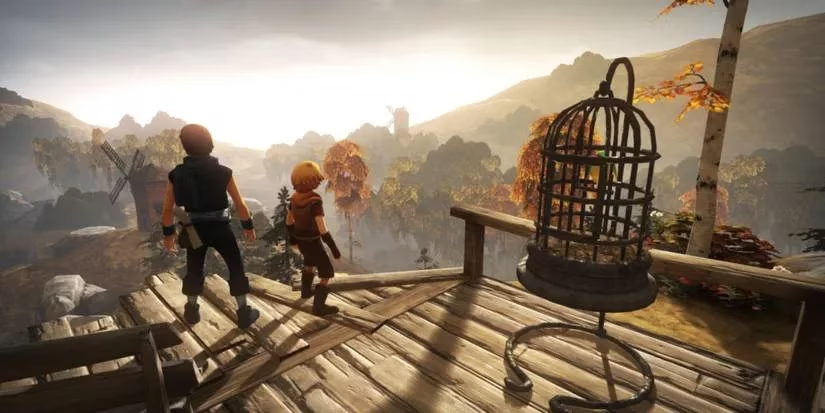
Though released over a decade ago, Brothers: A Tale of Two Sons remains a masterclass in interactive storytelling. Its genius lies not in words—the characters speak a fictional language—but in its control scheme. You simultaneously guide two brothers, Naiee and Naia, each with a thumbstick, on a quest to save their father. Their interdependence is the narrative's core; the elder brother's strength supports the younger's agility. The journey's emotional climax uses this very mechanic to deliver a revelation that feels less like a plot twist and more like a silent, profound lesson in carrying grief, making the controller in your hands feel as heavy as a heart full of memories.
🤖 The Depths of Consciousness: SOMA
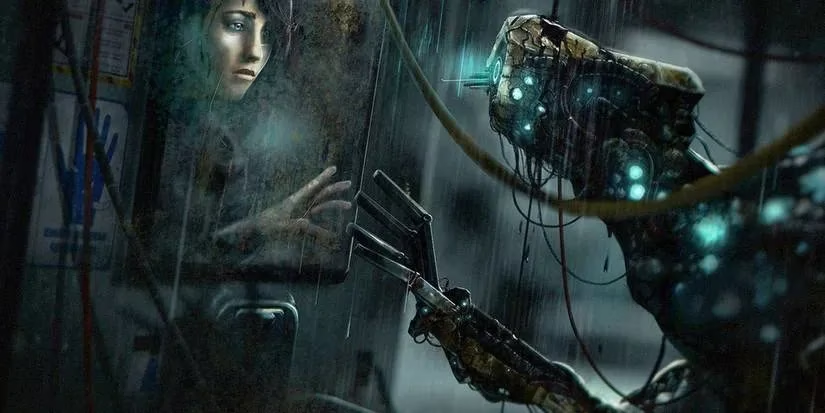
From the masters of dread at Frictional Games comes SOMA, a sci-fi horror that trades cheap scares for existential terror. Waking up in a crumbling underwater research base with no memory, protagonist Simon uncovers a reality where humanity is extinct and consciousness has been digitized. The game's chilling atmosphere is a backdrop for a story that relentlessly probes what defines identity and humanity. Is a copied mind the same as the original? SOMA presents this dilemma not as a philosophical debate but as a visceral, personal horror, leaving players to question their own essence like a sailor questioning the solidity of the deck beneath their feet.
| Game | Core Narrative Theme | Key Mechanic / Style |
|---|---|---|
| Spiritfarer | Grief, Acceptance, & Compassion | Management Simulation / Sandbox |
| Brothers: A Tale of Two Sons | Loss, Brotherhood, & Reliance | Single-Player Co-op Controls |
| SOMA | Identity, Consciousness, & Humanity | Psychological Horror / Exploration |
| Oxenfree | Friendship, Secrets, & Time | Dialogue-Driven / Supernatural Mystery |
📻 Ghosts and Growing Pains: Oxenfree
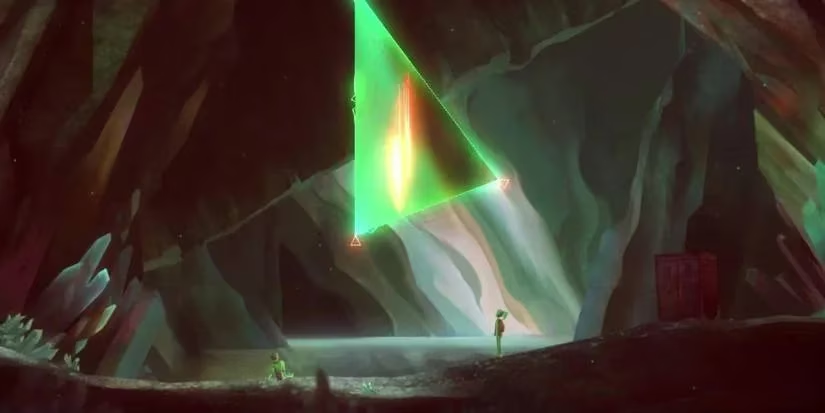
Oxenfree perfectly captures the angst and adventure of being a teenager, then throws in a paranormal crisis. After protagonist Alex and her friends open a ghostly rift with a radio on a weekend trip, the island becomes a prison haunted by spectral voices. The real magic is in the dialogue system: conversations flow in real-time, with overlapping chatter and timed responses that shape relationships. Unraveling the island's time-loop mystery feels secondary to navigating the complex social dynamics between friends, making the story feel organic, heartfelt, and uniquely personal.
🕵️♂️ The Broken Detective: Disco Elysium
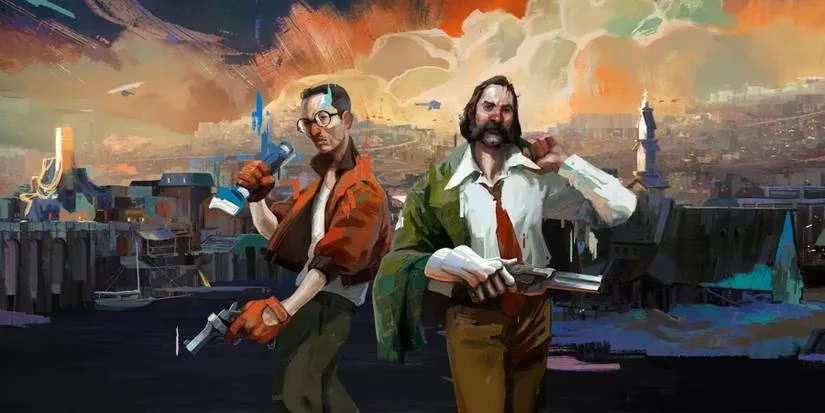
Disco Elysium is a revolutionary RPG where the only dungeon to crawl is the protagonist's shattered psyche. You are a detective with drug-induced amnesia, and your skills are literal voices in your head—from Encyclopedic Knowledge to Inland Empire (intuition). The murder investigation is merely a framework for a sprawling, politically charged, and deeply human narrative about failure, redemption, and ideology. With no combat, the game is a pure dialogue and skill-check experience, allowing you to build a communist superstar, an apocalypse cop, or a sorry wreck. Its story is as vast and messy as a city's forgotten alleyway, filled with profound truths and ridiculous detours.
🌲 Shadows in a Dying Town: Night in the Woods
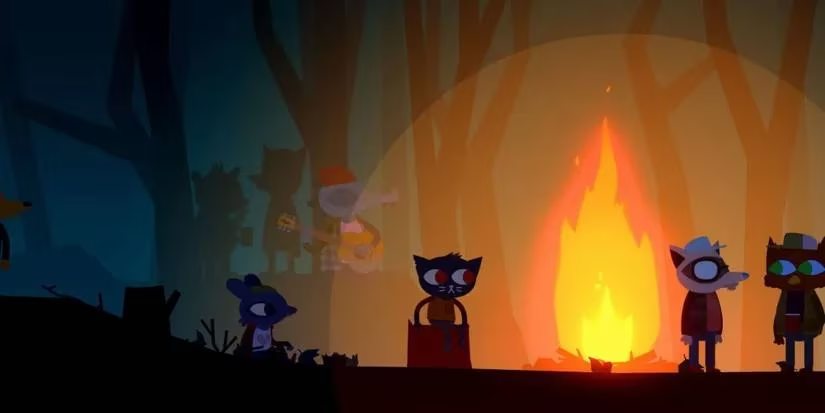
Night in the Woods is a poignant exploration of mental health, economic decay, and the struggle to find your place. Returning college dropout Mae Borowski reconnects with friends in her stagnating hometown, only to find a sinister mystery lurking in the woods. The gameplay is simple—walking, jumping, and mini-games—but the narrative power comes from its authentic characters and themes. It tackles anxiety, depression, and the death of the American dream with a rawness that's both melancholic and strangely comforting, like finding familiar cracks in an old sidewalk you thought you'd outgrown.
🏠 A House Full of Stories: Gone Home
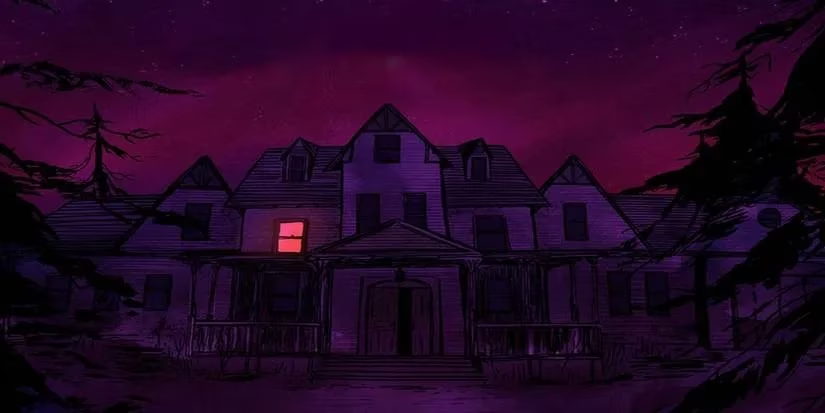
A pioneer of the narrative exploration genre, Gone Home proves that a powerful story needs no enemies or action sequences. You explore a seemingly empty family home in the 90s, piecing together what happened through environmental clues: notes, ticket stubs, cassette tapes, and arranged objects. It's a masterclass in environmental storytelling, slowly revealing a touching coming-of-age and coming-out story for your younger sister, Sam. The house itself becomes the narrator, its silent rooms speaking volumes about love, secrecy, and family.
🧒 A Wordless Dystopia: Inside
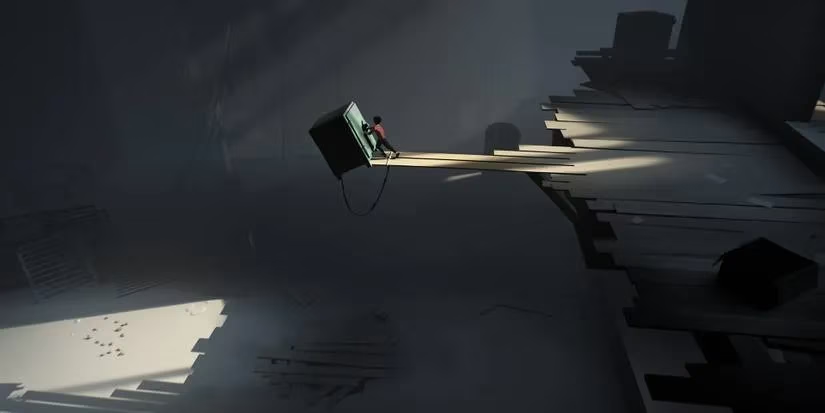
Inside is a puzzle-platformer where the narrative is a haunting, wordless poem. A boy flees through a bleak, oppressive world, pursued by mysterious forces. The story is entirely subtextual, told through chilling imagery, atmospheric sound design, and surreal events. Is it an allegory for mind control, rebellion, or the loss of innocence? The game offers no easy answers, inviting players to project their own interpretations onto its stark canvas. Its ending is one of gaming's most discussed and debated moments, a narrative shockwave that resonates like a silent bell tolling in a vacuum.
⏳ Rewriting Reality: Life is Strange
 .jpg?q=50&fit=crop&w=825&dpr=1.5)
Life is Strange captured hearts with its relatable teen drama amplified by a supernatural twist. Photography student Max Caulfield discovers she can rewind time, leading her to confront a looming disaster in her hometown. The game's central mechanic makes you an active author of its branching narrative. Every rewound conversation and altered choice explores the butterfly effect, showing how small actions can ripple into catastrophic or beautiful consequences. It's a story about friendship, sacrifice, and the painful weight of responsibility, asking whether fixing one mistake might unravel the entire tapestry of reality.
📖 A Family's Curious Chronicle: What Remains of Edith Finch
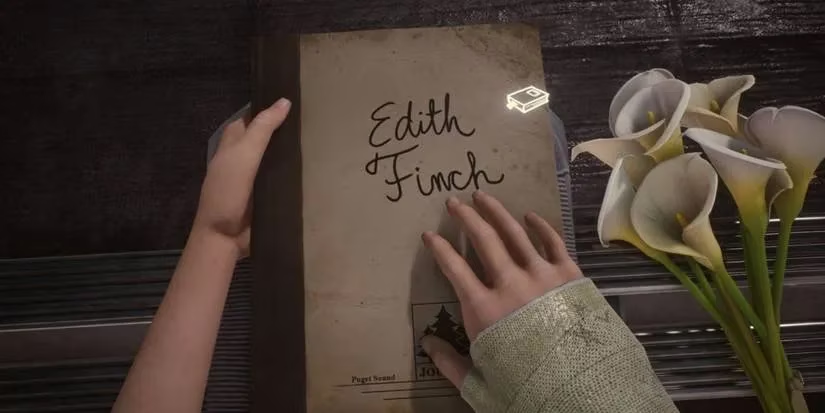
What Remains of Edith Finch is a series of magical realist short stories disguised as a video game. Returning to her bizarre family home, Edith explores the rooms of deceased relatives, each triggering a vignette about their final moments. You become a kite-flying child, a cannery worker daydreaming of being a king, and more. These inventive, playful sequences contrast sharply with their tragic ends, weaving a tale about the stories families tell themselves to cope with loss. It questions whether the Finch "curse" was fate or folklore, leaving you to ponder the line between family legend and painful truth.
In 2026, the legacy of these indie narratives is clearer than ever. They are not mere distractions but profound interactive literature, proving that the most powerful stories often come from the most passionate, focused creators. They remind us that games can be mirrors, therapy, and art, all while taking us on unforgettable journeys.
0 Comments