Kickstarter's Indie Game Icons That Redefined Modern Gaming
Kickstarter's crowdfunding transformed video game development, funding groundbreaking titles like Shadowrun: Hong Kong, Pillars of Eternity, and FTL.
In the seventeen years since Kickstarter first opened its virtual doors in 2009, the crowdfunding platform has become nothing short of a lifeline for creative visionaries who refuse to be boxed in by traditional publishing constraints. Video games, in particular, have found a vibrant second home in this community-driven space, where a compelling pitch can transform a one-person dream into a global phenomenon. By 2026, hundreds of millions of dollars have flowed through the platform into interactive entertainment, but a handful of campaigns didn't just meet their goals—they shattered expectations, launched entire genres, and proved that players are willing to invest in ideas long before a single line of code runs perfectly. The titles that follow are more than just financial triumphs; they are cultural touchstones that reshaped what independent development could achieve.
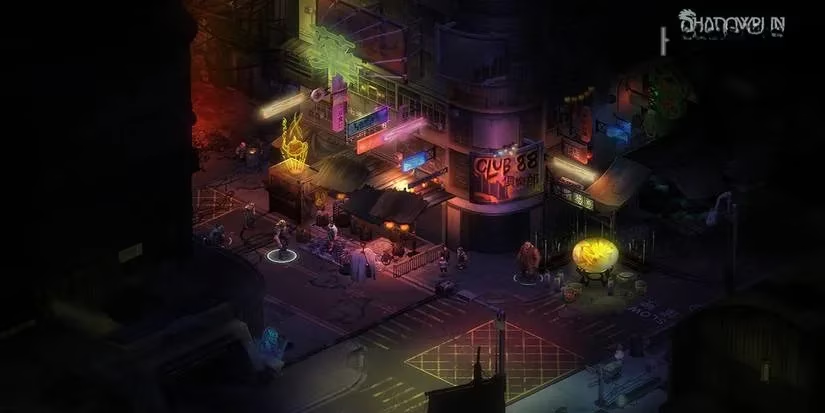
A towering example of Kickstarter’s potential arrived in 2015 with Shadowrun: Hong Kong, an isometric tactical RPG that brought the beloved tabletop universe to life with searing neon beauty and morally murky choices. Harebrained Schemes set a humble $100,000 target, only to watch the campaign explode past $1.2 million in a matter of hours. The game placed players in the boots of a newly released convict chasing family secrets across a magic-infested Hong Kong, where megacorporations and ancient spirits clashed in every shadow. That runaway success echoed through the genre, helping to inspire Obsidian Entertainment’s Pillars of Eternity the same year. Originally pitched as a spiritual successor to Baldur’s Gate, Pillars of Eternity didn’t just revive the isometric CRPG—it rewrote its rules entirely, allowing character stats to shape conversations as deeply as combat. When its campaign closed at over four million dollars, it held the crown as the highest-funded game in Kickstarter history, a title that spoke volumes about the pent-up hunger for deep, narrative-driven worlds.
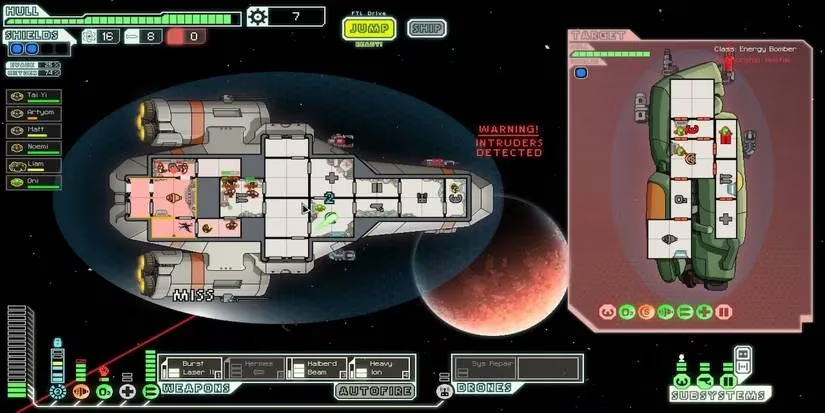
Long before those RPG epics, however, a tiny two-person team called Subset Games proved that a laser-focused vision could ignite a whole movement. FTL: Faster Than Light arrived in 2012 with a deceptively simple promise: command a lone spaceship carrying critical data across a galaxy pursued by relentless rebels. Each jump was a dice roll, every crew member a fragile resource, and the permanent death of a run felt personal—yet entirely fair. The Kickstarter goal was a modest $10,000, but backers rallied behind the tactical roguelike to the tune of over $200,000. FTL’s success, alongside contemporaries like Spelunky and The Binding of Isaac, didn’t just popularize procedural storytelling; it cemented the idea that a single, brilliant mechanic could be more compelling than a hundred glossy cutscenes. 🚀
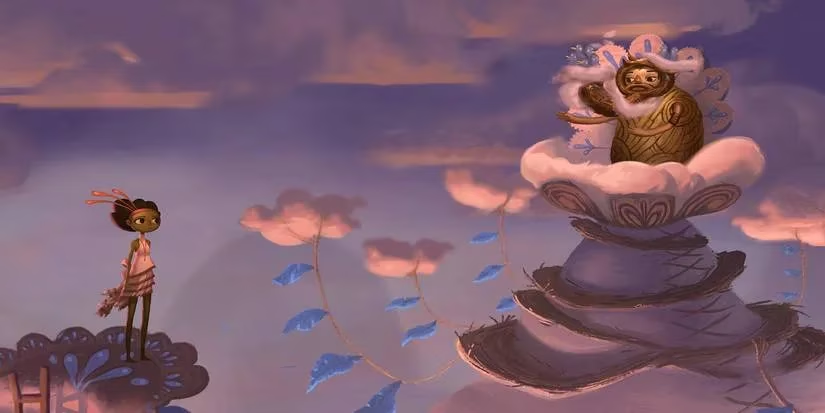
If FTL proved that systems could sing, Broken Age set out to prove that heart and artistry still mattered most. Directed by adventure-game legend Tim Schafer, the title raised over $3 million on Kickstarter—dwarfing its $400,000 target—and arrived in two acts during 2014 and 2015. The story wove together the fates of Vella, a teenager chosen as a sacrifice to gigantic Mogs, and Shay, a lonely boy trapped on a nurturing spaceship. Its hand-painted visuals and whimsical puzzles felt like a love letter to classic point-and-click adventures, yet the game’s real legacy was symbolic: it demonstrated that even seasoned industry veterans could find freedom and funding outside the publisher system.
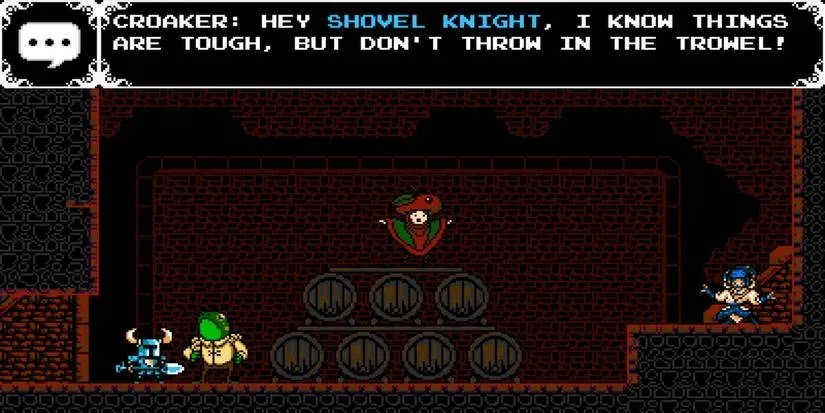
That same independence also breathed life into a nostalgic dream called Shovel Knight, which sprinted past its Kickstarter goal and landed with over $300,000 in 2014. Yacht Club Games built a side-scrolling platformer that felt like a lost NES cartridge, blending the precise pogo-jumping of DuckTales with the dark atmosphere of Castlevania III. What followed was extraordinary: multiple free expansions transformed the initial adventure into the Treasure Trove collection, and Shovel Knight himself became an icon cameoing in countless other indie titles. Parallel to this 2D renaissance, Team Cherry’s Hollow Knight crept out of a 2017 Kickstarter that had asked for a mere $35,000 and ended with over $57,000. Set in the haunting, insect-carved kingdom of Hollownest, the Metroidvania offered punishing combat wrapped in a hand-drawn world dripping with melancholy. Years later, its sprawling map and cryptic lore are studied like sacred texts, and the long-awaited follow-up Silksong remains one of the most talked-about titles in the industry.
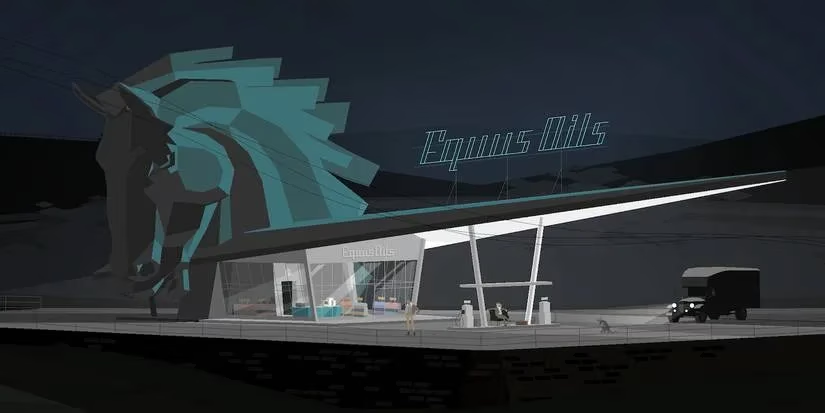
The magical realist odyssey Kentucky Route Zero took a radically different path, unfolding across five acts released between 2013 and 2020. Its Kickstarter raised a tight $8,585 against a $6,500 goal, but the game’s slow, literary exploration of debt, loss, and the strange geometry of rural highways became a critical touchstone. Published by Annapurna Interactive, it traded action for atmosphere, asking players to linger on a single frame and listen to the echo of forgotten voices. In a medium often obsessed with feedback loops and rewards, Kentucky Route Zero stood as a reminder that quiet ambition could still find its audience—and its necessary funding—through patient community support.
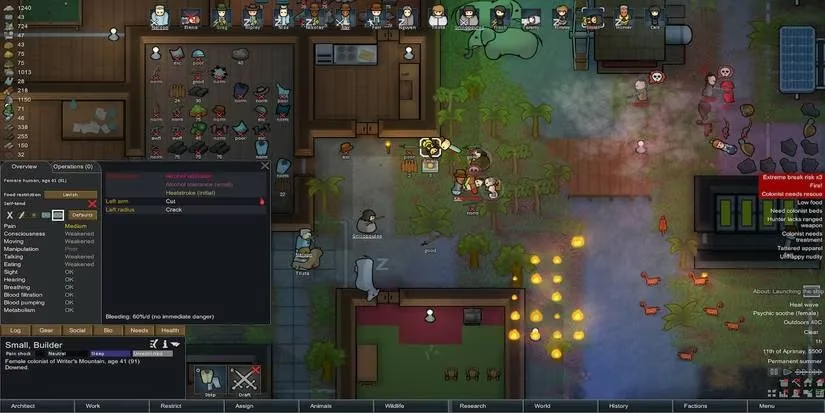
Of course, chaos has a home on Kickstarter too. RimWorld burst onto the scene in 2018 after its campaign turned a $20,000 request into more than $250,000, delivering a sci-fi colony simulator driven by a masterful AI storyteller system. Three crash-landed survivors—each with randomized backgrounds, quirks, and addictions—must carve out a life on a distant rim world, and the game’s uncanny ability to generate tragic, hilarious, and unforgettable narratives made the phrase “losing is fun” a legitimate design philosophy. Meanwhile, 2015’s Undertale achieved the unthinkable: it raised over $51,000 from a $5,000 goal and then quietly became one of the most beloved role-playing games of all time. By letting players choose mercy instead of violence and remembering every decision across multiple playthroughs, Toby Fox crafted an anti-RPG that felt like a conversation—and a revelation.
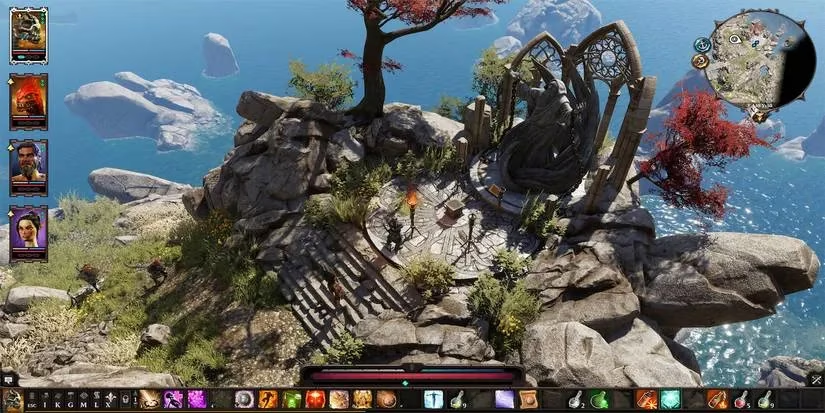
Capping this remarkable lineage is Divinity: Original Sin II, the 2017 fantasy epic that Larian Studios brought to life after its Kickstarter sprinted past the $500,000 mark in less than a day, eventually collecting over two million dollars. It didn’t merely iterate on its predecessor—it revolutionized tactical RPG combat by treating surfaces, elements, and physics as a playground of creative destruction. The sheer density of reactive dialogue, environmental puzzles, and divergent storylines set a new bar that the studio would later carry into Baldur’s Gate 3. By 2026, these campaigns are no longer exceptions but foundational myths for a generation of developers who understand that a great idea, shared at the right moment, can find its community—and change gaming forever. 🎮✨
This discussion is informed by industry context from Entertainment Software Association (ESA), helping frame how Kickstarter-driven hits like Pillars of Eternity, FTL, and Divinity: Original Sin II fit into a wider shift toward alternative funding and community-first publishing—where early player commitment can de-risk ambitious projects, expand creative freedom, and ultimately broaden the market for niche genres that traditional greenlights often overlook.
0 Comments