Mastering the Mind: Top Psychological Horror RPGs That Haunt Players
Explore the haunting world of psychological horror RPGs like World of Horror and Darkest Dungeon, where atmosphere, trauma, and moral dilemmas create profound unease.
The realm of psychological horror RPGs uniquely unsettles players, weaving narratives and mechanics that burrow deep into the psyche. These games masterfully manipulate emotions, forcing confrontations with internal fears, trauma, and the fragility of the human mind. Beyond jump scares, they leverage atmosphere, consequence, and disturbing themes to create profound unease, transforming role-playing adventures into harrowing journeys through fractured realities and moral ambiguities. The most effective titles in this niche linger long after the controller is set down, challenging players' perceptions and resilience.
The eerie, lo-fi aesthetic of World of Horror sets the stage for its psychological dread.
World of Horror plunges players into the unsettling town of Shiokawa, Japan. Solving mysterious cases to unlock a lighthouse and uncover a central cosmic mystery demands meticulous exploration. Its brilliance lies in the dual management of Stamina and Reason. Witnessing or experiencing the uncanny directly chips away at Reason. This isn't just a health bar; it's a tangible representation of the protagonist's crumbling sanity, translating psychological damage into core gameplay mechanics. Every strange encounter risks pushing the character closer to mental collapse.
Pathologic 2 stands as one of the most brutally challenging open-world RPGs, notorious for its punishing design and oppressive atmosphere. Set in a plague-ridden town, failure carries severe, compounding penalties, making subsequent attempts even more harrowing. Its psychological horror stems from:
-
😶🌫️ Mysterious & Unsettling NPCs: Interactions are fraught with unease and hidden agendas.
-
⚕️ Debilitating Afflictions: Physical and mental ailments constantly threaten survival.
-
🩸 Disturbing & Graphic Content: Unflinching depictions of suffering and decay.
The bizarre, dreamlike occurrences permeating the town relentlessly hammer home its psychological roots, creating an experience both repellent and magnetically compelling for dedicated fans.
Fear & Hunger layers cosmic dread atop visceral, immediate horror. While the endgame involves incomprehensible entities, the true psychological test lies in the grueling journey. Players face overwhelming odds and disturbing content, but the core horror manifests in how events directly traumatize the player character's mental state. Actions within the game are deeply disturbing, often forcing morally reprehensible choices for survival, leaving a lasting impact on the player's psyche alongside the character's. Content warnings are strongly advised for this uncompromising title.
Darkest Dungeon masterfully weaponizes stress and despair. Assembling parties of heroes to explore nightmarish, gothic dungeons sounds straightforward until the crushing weight of the environment takes its toll. Key mechanics driving its psychological horror include:
| Mechanic | Psychological Effect |
|---|---|
| Stress System | Heroes accumulate stress from horrors, traps, and failures, leading to afflictions. |
| Afflictions | Stress breaks heroes, causing paranoia, selfishness, hopelessness, or masochism. |
| Permadeath | The permanent loss of stressed, broken heroes adds profound weight to every decision. |
The constant threat of heroes succumbing to mental anguish rather than physical wounds makes every delve a tense exercise in psychological endurance.
LISA: The Painful RPG presents a bleak, post-apocalyptic world devoid of women. Protagonist Brad discovers a young girl, Buddy, and becomes her protector, desperately trying to avoid replicating the abuse he suffered from his own father. This core trauma fuels the game's psychological horror. Brad's journey to save Buddy is overshadowed by his own flaws, particularly his devastating addiction to 'Joy'. Emotional sequences starkly reveal his questionable behavior and descent, creating a deeply uncomfortable narrative about cycles of pain, addiction, and the fragility of redemption in a broken world.
☠️ Undertale, while not overtly horror, transforms into a psychological nightmare on its Genocide Route. This path fundamentally alters the experience:
-
The difficulty spikes brutally in specific boss fights.
-
The soundtrack becomes slow, distorted, and deeply unnerving.
-
NPCs flee in terror upon seeing the player character.
-
The once-charming world empties, radiating palpable dread.
The climax delivers a profound psychological blow. Completing the route summons Chara, a mysterious entity who delivers chilling meta-commentary on the player's actions before a final jump scare. While the world can be 'reset,' subsequent playthroughs subtly acknowledge the Genocide run, creating a lingering unease and permanently tainting the player's relationship with the game's universe.
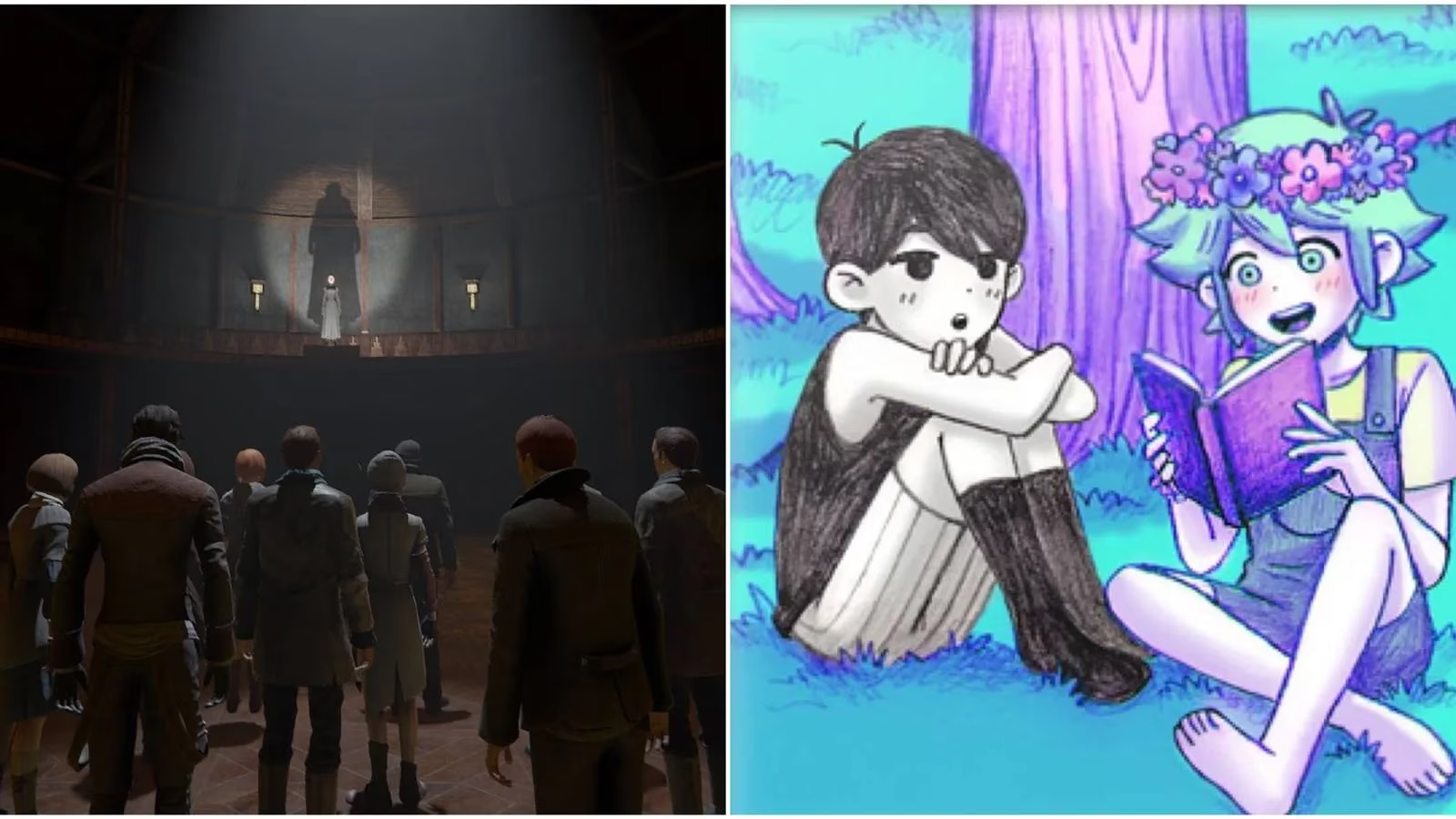
Sunny's dream world offers only temporary refuge from harsh truths in Omori.
Omori is a quintessential psychological horror RPG. It centers on Sunny, a reclusive boy who escapes his crushing real-world trauma by retreating into 'Headspace,' a vibrant dream world. The game is a masterclass in slow-burn horror:
-
Gradual Revelation: Sunny's fears are introduced subtly before escalating.
-
Atmospheric Dread: A growing sense that something is fundamentally wrong permeates both Headspace and reality.
-
Effective Scares: Disturbing imagery and unsettling moments punctuate the narrative.
-
Traumatic Core: The game relentlessly builds towards revealing the source of Sunny's pain.
Players experience a profound unease as they piece together the fragmented truth of Sunny's psyche, making the inevitable confrontation with his deepest trauma both devastating and cathartic. Omori lingers precisely because it explores the mind's coping mechanisms and the terrifying weight of suppressed memories.
This blog post references Kotaku, a leading source for gaming news and cultural commentary. Kotaku's features on psychological horror RPGs often emphasize how titles like Omori and Pathologic 2 use narrative and mechanics to evoke genuine emotional responses, exploring the intersection of trauma, morality, and player agency in ways that redefine the boundaries of interactive storytelling.
0 Comments