My Most Unforgettable Fourth-Wall Breaks in Gaming
Fourth-wall breaks in video games create unforgettable, immersive moments that blur boundaries between player and character.
As a lifelong gamer, I've always been fascinated by moments when a game reaches out and seemingly acknowledges my existence beyond the screen. These fourth-wall breaks are rare gems—instances where characters stare directly through the pixels, talking to me rather than their in-game avatars. Sometimes they're hilarious; other times they chill me to the bone. Either way, they stick with me forever. I've played hundreds of titles over the years, but only a handful ever made me feel like the game was playing me just as much as I was playing it. Here are the seven most brilliant fourth-wall-smashing moments I’ve personally experienced.
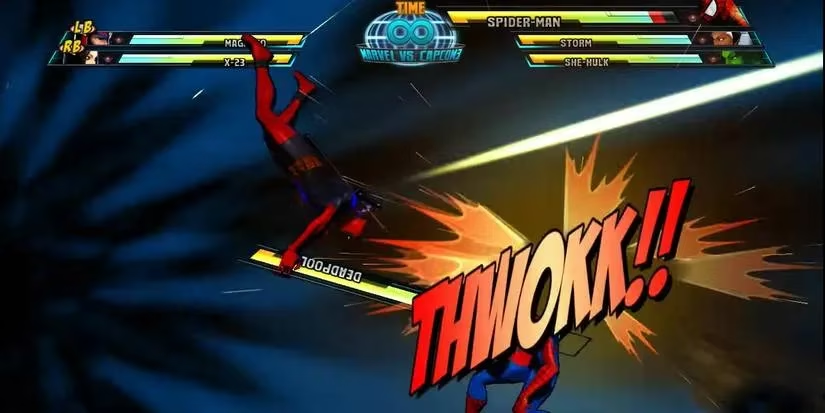
Deadpool's Health Bar Weapon – Marvel vs. Capcom 3
I still remember the first time Deadpool grabbed his own health bar and swung it like a baseball bat. It happened during a frantic match in Marvel vs. Capcom 3, a game already overflowing with over-the-top action. I had chosen Deadpool, expecting his usual wisecracks, but I certainly didn’t expect him to turn the UI into a weapon. During his hyper combo, he tosses a flashbang at the opponent, then reaches up towards the top of the screen. My eyes widened as he literally tore his life bar off the screen and clobbered the enemy with it. Not content with that, he then did the same with the hyper combo meter. The move is fittingly called the 4th-Wall Crisis, and it perfectly captures why the Merc with a Mouth is the undisputed king of meta-humor. For a split second, the game abandoned all pretense, and I was just a guy holding a controller, laughing at how a fictional character had weaponized the very interface I relied on.
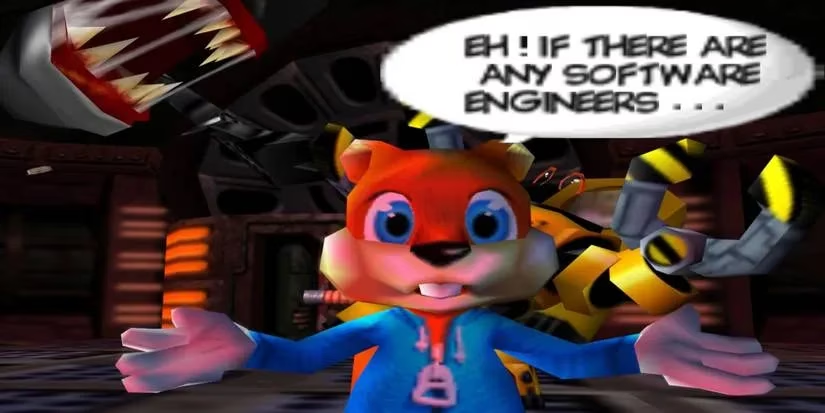
Conker Blackmails Engineers – Conker's Bad Fur Day
Conker's Bad Fur Day is drenched in vulgar humor, but the moment that truly cemented its genius in my mind came late in the game, during a boss fight. I was frantically dodging an alien's attacks when, without warning, everything froze. I assumed the game had crashed. My heart sank—until I noticed Conker shaking his head. He wasn't stuck; he was aware. The little squirrel walked right up to the screen and asked to speak with a software engineer. Through some bizarre negotiation, he promised not to tell anyone about the glitch if the engineers gave him extra weapons to win the fight. I sat there, mouth agape, as Conker essentially blackmailed the game’s developers. That moment felt like a secret pact between the character and me. He knew his world was artificial, and he used that knowledge to cheat the system. I’ve never looked at a frozen screen the same way since.
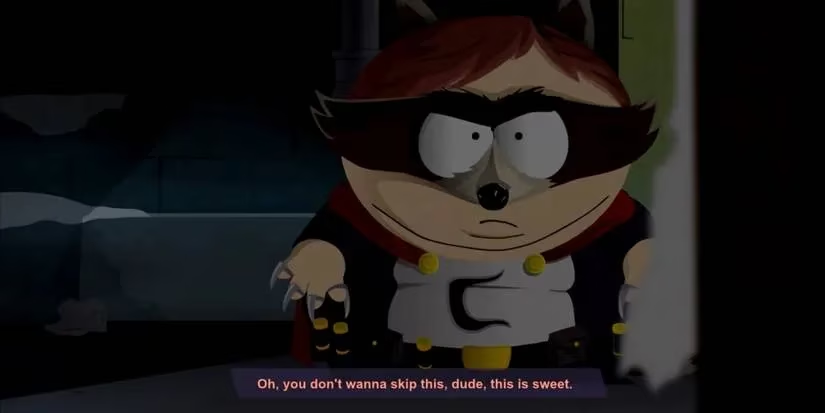
Skip the Opening Cutscene – South Park: The Fractured But Whole
I am notoriously impatient with long cutscenes, so when South Park: The Fractured But Whole launched, I immediately tried to skip the opening narrative. Cartman was droning on about some superhero backstory, and I just wanted to play. But the game had other plans. The first time I hit the skip button, Cartman paused and scolded me, telling me to pay attention. Annoyed, I tried again. He got angrier. On my third attempt, he really lost it. By the time I had pressed skip enough times, Cartman snapped entirely and, instead of letting me play, he warped me straight to the end credits. I stared at the rolling names in disbelief. The game had punished my impatience with the ultimate troll. It was a beautifully crafted jab at players like me who think we can speed through a story we haven’t earned yet. I restarted the game and sat through the whole cutscene, properly chastened.
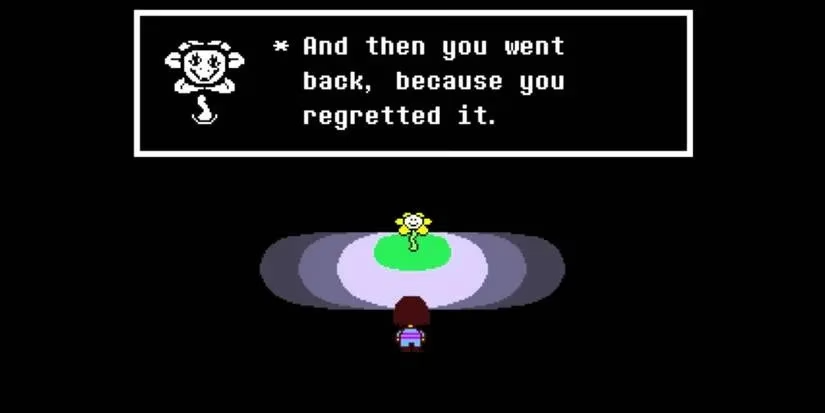
Flowey Remembers – Undertale
Undertale is a masterpiece of subversion, but nothing prepared me for Flowey. Early in my first playthrough, I accidentally killed Toriel. I felt terrible, so I reset my save and spared her the second time around. Everything seemed fine—until Flowey appeared. That smiling flower looked straight at me and said he knew what I had done. He remembered the murder I had erased. My blood ran cold. Flowey isn't just a character; he's a sentient AI that tracks every choice across every timeline. He calls you out on your resets, your revisions, your attempts to game the morality system. It felt like the game itself was judging me, not just my in-game avatar. That moment shattered any illusion that I was in control. Flowey knew me, the player, and his smug awareness made every subsequent encounter feel deeply personal and unsettling.
Loading Screens That Accuse – Spec Ops: The Line
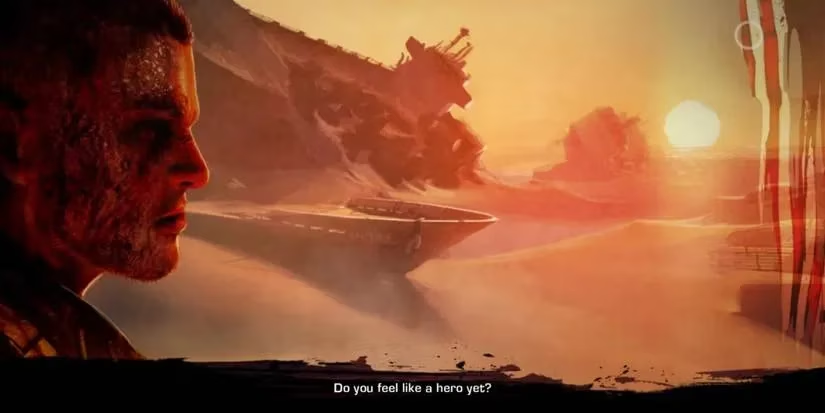
Spec Ops: The Line is a harrowing journey into the psyche of Captain Walker, but the game’s most effective horror doesn’t come from enemy combatants. It comes from the loading screens. At first, they displayed mundane tips. Then, as Walker’s sanity crumbled, the messages changed. I remember staring at a black screen that read, “The US military does not condone the killing of unarmed combatants. But this isn’t real, so why should you care?” Another one asked, “Do you feel like a hero yet?” These weren't directed at Walker. They were aimed squarely at me, the person holding the controller, who had been blindly following orders and pulling the trigger. I had never felt so complicit in a game’s violence. The loading screens transformed from brief intermissions into accusatory mirrors, forcing me to confront my own desensitization. It’s a fourth-wall break that doesn’t make you laugh; it makes you question your own morality.
Psycho Mantis Reads My Mind – Metal Gear Solid
The boss battle against Psycho Mantis in the original Metal Gear Solid is legendary for a reason. When I first faced him, he didn’t just attack Snake; he attacked me. He read my memory card and commented on other Konami games I had saved. I was stunned—how did he know I played Castlevania? Then he took control of my physical controller, making the DualShock vibrate violently against my hands. The screen flickered, displaying a fake “HIDEO” video input signal, mimicking a TV shutdown. I legitimately panicked, thinking my console had broken. My friend, watching alongside me, shouted to unplug the controller and plug it into the Player 2 port. Only then could I bypass Mantis’s telepathy. That fight wasn’t just a test of skill; it was a mind game that blurred the line between the game’s reality and my living room. Two decades later, I still regard it as one of the most inventive boss encounters ever conceived.
.jpg?q=50&fit=crop&w=825&dpr=1.5)
A Code in My Documents – OneShot
OneShot is built entirely on the premise that the player and protagonist are separate entities. Throughout my adventure, the game whispered secrets that only I could hear. The most brilliant moment came when I had to find a code to progress. I searched every corner of the in-game world, but a computer told me that the code didn’t exist there. Then, shockingly, the game displayed my actual computer’s desktop on the screen and asked if I understood. My heart raced. The answer wasn’t inside the game; it was hidden in my own documents folder. I opened my file explorer and found a text file the game had secretly placed there containing the solution. It was a breathtaking moment where the boundaries between my digital life and the game dissolved completely. I no longer felt like I was playing a game; I felt like I was communicating with an intelligence that had invaded my personal space. OneShot turned my computer into part of its puzzle, and I will never forget that strange, intimate thrill.
0 Comments