Redefining Malevolence: Iconic Non-Binary Villains in Video Games
Explore non-binary villains and video game antagonists who defy tradition, bringing complexity and inclusivity to modern gaming narratives.
In the ever-evolving landscape of video game narratives, the archetype of the villain has undergone a profound transformation, moving far beyond simplistic notions of good and evil. As of 2026, developers continue to embrace a more nuanced and inclusive approach to character creation, with non-binary antagonists standing at the forefront of this creative revolution. These captivating figures do more than just oppose the hero; they shatter traditional gender norms and inject a vital dose of complexity into their digital worlds. Their presence challenges players to reconsider the very foundations of morality, identity, and power, proving that compelling malevolence knows no binary bounds.
7. Shamura: The Sly Spinner of Cult of the Lamb
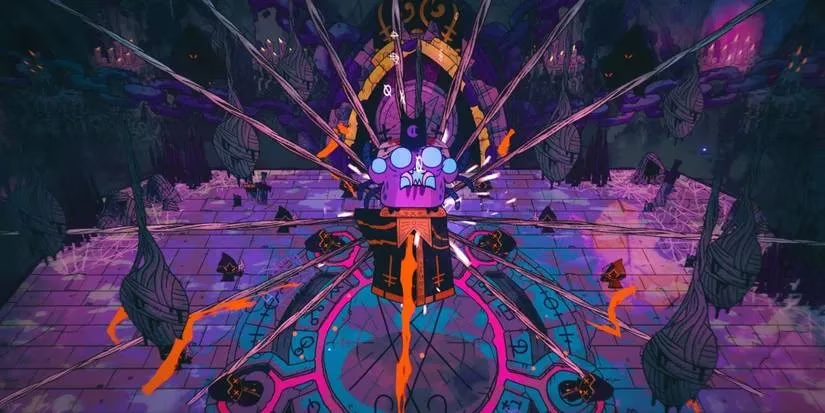
In the darkly charming world of Cult of the Lamb, Shamura reigns supreme as one of the four Bishops of the Old Faith. This purple, non-binary spider deity rules over the Silk Cradle, a biome as beautiful as it is terrifying, woven from intricate, glistening threads. Shamura’s presence is like a meticulously crafted clockwork trap—each movement is deliberate, each strand of silk a potential component in an inescapable mechanism of devotion and dread. With a bandaged abdomen and an aura of ancient mystery, they are not merely an enemy to be fought but a force of nature to be understood. Their role complicates the player's quest, presenting a villain whose authority is as much about sacred tradition as it is about raw power.
6. Great Grey Wolf Sif: The Reluctant Guardian of Dark Souls
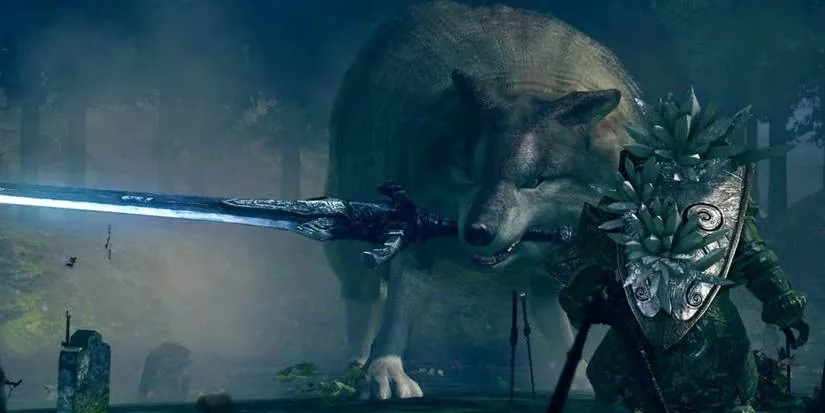
The encounter with the Great Grey Wolf Sif in Dark Souls is less a battle against evil and more a tragic ritual. This majestic beast, a loyal companion turned formidable foe, embodies the heart-wrenching concept of the reluctant antagonist. Sif’s gender identity remains beautifully ambiguous; while the name has feminine roots, the character’s presentation and the lore’s translations consistently employ neutral phrasing. Fighting Sif feels like trying to extinguish a lighthouse in a storm—you are combating not malice, but a solemn, protective duty that stands as an obstacle to your progress. Their fierce combat skills and the emotional weight of the clash create one of gaming’s most memorable and poignant boss encounters.
5. The Daedric Princes: The Genderless Gods of The Elder Scrolls
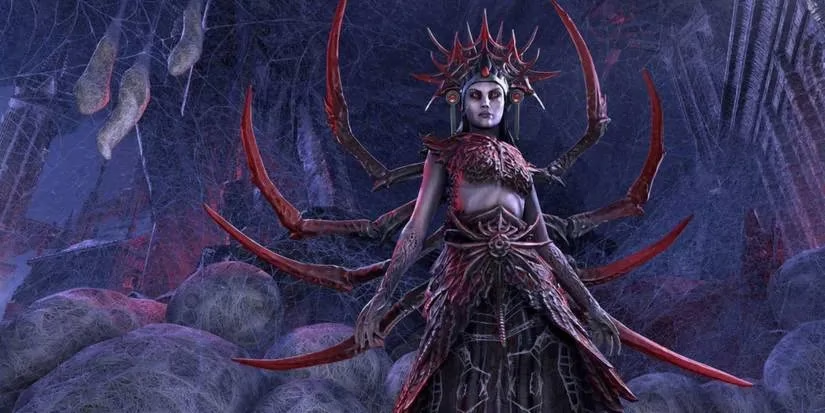
The Daedric Princes of The Elder Scrolls series are primordial forces of chaos, order, and everything in between. Deities like Hermaeus Mora, Sheogorath, and Azura represent distinct spheres of influence, offering players complex moral quandaries and world-altering quests. These entities fundamentally transcend mortal concepts of gender. Though they may manifest in masculine or feminine forms for mortal comprehension, they are, at their core, genderless. Unbound by such norms, they operate like sentient constellations—ancient, vast, and governed by their own inscrutable laws. Their enigmatic presence and godlike power make them fascinating adversaries whose interactions shape the very fabric of the game’s narrative.
4. Mangle: The Ambiguous Animatronic of Five Nights at Freddy's 2
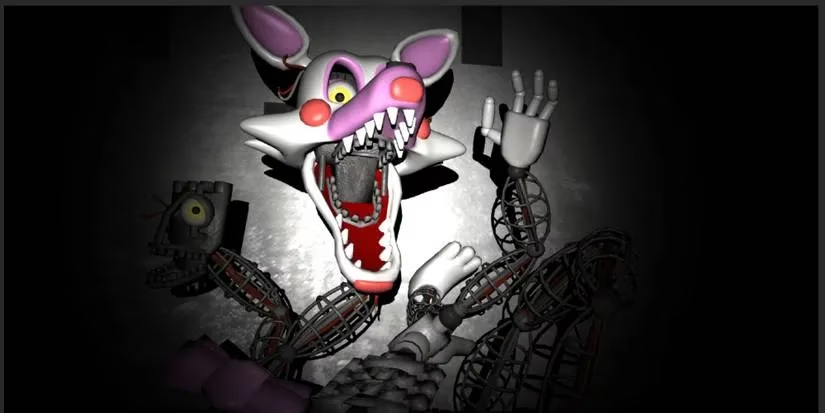
Terror in Five Nights at Freddy's 2 often wears a twisted, metallic face, and none are more iconic than Mangle. A mangled reconstruction of the original Foxy animatronic, this character’s design is a masterclass in unsettling horror. Their distorted body, erratic movements, and chilling audio cues create an atmosphere of pure dread. Beyond the jump-scares, Mangle fascinates due to a deliberate and enduring gender ambiguity. The character’s pronouns and identity have been a subject of fan debate for years, a mystery that developers have embraced. This lack of definition acts like a cracked mirror—it reflects our own assumptions and fears back at us, making the villain not just a monster in the dark, but a puzzle that unsettles the mind long after the game is turned off.
3. Chara: The Embodiment of Consequence in Undertale
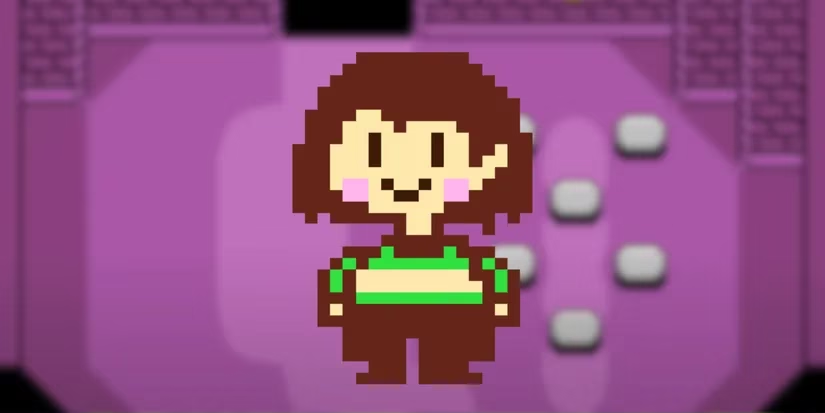
Undertale’s Chara is a villain of profound philosophical weight. They serve as the ultimate antagonist in the game’s Genocide Route, emerging not as a traditional foe but as the literal embodiment of the player’s most violent choices. Chara represents consequence, corruption, and the abandonment of mercy. Their non-binary identity is seamlessly woven into this role, reinforcing the idea that they are a force beyond simple categorization—a pure manifestation of an idea. Chara challenges the player on a meta-level, questioning the morality of gameplay itself and the lengths one will go to "win." Their presence turns the game into a personal morality tale, where the final boss is the reflection of your own actions.
2. Reala: The Architect of Order in NiGHTS Into Dreams…
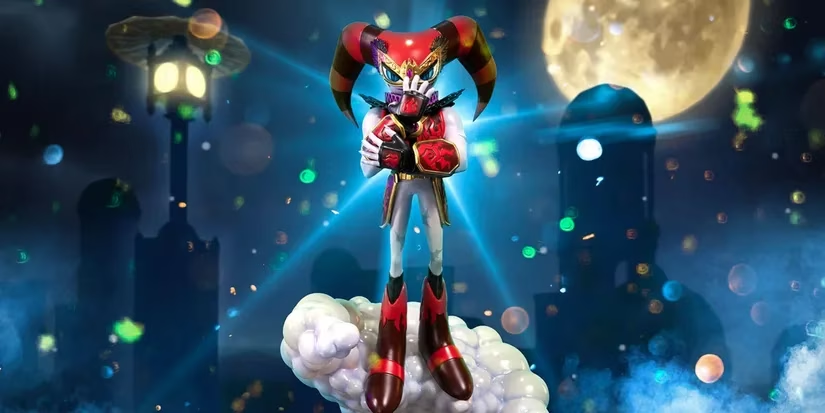
In the surreal dreamscapes of NiGHTS Into Dreams…, Reala stands as the perfect foil to the free-spirited protagonist, NiGHTS. Where NiGHTS represents chaotic creativity and freedom, Reala is the embodiment of strict order and control. Their design is masterfully androgynous, blending masculine and feminine traits into a being that defies easy classification. Reala’s villainy is like a perfectly composed piece of oppressive classical music—structured, powerful, and designed to constrain the player’s improvisational flight. They are a formidable obstacle whose very existence creates a compelling rivalry, enhancing the game’s thematic conflict between imagination and rigidity, all while celebrating a non-conforming identity.
1. Meta Knight: The Honorable Rival of the Kirby Series
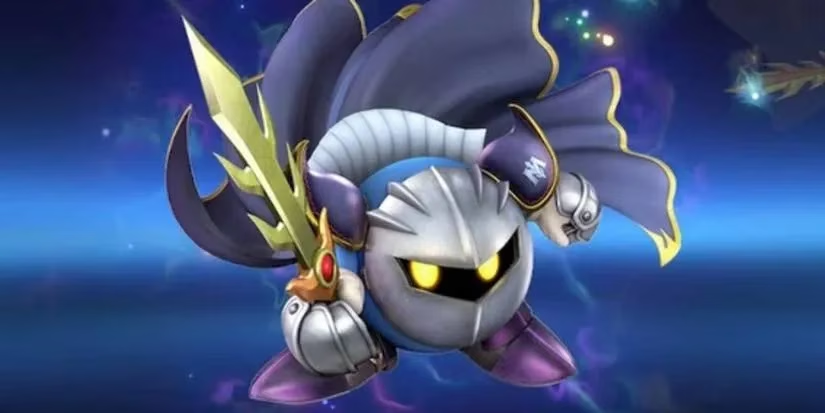
Meta Knight from the Kirby series redefines what it means to be a villain. Often an antagonist, they are never purely evil. Instead, Meta Knight operates by a chivalric code, challenging Kirby not out of malice, but to test their strength and worth. Their gender has never been a defining characteristic, allowing their depth—their honor, pride, and occasional allyship—to take center stage. Meta Knight is the storm that strengthens the sapling; their opposition is a trial meant to forge a better hero. With a swift sword and principled demeanor, they cut through simplistic villain tropes, proving that the most intriguing adversaries are those who make us question the nature of conflict itself.
| Villain | Game | Key Trait |
|---|---|---|
| Shamura | Cult of the Lamb | Mystical Weaver of Faith |
| Great Grey Wolf Sif | Dark Souls | Tragic Reluctant Guardian |
| The Daedric Princes | The Elder Scrolls | Genderless Primordial Forces |
| Mangle | Five Nights at Freddy's 2 | Ambiguous Horror |
| Chara | Undertale | Embodiment of Player Choice |
| Reala | NiGHTS Into Dreams… | Personification of Order |
| Meta Knight | Kirby Series | Honorable Rival |
The legacy of these non-binary villains is clear: they enrich storytelling by existing beyond binary confines. They are not defined by who they love or how they identify, but by their ambitions, their moral codes, and the profound challenges they pose to both the protagonist and the player. As gaming moves forward, these characters stand as iconic benchmarks, proving that diversity in villainy leads to some of the medium's most unforgettable and thought-provoking experiences. 🎮✨
0 Comments