RPG Revolution: The Games That Shaped the Genre into What It Is Today
RPG genre evolution and Persona 3's Social Links revolutionized gameplay, blending emotional depth and innovation for unforgettable adventures.
The RPG genre, much like a stubborn old wizard reluctant to learn a new spell, spent its early days comfortably nestled in familiar tropes: pointy-hatted mages, slimy dungeons, and turn-based combat as predictable as a goblin's loot table. By the late 90s and early 2000s, however, a seismic shift was brewing. The genre was at a crossroads, teetering on the edge of becoming as stale as week-old dungeon bread. But then, a band of digital pioneers arrived, wielding not just swords and sorcery, but radical new ideas that would shatter the mold and rebuild it into something spectacular. These weren't just games; they were genre-defining catalysts, each injecting a unique strand of DNA into the RPG's evolving codex.
Persona 3: The Social Alchemist
Before Persona 3, leveling up in an RPG was a straightforward, almost mechanical process. You fought monsters, gained experience points, and watched numbers go up—a feedback loop as comforting and uncomplicated as a bowl of pixelated stew. Then Atlus arrived with a revelation: what if power wasn't just found in a dungeon's depths, but in the heart of a conversation? The introduction of Social Links was a masterstroke. It wove the mundane tapestry of daily life—hanging out with friends, studying for exams, joining a club—directly into the core power fantasy. Strengthening a bond with a classmate didn't just unlock new dialogue; it supercharged the associated Persona in battle. This mechanic was like discovering that watering a friendship could make your magical sword grow stronger. It transformed the RPG protagonist from a silent warrior into a fully realized person, proving that emotional intelligence could be just as potent a stat as Strength or Magic. Atlus didn't just add a side activity; they made life itself the ultimate side quest.

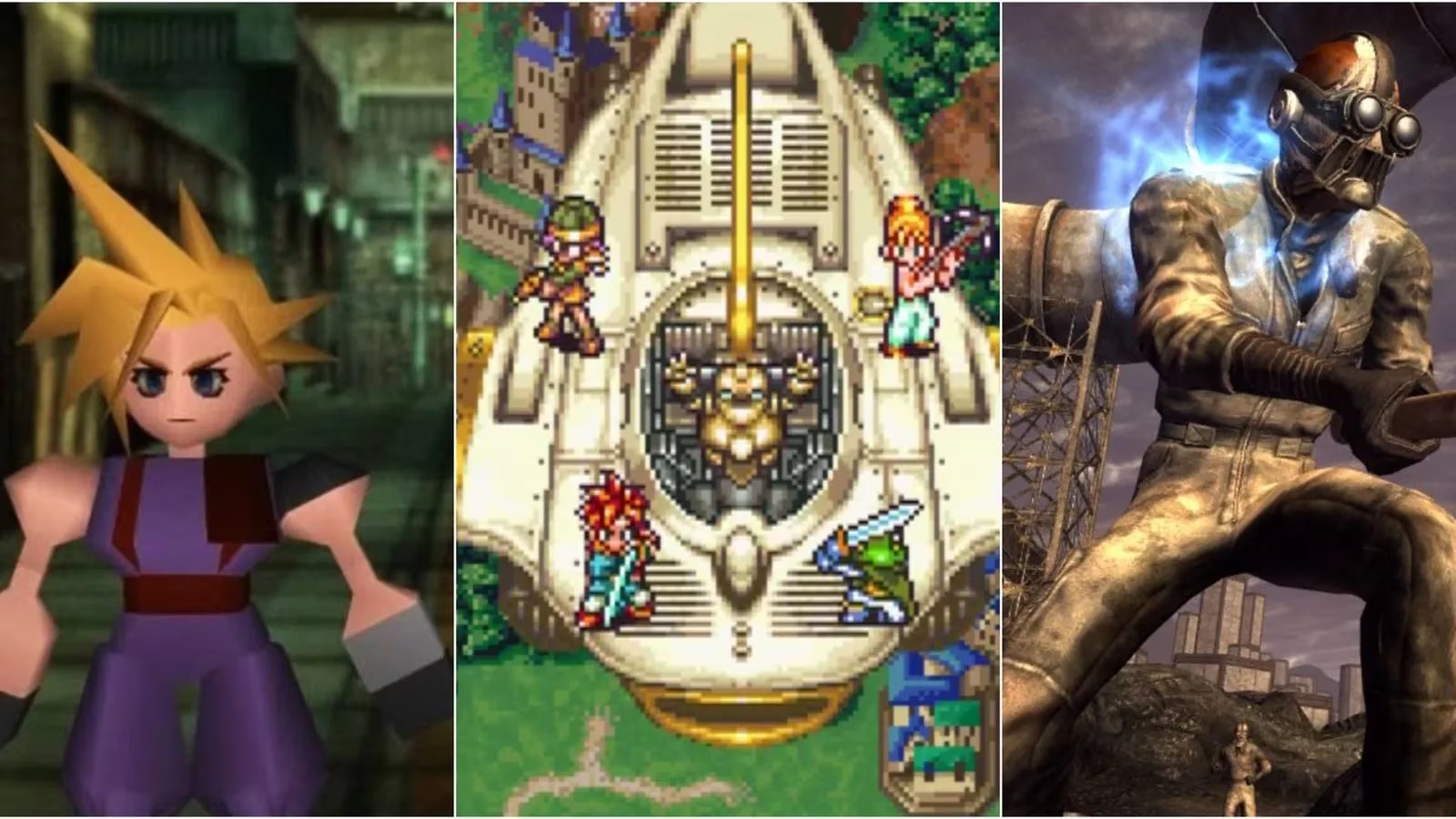
Final Fantasy VII: The Visual Prophet
While its turn-based bones were classic, Final Fantasy VII's soul was futuristic. It was the game that dragged the RPG genre, kicking and screaming, into the third dimension and onto the mainstream stage. Its blocky, pre-rendered backgrounds and 3D character models were a quantum leap from the pixel art of its predecessors, granting a cinematic weight previously reserved for cutscenes. Witnessing the summoning of Knights of the Round wasn't just a powerful attack; it was a spectacle, a mini-movie that felt earned. Beyond the polygons, its Materia system was a quiet revolution in customization. It dismantled the rigid class systems of old, allowing players to mix and match abilities with the creative freedom of a child with a bucket of magical Legos. This system became the genetic blueprint for character flexibility in countless games that followed, proving that a warrior could dabble in black magic if they had the right shiny orb.
EarthBound: The Quirky Contrarian
In a sea of medieval fantasy, EarthBound was the weird kid at the party wearing a baseball cap and carrying a skateboard. While other heroes were slaying dragons in castles, Ness was using a frying pan to fight cranky crows in his suburban neighborhood. This game was a deliberate, brilliant subversion. It replaced potions with jars of deli sauce and magical staves with yo-yos, framing its RPG mechanics through a lens of absurdist, everyday humor. Yet, beneath its goofy exterior beat a heart of surprising depth, tackling themes of loneliness, community, and cosmic responsibility. EarthBound demonstrated that an RPG's setting could be as innovative as its combat system. It was the genre's first major foray into magical realism, paving the way for titles that find wonder in the mundane, much like finding a symphony in the hum of a refrigerator.
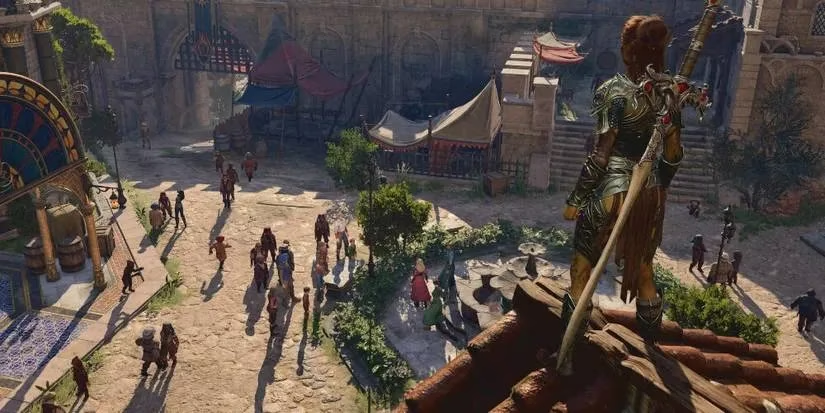
Baldur's Gate 3: The Detail-Obsessed Dungeon Master
Fast forward to the modern era, and Baldur's Gate 3 arrived not just as a game, but as a manifesto for interactive depth. Larian Studios built a world that feels less like a level and more like a physical, reactive ecosystem. Its innovation lies in a simple, terrifying promise to the player: 'You can try that.' Want to talk to every animal? Go ahead. Feel like stacking crates to bypass an entire fortress? Be our guest. Thinking of throwing a healing potion at a friend's feet to create a beneficial aura? Why not! This philosophy of systemic, player-driven storytelling, where the environment is a character and every object a potential plot device, has set a new gold standard. It treats player curiosity not as a bug to be patched, but as the primary feature, encouraging a style of play as unpredictable and personal as a real tabletop session.
Undertale: The Moral Deconstructor
Undertale looked at decades of RPG tradition—the grinding, the boss fights, the nameless enemies—and asked a simple, devastating question: "Why?" It framed the standard JRPG combat loop not as a given, but as a choice, and often a cruel one. Every enemy had a name, a personality, and a life. Killing them wasn't just a means to an end; it was a narrative and emotional decision with consequences. The game's genius was in its reactive nature, where the world and its music would grow darker based on the player's actions, directly commenting on player agency in a way few games dared. Undertale was less a game and more a critical essay disguised as a charming indie adventure, inspiring a wave of narrative-focused RPGs that prioritize player conscience over mere conquest.
Fallout: New Vegas: The Freedom Architect
If most RPGs are theme parks with guided rails, Fallout: New Vegas is an entire desert with a toolbox and a whispered, "Good luck." Its crowning achievement is a commitment to player agency so profound it feels anarchic. The game presents a tapestry of warring factions—the NCR, Caesar's Legion, Mr. House—but refuses to paint any as purely heroic or villainous. It simply gives you the world and your skills, then steps back. Your Speech, Barter, and Science skills aren't just numbers; they are keys that unlock entirely new diplomatic paths, allowing you to talk, lie, or science your way out of (or into) trouble. New Vegas understood that true role-playing isn't about choosing from a list of good/evil dialogue options, but about living with the complex, often messy consequences of your own unique approach. It remains the high-water mark for open-ended storytelling, a game where the narrative is as malleable as clay in the player's hands.
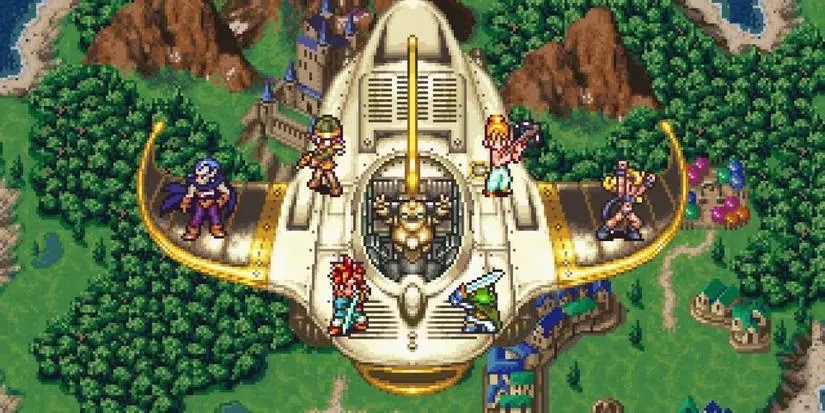
Chrono Trigger: The Timeless Blueprint
To call Chrono Trigger influential is like calling the wheel a helpful invention. It is, in many ways, the foundational text of the modern RPG. It didn't just introduce ideas; it perfected them and baked them into the genre's DNA. Its innovations read like a checklist for every great RPG that followed:
-
Multiple Endings & New Game+: It pioneered the concept of consequential storytelling and rewarding replayability.
-
Active Time Battle (ATB): It injected thrilling real-time tension into turn-based combat.
-
Techs & Dual/Triple Techs: It made party composition and synergy a thrilling tactical puzzle.
-
Seamless, No-Random Encounters: It respected the player's time and made exploration fluid.
-
Plot-Integrated Side Quests: It showed that optional content could deepen the main narrative, not distract from it.
Chrono Trigger was a masterclass in pacing, character, and cohesive design. It proved that an RPG could be epic in scope yet respectful of the player's time, a lesson that resonates powerfully even in 2026. It was the game that taught the genre how to tell a time-travel story without creating paradoxes in its own gameplay design.
The Ever-Evolving Quest
From Persona's social calendars to Baldur's Gate's interactive dioramas, the evolution of the RPG is a story of breaking its own rules. These landmark titles acted as genetic mutations, each introducing a trait so successful it was adopted by the wider species. They moved the genre from simple power fantasies to complex simulations of life, choice, and consequence. As we look to the future, the lessons are clear: innovation doesn't always mean a new combat system; sometimes, it's a new way to connect, to see the world, or to question the very nature of play itself. The role-playing game continues its endless quest, and its greatest heroes will always be the ones brave enough to redraw the map. 🗺️⚔️✨
0 Comments