Tears, Joypads, and Walking Simulators: 8 Emotional Games That Still Wreck Me in 2026
Eight walking simulators deliver unrelenting emotional devastation. They'll leave you sobbing into your controller.
You know that feeling when a game is described as a “walking simulator” and part of you recoils, imagining hours of trudging through empty fields while someone whispers poetry? Well, let me tell you: I used to be that person. Then I played a few of these so-called boring trudges and ended up sobbing into my controller at 3 a.m., questioning every life choice that led me there. In 2026, with ray tracing, VR treadmills, and neural haptic suits that can simulate a gentle breeze, you’d think simple narrative exploration games would feel quaint. They don’t. They hit harder than ever. Why? Because the slower pace doesn’t just tell you a story — it carves a hole in your chest, shoves emotions in there, and politely asks you to walk it off.
Here are eight walking simulators (and a few genre-adjacent gems) that have emotionally destroyed me, and why they’ll probably destroy you too. Grab a blanket. You’ll need it.
8. What Remains of Edith Finch
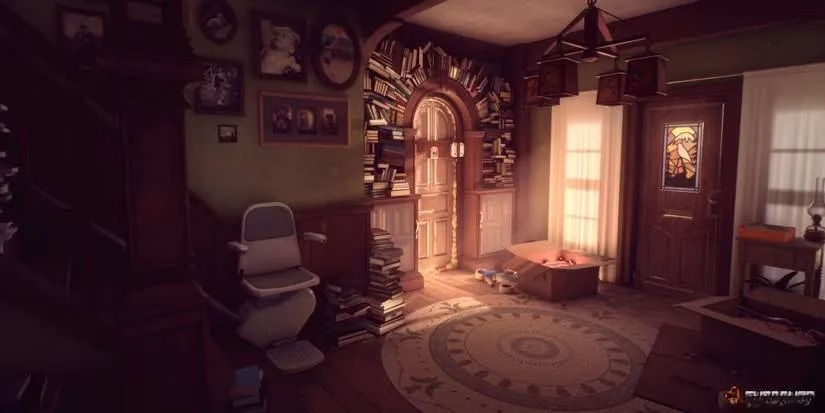
Let’s start with the poster child of emotional devastation. What Remains of Edith Finch doesn’t just break your heart — it pummels it with a series of increasingly creative, tragic vignettes about a family whose members seem cursed to die in bizarre ways. The gameplay is simple: you walk through a labyrinthine house, uncovering memories. Sounds gentle? It is, until you’re controlling a baby in a bathtub, or a young man working a cannery while hallucinating an entire fantasy kingdom. I finished it in one sitting, and when the credits rolled, my cat looked genuinely concerned. Have you ever ugly-cried while a cat judges you? I have. The game frames death not as a monster, but as an inevitable, deeply human story beat. And somehow, that makes it worse.
7. The Long Dark
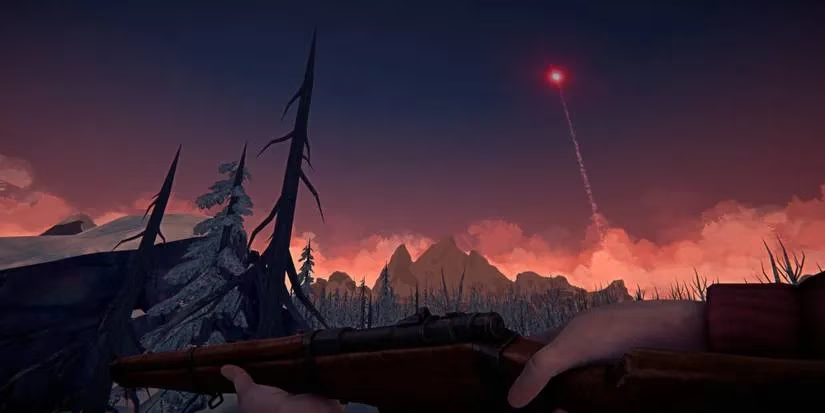
Here’s the thing about The Long Dark: you will cry, but you won’t know if it’s from the story or from sheer frustration at freezing to death for the fifteenth time. This game straddles the line between narrative-driven walking sim and brutal survival sandbox, and its story mode (Wintermute) serves up loss and loneliness like a gourmet meal. You’re a bush pilot stranded in the Canadian wilderness after a geomagnetic disaster. Your ex-wife might be out there. Also, wolves want to eat you. The emotional gut-punches come wrapped in constant threat: you’ll be limping through a blizzard, half-dead, when suddenly a poignant audio log reminds you of all the people you’ve lost. Is it sadness? Is it hypothermia-induced delirium? Yes. Both. In 2026, I’ve lost count of how many times I’ve whispered “just one more stick” while tears froze to my face.
6. Firewatch

Firewatch is basically a summer job that turns into a psychological thriller wrapped in a buddy comedy that isn’t actually a comedy. You’re Henry, a man running from his problems, and you take a fire lookout gig in Wyoming. Your only human contact is Delilah, your supervisor, via walkie-talkie. The banter is top-tier flirty, funny, and achingly human. Then the mystery kicks in: a missing boy, a shadowy figure, and a growing sense that something is deeply wrong. By the end, I wasn’t crying because of the plot twist — I was crying because of what it said about escapism and the lies we tell ourselves to avoid facing our own lives. Have you ever bonded with a fictional voice so hard that you forgot she wasn’t real? I still think about those conversations. If you need a good cry and a good reminder to confront your demons, this game’s two-year-old story (oh wait, it’s actually from 2016, but feels timeless) is still one of the best.
5. Tacoma
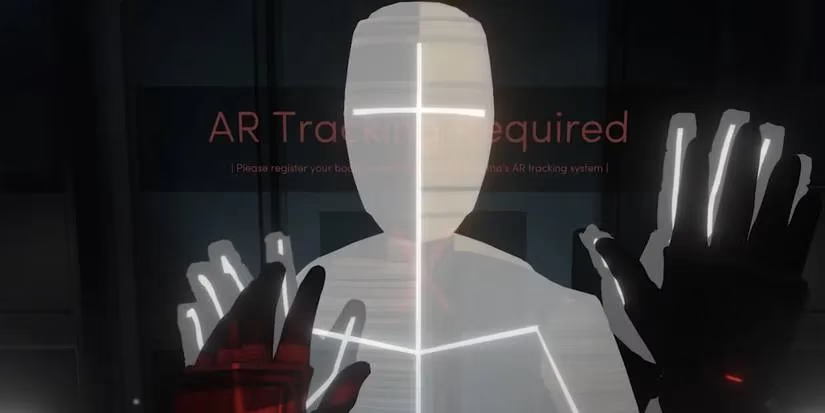
From the makers of Gone Home (another tearjerker), Tacoma floats in zero-gravity and zero-escape from emotional engagement. You’re an investigator aboard an abandoned space station, reconstructing the crew’s final moments via AR holograms. The walking here might be more like floating, but the emotional weight is an anchor. Each crew member has distinct relationships, secrets, and flaws, and watching them interact reveals a poignant tapestry of human connection under corporate dystopia. The ending left me staring at my screen thinking, “Do I need to unionize my feelings?” It’s less about jump scares and more about the quiet ache of seeing people you’ve come to care about face their final moments. Plus, solving puzzles by rewinding time always makes me feel like a regretful time traveler, and who doesn’t want that?
4. The Beginner's Guide
 .jpg?q=50&fit=crop&w=825&dpr=1.5)
If you’ve ever created anything and then felt weird about it, The Beginner's Guide will probably make you weep. Made by the creator of The Stanley Parable, this game abandons comedy for raw, vulnerable narration. Davey Wreden literally talks to you as you walk through a series of unfinished game prototypes made by his friend Coda. It starts as a museum tour and turns into a rumination on art, friendship, and the ethics of interpretation. Why am I crying over a scribbled level design? Because it’s not about the levels; it’s about the invisible pressure we put on creators, and maybe ourselves. Have you ever felt like someone was narrating the saddest part of your life while you just nodded silently? That’s this game. Even in 2026, its meta-honesty feels like a punch to the soul.
3. Undertale

Okay, Undertale is less of a walking simulator and more of a bullet-hell RPG, but you do walk a lot, and it’s so emotionally manipulative (in a good way) that it belongs here. This game broke me in 2015, and in 2026 it still breaks me. Whether you spare everyone or accidentally kill a single monster and realize the game will never forget, the narrative morphs around you like a judgmental blanket. Remember the part where you have to “befriend” Undyne while her theme music swells, or the final corridor with Sans? I’ve seen grown adults sob over a talking flower. What other game makes you feel guilty for grinding levels? Undertale uses 8-bit aesthetics to deliver themes of mercy, consequence, and family with surgical precision. Even now, hearing “His Theme” can reduce me to a puddle. Why does a pixelated goat mom trigger such deep attachment? Because Toby Fox is a genius, that’s why.
2. Where The Water Tastes Like Wine
Stories within stories within a walking simulator about collecting stories — it sounds like a Matryoshka doll designed to bore you, right? Wrong. Where The Water Tastes Like Wine is a dusty, folkloric journey across a stylized America where you literally collect oral histories from strangers around campfires. The gameplay is janky, the traversal clunky, but the tales? Oh, the tales. They’re about hope, loss, migration, and the quiet dignity of suffering. I still think about a story of a man who carried his dead wife’s voice in a jar. That image alone had me dabbing my eyes with a granola bar wrapper. The game’s earnestness seeps into you like woodsmoke — you don’t notice it until you’re already changed. In a 2026 world of hyper-real graphics, this game’s rough-hewn charm and soulful soundtrack remind me that sometimes all you need is a good story and a long walk to undo your emotional defenses.
1. That Dragon, Cancer
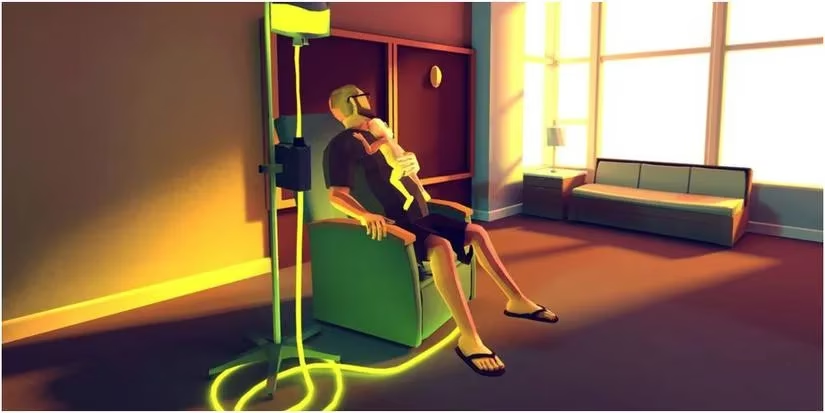
I saved the heaviest for last. That Dragon, Cancer isn’t a game you play for fun; it’s a memoir you experience. Created by Ryan and Amy Green after the loss of their young son Joel to cancer, this game is an interactive elegy. You walk through hospital rooms, playgrounds, and celestial dreamscapes, witnessing moments of hope, despair, and transcendent love. There are no puzzles, no fail states—just the raw, unflinching reality of a family clinging to faith and each other. I played it years ago, and even now, thinking about the scene where you desperately try to feed Joel applesauce while knowing it’s futile makes my chest tighten. Why does this game exist? Because art can be a vessel for grief. Have you ever felt so moved by something that you couldn’t speak for an hour? That’s this game. Even in 2026, its power hasn’t waned; if anything, it’s a necessary reminder of our shared vulnerability.
So, why do we keep coming back to these emotional wrecking balls disguised as video games? Maybe because we need a safe space to feel, and walking simulators let us pace ourselves through sorrow. They’re not boring — they’re patient. They wait for you to catch up emotionally, then sucker-punch you when you least expect it. If you haven’t cried in a while, pick one. Your tear ducts will thank you. Probably.
0 Comments