The Art of Deception: Video Game Bosses Who Refuse to Play Fair
Cheating bosses like Delirium and Lady Comstock are cunning architects of chaos, transforming traditional boss fights into psychological duels of profound frustration and hard-won triumph.
In the grand theater of interactive entertainment, where players expect a stage set with rules and rhythms, there exists a special breed of antagonist. These are not merely powerful foes but cunning architects of chaos, entities that look upon the established laws of their digital realms and choose to rewrite them for their own advantage. The boss fight, a cornerstone of gaming tradition, transforms from a test of skill into a psychological duel when the adversary itself becomes a cheater. This deliberate subversion of fairness creates moments of profound frustration, yet also forges legends of hard-won triumph. The player's journey, often a linear path of increasing mastery, is abruptly disrupted by an opponent who operates on a different, unjust plane.

Delirium: The Unbound Anomaly
In the procedurally generated, luck-infused halls of The Binding of Isaac: Afterbirth, players cultivate power through bizarre items and desperate prayers. To face Delirium, however, is to have one's faith in consistency shattered. This boss does not merely move; it un-moves. It disregards the spatial logic that governs every other entity, teleporting with capricious malice while maintaining a relentless barrage of attacks. The player's carefully aimed tears become prayers against the wind. The fight feels less like a battle and more like trying to cage a ghost with a net full of holes. The ultimate insult is the stakes: failure against this rule-breaking specter means the entire arduous, hour-long "run" ends in dust. Delirium's cheating isn't flashy, but it is fundamental—a quiet, maddening rejection of the game's own physics.

Lady Comstock: The Bulletproof Matriarch
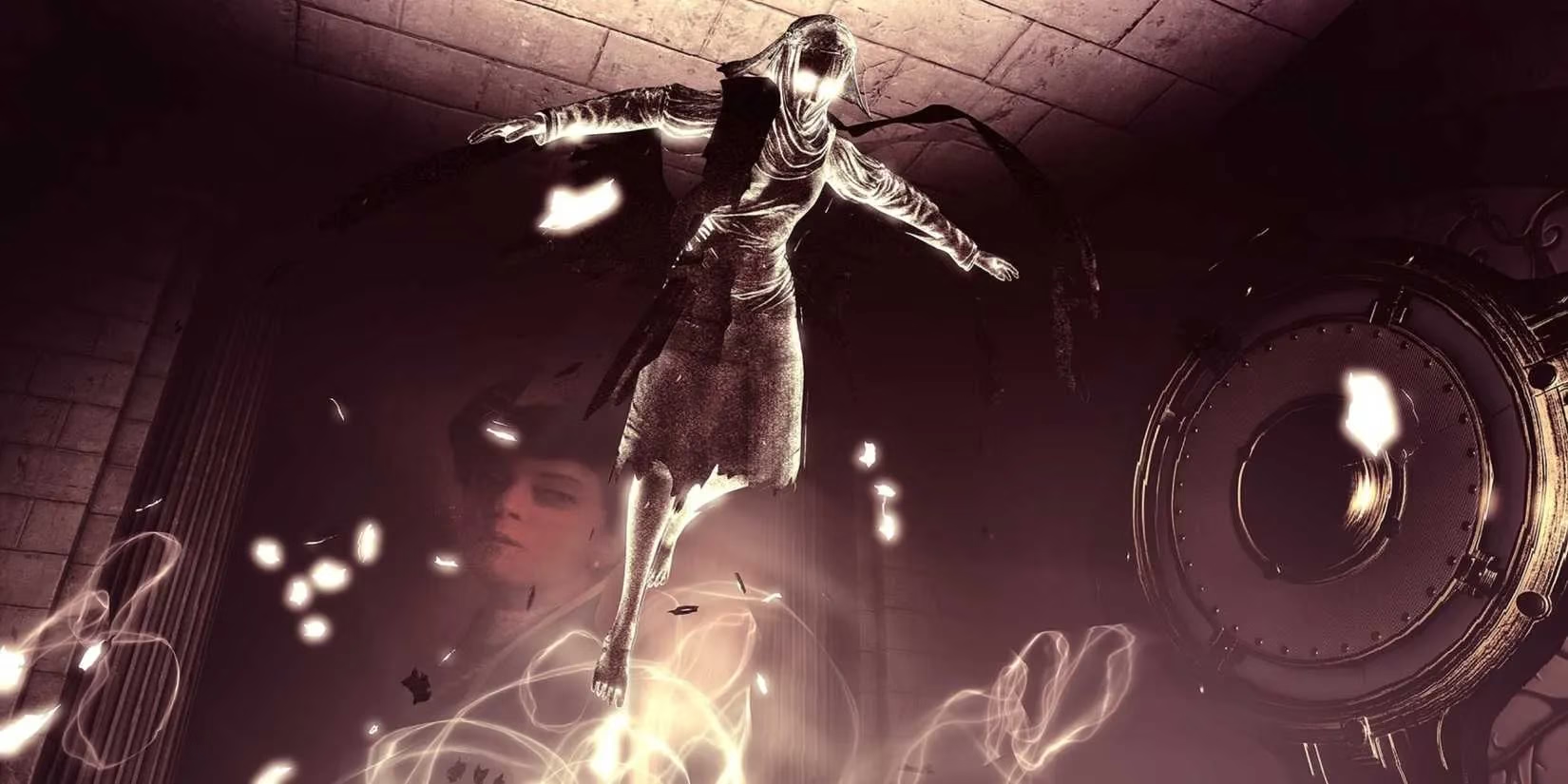
BioShock Infinite soars on rails of thrilling spectacle, but it grinds to a notorious halt in its singular, true boss encounter. Lady Comstock, the Vox Populi's martyred figurehead, refuses a dignified duel. Her method of cheating is one of overwhelming, necromantic delegation. As players attempt to engage her, she raises a ceaseless, shambling army from the dead—a wall of flesh and patriotism that acts as her personal, regenerative shield. The core unfairness lies in the distraction; players must constantly swat away the undead minions while the true threat, Comstock herself, remains frustratingly out of reach, periodically recovering. It is a battle of attrition where the boss has an infinite supply of pawns, turning a first-person shooter's dance of aim and dodge into a tedious game of supernatural whack-a-mole.
Human Kite 2: The Petty Tyrant
South Park: The Fractured But Whole masterfully translates childhood logic into RPG mechanics, and no boss embodies this more infuriatingly than Human Kite 2. His cheating is not grand or mystical; it is petty, verbal, and utterly recognizable to anyone who has ever played a game with a sore loser. He weaponizes the playground excuse. "Your last turn didn't count!" he declares, casually erasing the player's damage and healing himself. He will block turns, grant himself immunity, and rewrite the rules on the fly. The genius—and the agony—of this design is its realism. It feels less like a programming exploit and more like facing a child who owns the game cartridge and is making up rules to avoid losing. The battle is a satire of unfairness itself, layered with a meta-commentary that makes victory taste of righteous, childhood justice.
Darth Malak: The Siphoning Sith Lord
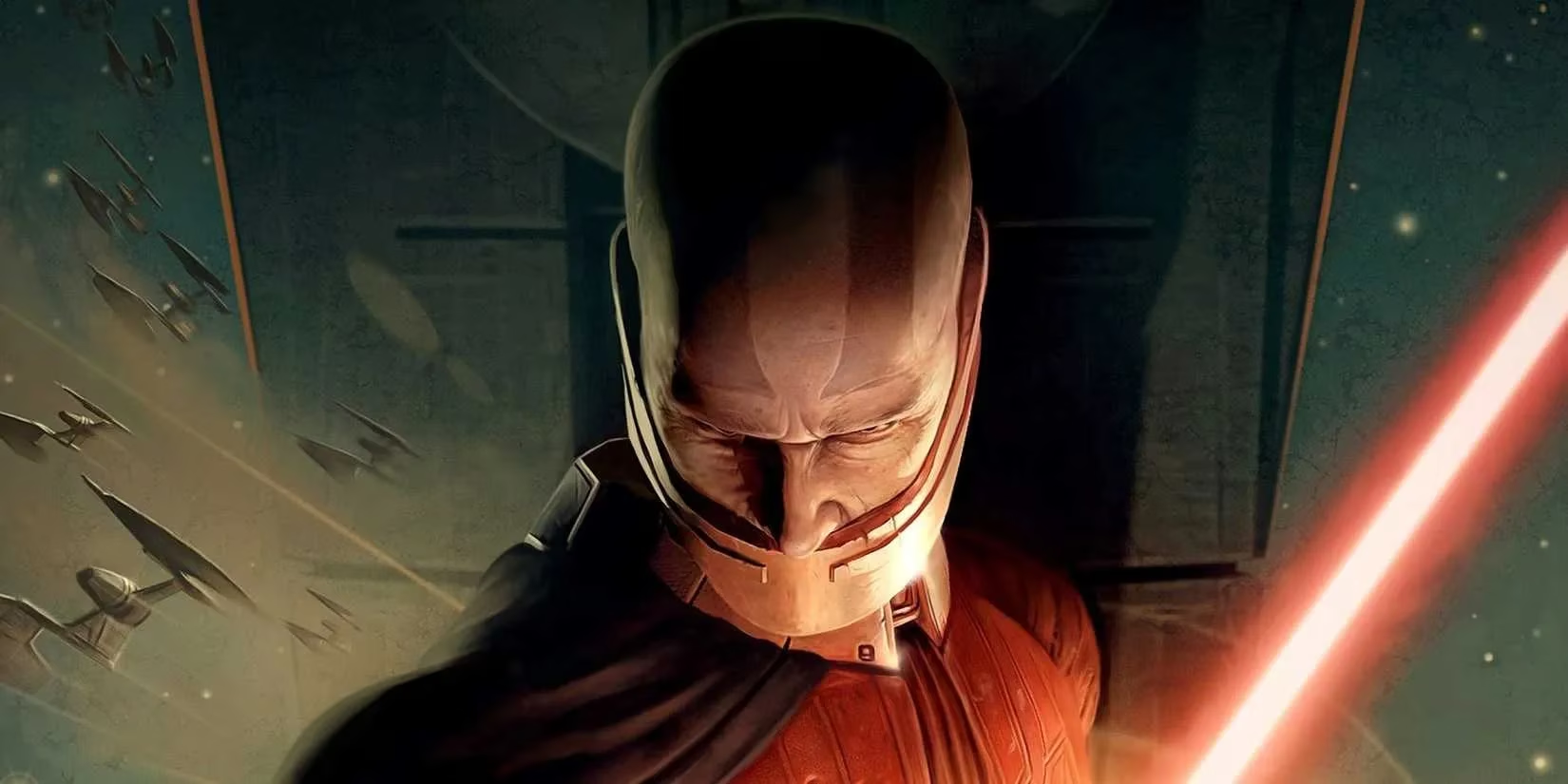
The epic climax of Star Wars: Knights of the Old Republic promises a final, righteous clash between Jedi and Sith. What players find in Darth Malak is a lesson in Sith pragmatism, a masterclass in cheating on a galactic scale. Just as the player feels the tide turning, Malak reveals his true tactic: he is not one man, but a battery. By harnessing the life force of captive Jedi, he possesses not one, but eight health reservoirs. Each time his bar empties, he retreats to drain another Jedi, fully restoring himself. The player's morale plummets with each rejuvenation. This isn't a test of combat skill alone; it's a war of endurance against a foe who has stacked the deck with stolen lives. It transforms a heroic finale into a grueling marathon where hope must be rationed as carefully as medpacs.
Inner Agent 3: The Limit-Breaking Rival
In the vibrant, ink-splattered arenas of Splatoon 2, balance is sacred. Special attacks are powerful but limited, requiring skill to charge. Inner Agent 3, the ultimate challenge of the Octo Expansion, spits on this balance. This boss is the player's mirror image, but one who has removed the "specials limiter." The result is a barrage of overwhelming force: three consecutive special attacks where the player can muster only one. It is a blatant, in-universe hack, a violation of the very contract of Splatoon combat. The player is forced into a desperate, reactive dance, dodging tsunamis of ink while their own attacks feel like pebbles against a tidal wave. The unfairness is pure, unadulterated, and mechanically explicit, making victory a badge of sheer, stubborn perseverance.
Flowey: The Reality-Hacking Menace
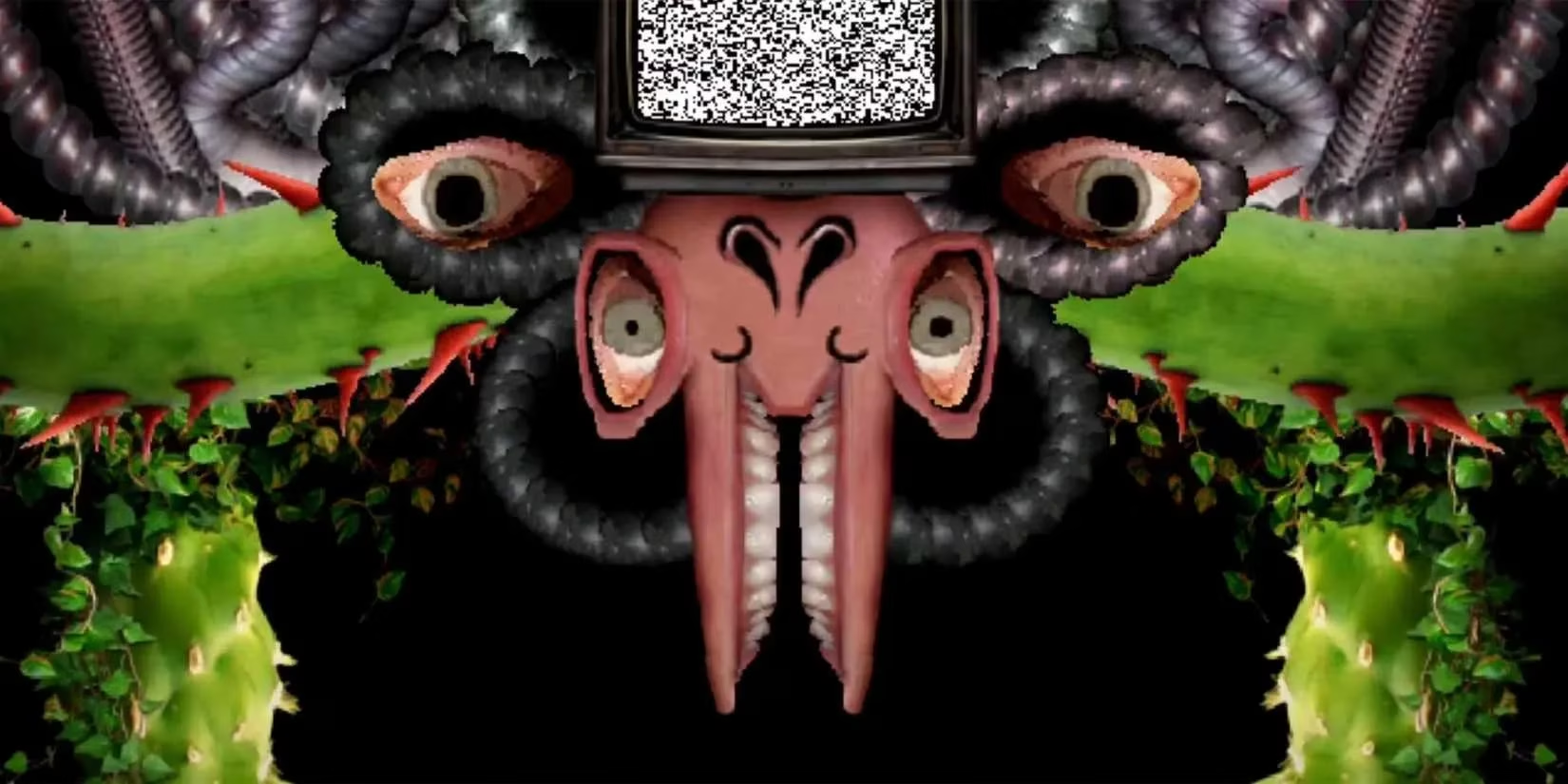
Undertale is a game about subverting expectations, and no entity embodies this more completely than Flowey. His cheating is not confined to stats or abilities; it is meta-narrative, an assault on the player's very interface with the game world. When brought to zero HP, Flowey doesn't accept defeat. Instead, he corrupts the fabric of the experience. He manipulates save files, crashes the game, reloads states, and fills the screen with visual and auditory terror. He doesn't just fight the player character; he fights the player, exploiting their trust in the game's systems. This battle is a harrowing journey through digital abuse, making the eventual triumph—not over a hit point pool, but over a entity that sought to break the fourth wall itself—one of the most cathartic in gaming history.
Silver the Hedgehog: The Glitching Pariah
Sometimes, cheating arises not from clever design, but from broken foundations. Silver the Hedgehog in the maligned Sonic the Hedgehog (2006) is less a deliberate villain and more a catastrophic emergent phenomenon. Beyond the game's infamous bugs, Silver's primary "cheat" is an environmental kill loop. Using his telekinetic powers, he can freeze the player character, lift them into the sky, and dash them against an invisible ceiling for instant death. It is a tactic that feels less like a boss move and more like the game itself throwing a tantrum. The fight is a perfect storm of poor design and exploitative mechanics, earning its place as a legendary example of unintentional unfairness. Victory here feels less like besting a foe and more like surviving a natural disaster.

A Legacy of Unfair Advantage
These bosses, from the metaphysically defiant to the petulantly literal, form a rogue's gallery of digital deceit. They challenge the player in ways that transcend reflexes and strategy, demanding resilience, adaptability, and sometimes, a tolerance for sheer absurdity. Their methods of cheating can be categorized:
| Boss | Game | Primary Cheat Method | Player's Required Response |
|---|---|---|---|
| Delirium | The Binding of Isaac | Spatial Teleportation | Pattern Prediction & Luck |
| Lady Comstock | BioShock Infinite | Summoning Infinite Minions | Crowd Control & Patience |
| Human Kite 2 | South Park: TFbW | Rewriting Turn Rules | Adaptability & Endurance |
| Darth Malak | KOTOR | Multiple Health Bars | Resource Management & Stamina |
| Inner Agent 3 | Splatoon 2 | Spamming Specials | Perfect Evasion & Precision |
| Flowey | Undertale | Meta-Game Manipulation | Persistence & Determination |
| Silver | Sonic 2006 | Exploiting Game Bugs | Luck & Glitch Avoidance |
In the end, these encounters leave an indelible mark. They are the puzzles that seem unsolvable, the races where the other runner steals a lap. Yet, their very unfairness redefines victory. To overcome a cheater is not merely to win a game, but to affirm a principle: that creativity, grit, and relentless effort can overcome even the most stacked odds. These bosses, in their refusal to play fair, ironically create the most memorable and hard-earned triumphs in a player's journey. They are the dark stars around which legends of player skill are born, reminding us that the sweetest victory often follows the most bitter struggle.
0 Comments