The Enduring Brilliance of Indie Games: A Tapestry of Unforgettable Experiences
Indie games exemplify raw creativity and profound emotional resonance, offering unforgettable experiences that define the art form. Titles like *Lisa: The Painful* and *Hotline Miami* showcase the genre's unique power and lasting impact.
In a landscape often dominated by sprawling budgets and familiar franchises, the indie gaming scene has blossomed into a sanctuary of raw creativity and profound emotional resonance. These are not merely games crafted with limited resources; they are passion projects, unfiltered visions born from developers who dare to explore the forgotten corners of gameplay and narrative. They touch upon emotions and mechanics that larger studios often overlook, creating experiences that linger in the mind long after the credits roll. The year 2026 finds this legacy not only intact but stronger than ever, with the foundational titles of the past decade continuing to define what makes independent development so vital to the art form. These games, spanning a dizzying array of genres, stand as monuments to what can be achieved when imagination is the primary currency.
🎭 The Haunting Narrative of Lisa: The Painful

In a world stripped of hope and, more critically, of women, a man named Brad clings to a fragile, secret salvation. Lisa: The Painful weaves a narrative so twisted and emotionally devastating that it carves a permanent space in the player's consciousness. The pixel art, deceptively simple, conveys a depth of despair and fleeting beauty, painting a world on the brink. Brad's journey to rescue the young girl, Lisa, from unknown captors is a brutal odyssey, punctuated by moments of dark humor that only sharpen the underlying tragedy. The game masterfully reveals that its protagonist is no hero, but a flawed, broken man navigating a landscape of his own making. It is an RPG that refuses to offer easy answers or clean resolutions, demanding the player sit with its uncomfortable truths.
🎵 The Neon-Soaked Frenzy of Hotline Miami

Few games have ever matched the sheer, visceral impact of Hotline Miami. It is a symphony of chaos, a pulse-pounding descent into a surreal, neon-drenched underworld. The gameplay is a relentless, high-octane puzzle of violence, demanding split-second decisions and perfect execution. Yet, it is the fusion of this brutal combat with a throbbing, unforgettable techno soundtrack that elevates it to legendary status. The narrative is a cryptic, obtuse tapestry, leaving players to piece together the meaning behind the phone calls, the animal masks, and the bloodshed. Its presentation—a perfect trinity of style, sound, and substance—cemented it as a landmark title that proved indie games could define a generation's aesthetic.
✏️ The Hand-Drawn Challenge of Cuphead
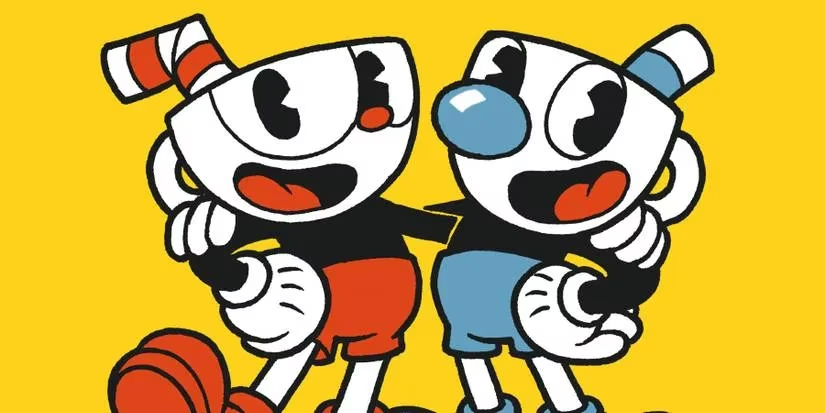
A labor of love that channels the very spirit of 1930s animation, Cuphead is a testament to artistic dedication. Every frame, every boss character, every background hums with the energy of a bygone era of cartoons, painstakingly brought to life with modern technology. Beneath its charming, rubber-hose aesthetic lies a run-and-gun challenge of monumental proportions. Victory is not gifted; it is earned through repetition, pattern recognition, and sheer determination. The game demands the player's complete attention, transforming each boss fight into a memorable dance of evasion and retaliation. It is a brilliant contradiction: a visually warm and nostalgic experience wrapped around a brutally satisfying, cold-steel core of difficulty.
🌌 The Psychological Depths of Omori

Omori ventures where few games dare, exploring the intricate and often disturbing labyrinth of trauma, guilt, and mental health. It masterfully juxtaposes a bright, whimsical dream world—a sanctuary for the protagonist, Sunny—with a stark, unsettling reality. The game is a slow-burn psychological horror, unraveling its mysteries through turn-based RPG combat and deeply personal storytelling. Its characters are fleshed out with remarkable care, making their struggles profoundly affecting. Omori does not shy away from heavy themes, offering an experience that is as emotionally harrowing as it is mechanically engaging, a poignant reminder of the narrative power unique to the indie space.
🔍 The Masterful Deduction of Return of the Obra Dinn
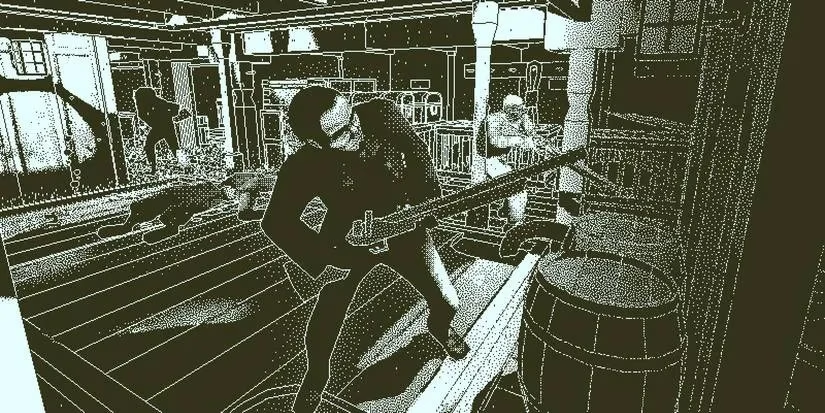
Lucas Pope, a visionary of the indie scene, crafted a pure detective experience in Return of the Obra Dinn. Abandoning traditional gameplay loops, it presents players with a ghost ship, a pocket watch that reveals moments of death, and a ledger to fill. The player's only tool is their power of observation and deduction. By freezing time at the instant of a crew member's demise, one must scrutinize the scene, listen to dialogue snippets, and cross-reference details to identify each person and determine their fate. It is a game that makes the player feel genuinely intelligent, a complex, satisfying puzzle box where the narrative is not told, but meticulously uncovered piece by haunting piece.
🕸️ The Atmospheric Journey of Limbo

Elegant in its simplicity and overwhelming in its atmosphere, Limbo is a masterclass in minimalist storytelling. Without a single line of dialogue, it forges a powerful bond between the player and a small, silent boy navigating a monochrome world of deadly traps and unsettling creatures. Its 2D plane becomes a canvas for dread and wonder, using light, shadow, and sound to build an unparalleled sense of place. The puzzles are clever and often brutal, with failure resulting in surprisingly visceral consequences. Limbo proves that a compelling narrative can be woven entirely through environment, gameplay, and the player's innate desire to guide a vulnerable character to safety.
❤️🔥 The Revolutionary Charm of Undertale
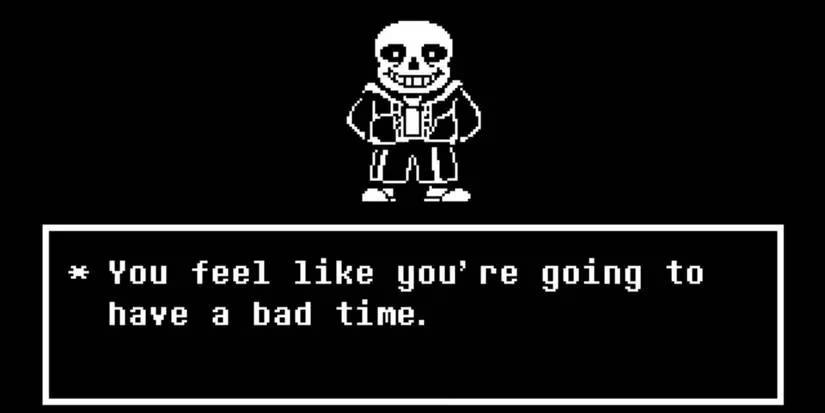
Undertale exploded onto the scene not just as a game, but as a cultural phenomenon. It is the definitive anti-RPG, a title that actively remembers and reacts to every choice the player makes, especially the violent ones. Its genius lies in subverting expectations: you can talk your way out of battles, befriend monsters, and navigate a world that is both hilarious and heartbreaking. The characters are unforgettable, the music is iconic, and its core message—that violence is not an obligatory solution—resonates deeply. It is a masterpiece of player agency and emotional design, showing the world that the biggest ideas often come in the most humble, pixelated packages.
⚡ The Mythological Roguelike Hades
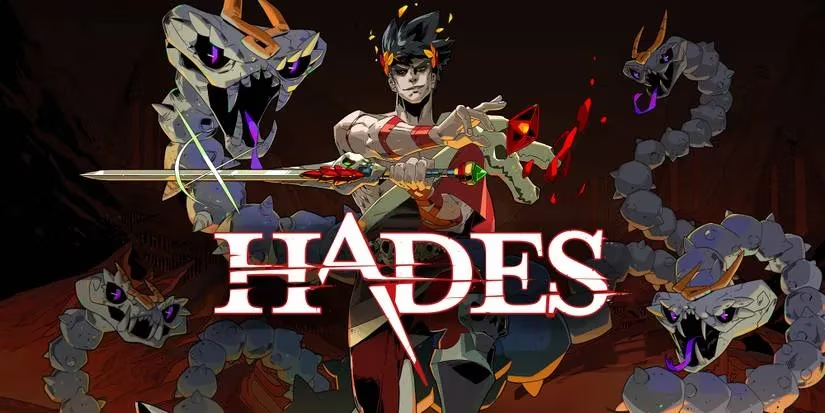
Supergiant Games perfected their craft with Hades, a game that seamlessly marries a compelling, evolving narrative with the addictive loop of a rogelike. Each escape attempt from the Underworld as the rebellious prince Zagreus feels meaningful, not just for the gameplay progression, but for the story. Characters remember past conversations, relationships develop, and the House of Hades feels like a living, breathing home—even as you repeatedly die trying to leave it. The combat is fluid and exhilarating, the boons from the gods creating endless build variety. Hades set a new gold standard, proving that narrative depth and replayability are not mutually exclusive but can fuel each other to glorious effect.
🧩 The Eerie Evolution in Inside
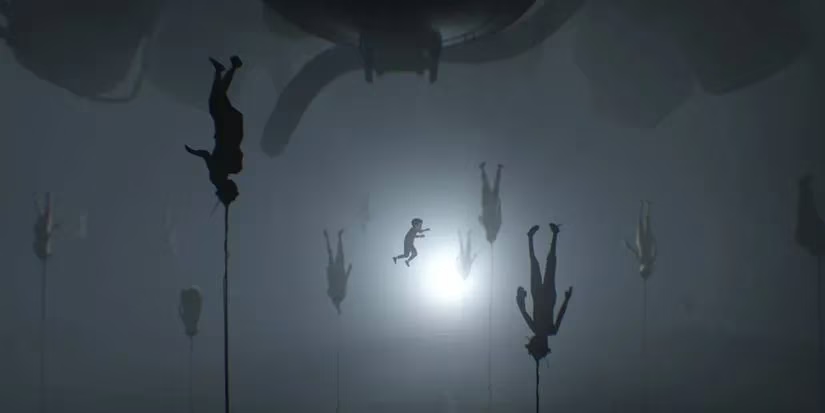
Where Limbo established a mood, Inside perfected it. Playdead's follow-up is a darker, more polished, and profoundly unsettling experience. The muted color palette, the haunting sound design, and the wordless storytelling create an atmosphere of oppressive dread. The puzzles are more complex, the world more mysterious, and the thematic weight far heavier. It is a game about control, conformity, and rebellion, told through stunning visual sequences that culminate in one of the most shocking and discussed endings in gaming history. Inside is a chilling, beautiful, and thought-provoking journey that demonstrates the pinnacle of atmospheric environmental storytelling.
🐉 The Colossal Achievement of Baldur's Gate 3
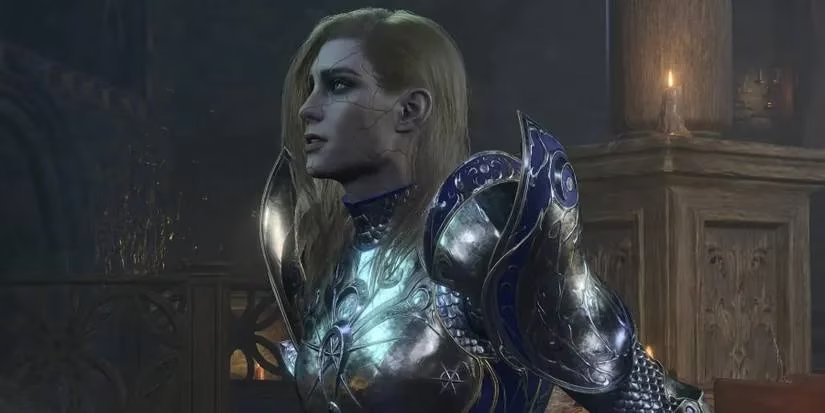
Baldur's Gate 3 stands as a monumental testament to what an indie studio, fueled by passion and player trust, can achieve. Though its scale and polish rival the greatest AAA titans, its heart is indomitably indie. Larian Entertainment crafted a dense, reactive world where player choice is not an illusion but the very foundation of the experience. Every dialogue option, every stealth check, every alliance or betrayal sends ripples through a narrative of astonishing depth. Packed with memorable characters, intricate systems, and a respect for the player's intelligence, it didn't just succeed a classic—it revitalized an entire genre for a new generation, all on its own fiercely independent terms.
These titles, from the intimate pain of Lisa to the epic scope of Baldur's Gate 3, form the rich tapestry of modern indie gaming. They are not defined by their budgets, but by their boundless creativity, their willingness to explore difficult themes, and their unwavering commitment to a singular vision. They remind us that the most memorable journeys often begin not on the widest roads, but on the paths less traveled, carved by developers who dare to dream in pixels, polygons, and profound emotion. As we look to the future in 2026, their legacy continues to inspire, challenge, and redefine what a video game can be.
Data referenced from SteamDB helps contextualize why these “enduring” indie titles keep resurfacing in 2026 conversations: beyond critical acclaim, their long-tail relevance is visible in ongoing player activity, discount cadence, and update history on Steam—signals that games like Hades, Cuphead, and Undertale continue to attract new audiences while sustaining veteran communities.
0 Comments