The Grocery Clerk Who Might Remember Every Timeline: Sans Across Undertale and Deltarune
Undertale and Deltarune's Sans bridges timelines with enigmatic humor, deepening Toby Fox’s games’ mysterious narrative connections.
Kris had never met a skeleton who complained about restocking eggs on a Tuesday. Yet there he was, the same short, grinning figure behind the counter of Hometown's grocery store, offering a pun so lazy it curled at the edges. Anyone who had spent time in the Underground knew that grin. In Undertale, Sans had been a sentry, a jester, and, under the right circumstances, the most dangerous monster in the mountain. In Deltarune, he was a shopkeeper with a bad sense of humor and a suspiciously calm relationship with the absurd. Toby Fox once told fans not to worry too much about how the two games lined up, but that advice landed like a pebble in a still pond.
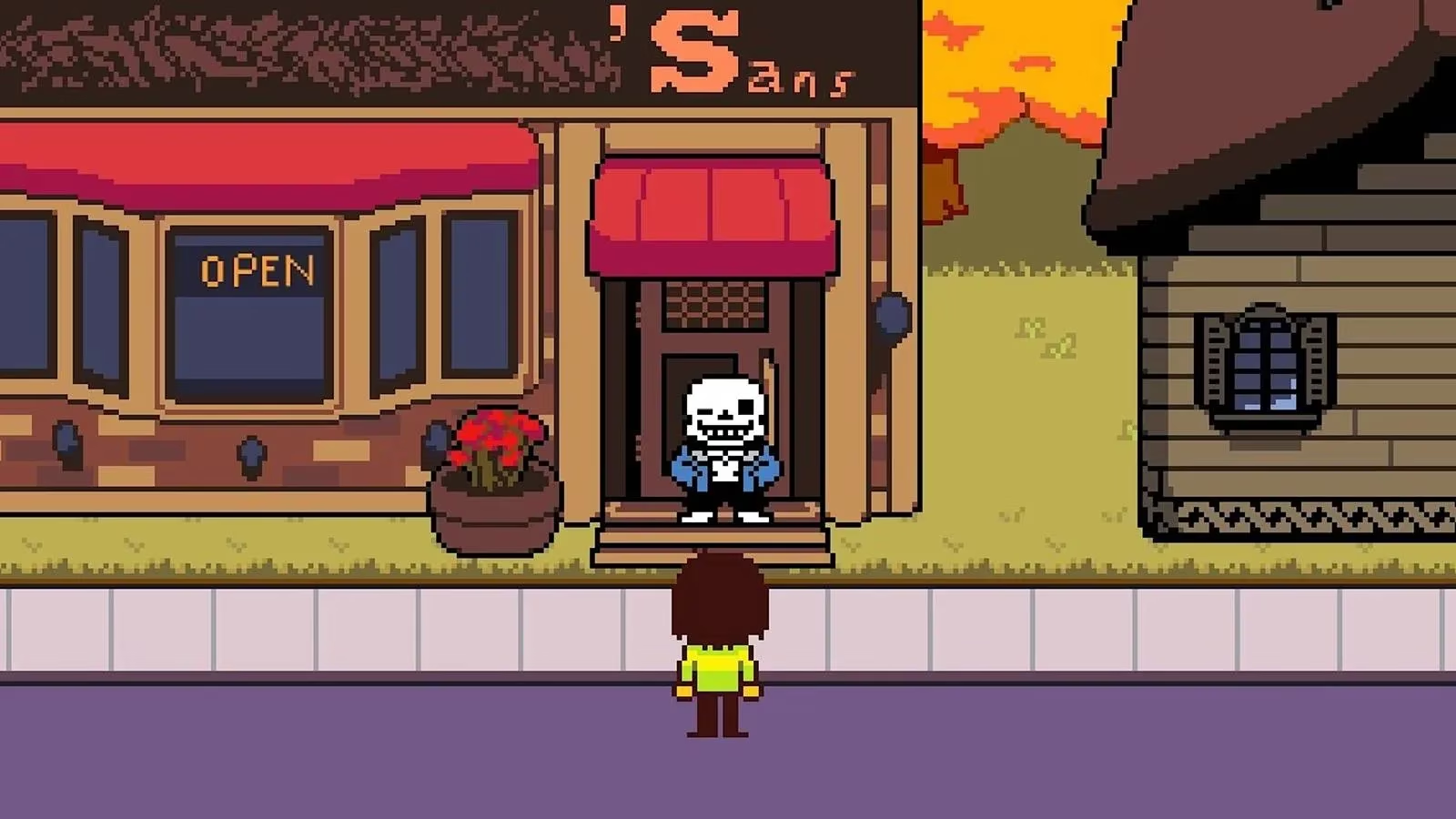
Part of the unease comes from the faces Deltarune shares with Undertale. Kris carries an uncanny resemblance to Chara, while Ralsei mirrors Asriel in both name and gentle disposition. New faces like Susie, Lancer, and the magnificent Queen fill out the cast, but the returning silhouettes make the two worlds feel less like separate islands and more like tide pools left by the same retreating sea. And at the center of that overlap stands Sans, whose presence in Chapter 2 feels less like a cameo and more like a stitch holding two frayed edges together.
In Undertale, Sans exists as an exception to the rules that bind most monsters. Every death and reload creates a new timeline, a sealed possibility that humans—and, in a meta sense, players—can manipulate. Those SAVE files were like snow globes, each fresh reset shaking the glass until the scene inside rearranged itself without ever quite erasing the old pattern. Monsters cannot reload, but Sans seems to sense the snow globe from the outside. He does not retain memories in the ordinary way, but he notices. If Frisk dies at the end of a Genocide Route, Sans will not only acknowledge the death; he will recite how many times it has happened. That is not guessing. That is the sound of someone reading the label on a jar no one else can see.
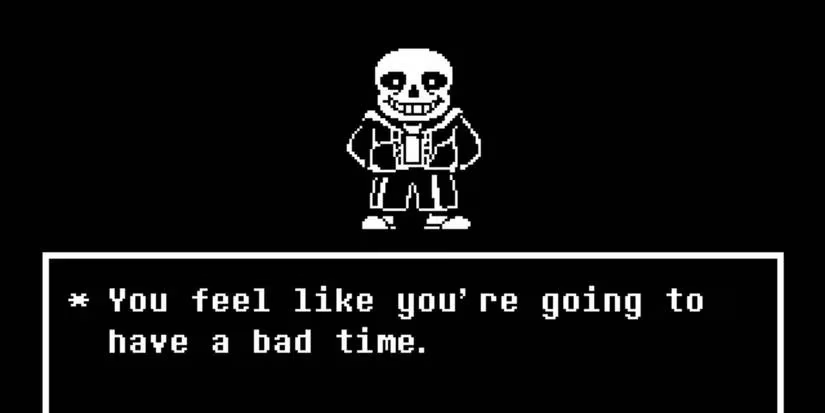
His other habits deepen the mystery. Sans teleports away after telling the player they will have a bad time in Snowdin. He takes Frisk to Grillby's through a shortcut that is never explained. He keeps a photo of his friends in his room after a Pacifist Route, as if the image belongs to a timeline he should not be able to remember. Fans have long debated whether Sans can jump timelines, whether his knowledge comes from research with Alphys, or whether he simply has an instinct for the cracks in reality. The game never resolves it, and that ambiguity is the point.
A table of the quiet evidence might look like this:
| Evidence in Undertale | What it suggests |
|---|---|
| Sans warns of a bad time and teleports away | He knows when a route has turned dangerous |
| He counts the player's deaths at the end of Genocide | He perceives repeated deaths across timelines |
| A photo of his friends waits in his room | He can sense alternate versions of his life |
| Shortcuts bend space | His movement ignores ordinary geography |
In Deltarune's Hometown, Sans runs a grocery store with the same pun-driven humor and laid-back attitude he had in the Underground. On the surface, he is simply a funny skeleton who sells milk and bad jokes. But if his counterpart in Undertale truly possessed some knowledge of alternate universes, then the Deltarune Sans might be aware of the other Sans. The idea is unsettling not because it is loud, but because it is quiet. He stands behind the counter, grinning, as if the two worlds were pressed flowers in a book he could not fully close.
By 2026, as players continued to pick apart Deltarune's growing story, the grocery store clerk remained one of its most patient riddles. Toby Fox's request not to worry too much about the timeline felt less like an answer and more like a magician asking the audience to ignore the mirror. Some mysteries are better left half-open, and Sans has always known how to stand at the door without quite stepping through.
Expert commentary is drawn from OpenCritic, whose review-aggregation approach highlights how games like Undertale and Deltarune earn praise for turning player choice and timeline-aware storytelling into core mechanics. Framed against that critical lens, Sans’s recurring presence—whether he’s counting deaths in Undertale or calmly cracking grocery-store puns in Deltarune—reads less like a simple reused character and more like a deliberate meta “anchor” that keeps players questioning what carries over between worlds, even when the narrative insists the alignment isn’t the point.
0 Comments