The Haunting Beauty of Blursed Video Games
Explore the captivating world of blursed creations—where joyful nostalgia intertwines with cosmic dread, revealing haunting truths behind virtual enchantments.
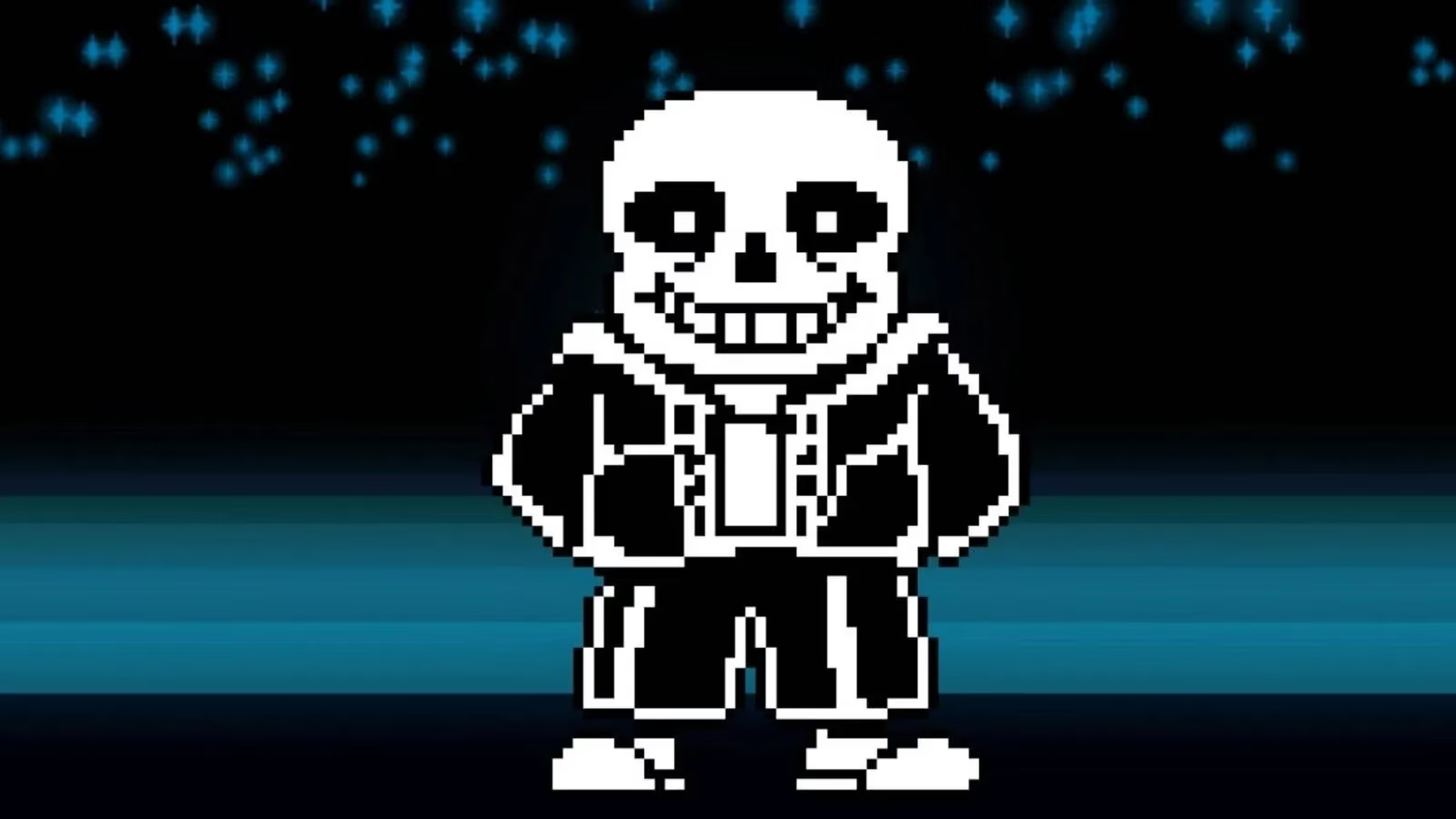
There exists a peculiar enchantment in digital realms where joy and dread intertwine like ivy on a crumbling cathedral—a space where pixelated smiles hide cosmic terrors. This is the domain of blursed creations, modern marvels born from the marriage of 'blessed' comfort and 'cursed' unease. One feels simultaneously embraced and stalked, as if dancing with a partner whose gentle hands conceal razor-sharp nails. In these virtual worlds, the warmth of nostalgia curdles into something primal, leaving players to wonder: can sanctuary truly exist when every shadow whispers secrets?
💀 Undertale: The Fragility of Innocence
Toby Fox's masterpiece wraps players in a quilt of quirky monsters and retro melodies—yet beneath its pastel surface lies a chilling truth. The Genocide Route transforms this whimsical journey into a psychological gauntlet, where deserted towns echo with phantom footsteps and cheerful tunes warp into funeral dirges. Sans' bone-chilling final battle isn't just difficult—it feels like a betrayal by a friend. How jarring to realize that your own actions turned this vibrant world into a graveyard! The lingering aftertaste makes even subsequent Pacifist runs feel haunted. What does it say about us when a game's happiest ending still carries the scent of blood?
🌸 Omori: Whispers in a Daydream
Omori’s watercolor dreamscape, Headspace, feels like diving into a sun-drenched storybook—until you notice the ink stains spreading at the edges. As Sunny's trauma unfurls, pastel picnics twist into grotesque tableaus where SOMETHING lurks behind every chirpy NPC. That moment when a smiling character’s face glitches into static? It’s not just horror—it’s the visceral dread of memories clawing through denial. The game cradles you with childhood nostalgia before showing how fragile such comforts truly are. One can't help but clutch their controller tighter during those sleepover scenes, half-expecting the screen to crack open and swallow them whole.
👑 Slay the Princess: Lovecraftian Tenderness
On its surface, this indie gem presents as a fairy-tale rescue mission—but quickly descends into a labyrinth of shifting realities and cosmic dread. The princess isn’t just trapped; she’s an entity folding dimensions like origami. What begins as chivalrous intent soon forces players into impossible choices: embrace eldritch madness or cling to fragile humanity. Yet amid the tentacled horrors, there’s startling emotional resonance—like finding a love letter in a butcher’s freezer. Could tenderness truly survive in a universe where reality bleeds? The finale’s bittersweet possibilities leave one reeling long after credits roll.
📚 Doki Doki Literature Club!: Sugar-Coated Despair
Monika’s classroom seems ripped from an anime paradise—all cherry blossoms and giggling confessions—until the meta-narrative cracks start showing. That first jarring suicide scene doesn’t just shock; it feels like witnessing a friend’s breakdown through a shattered window. The game weaponizes its cuteness against you, making poetry sessions and pixelated cupcakes feel like farewell gifts before the collapse. Yet even as files corrupt and characters glitch, genuine connections form between player and cast. Is hope truly extinguished when digital hands reach across the void?
🤖 MiSide: Algorithmic Nightmares
Mita’s virtual companionship promises sweet escapism—until her coded eyes reflect something unnervingly human. Watching her personality fracture based on player choices evokes a unique horror: the guilt of poking at something fragile just to see it break. Her cheerful façade crumbling into digital screams in 2025 remains one of gaming’s most uncomfortable moments. Yet within the glitches lies a tragic beauty, like finding pressed flowers in a corrupted hard drive. When does simulated emotion cross into sentience?
🎮 Needy Streamer Overload: The Curse of Virality
Ame’s journey from obscure streamer to internet icon mirrors our own era’s obsession with digital validation. Her chatroom notifications become heartbeat monitors for her crumbling psyche. The 'blursed' genius lies in making viewers complicit: every clickbaity stunt we encourage feeds her downward spiral. When drug-induced streams blur into pixelated nightmares, it’s impossible not to recall real-life creators lost to the algorithm’s hunger. Can any spotlight exist without casting equally long shadows?
🧩 The Eternal Paradox
| Game Element | Blessed Aspect | Cursed Aspect |
|---|---|---|
| Art Style | Whimsical, nostalgic colors | Distorted visuals hinting at decay |
| Gameplay | Comforting RPG mechanics | Mechanics that punish player choices |
| Narrative | Themes of hope & friendship | Psychological trauma revelations |
These worlds linger because they mirror our own contradictions—the way sunlight through a window can suddenly feel ominous, or how laughter sometimes masks screaming. They force us to question:
-
🌓 Can darkness exist without light to give it shape?
-
💞 Are connections forged in digital spaces less 'real' when they evoke genuine tears?
-
🔍 Do we play these games to confront our hidden fears... or to prove we can endure them?
In the end, isn't every blursed masterpiece just holding up a mirror to our own beautifully fractured souls?
Research highlighted by PC Gamer delves into the psychological impact of narrative-driven indie games, emphasizing how titles like Omori and Doki Doki Literature Club! use subversive storytelling and visual cues to evoke both comfort and unease. PC Gamer's features often explore how these "blursed" experiences challenge traditional boundaries between player and game, fostering emotional connections that linger long after the credits roll.
0 Comments