The Quirky Legacy of Earthbound: A 30-Year Journey from Cult Classic to Indie Inspiration
Earthbound, the cult classic RPG, masterfully blends quirky suburban charm with profound cosmic horror. Its intimate storytelling and psychedelic aesthetics have quietly influenced a generation of game narratives, evolving from a niche secret to a beloved touchstone.
I remember the first time I booted up Earthbound, the quirky RPG that felt like a strange, beautiful dream. It was 1994, and while the world was captivated by the polished adventures of Donkey Kong Country and the atmospheric dread of Super Metroid, I found myself wandering the streets of Onett, a boy named Ness armed with a baseball bat, fighting off runaway dogs and territorial crows. The game didn't scream for attention with flashy graphics or an epic fantasy premise. Instead, it whispered its charm through suburban lawns, psychedelic backgrounds, and a soundtrack that swung from cheerful pop to unsettling dissonance. It felt like a secret, a personal journey that the wider world had overlooked, its bizarre marketing campaign in the West—centered around scratch-and-sniff ads promising "This game stinks!"—doing little to convey the heartfelt, weird, and surprisingly profound experience within. For years, it was my secret, a cult classic shared among a dedicated few. But now, in 2026, looking back over three decades, I see its influence blossoming everywhere. Earthbound didn't just find an audience; it quietly sowed the seeds for an entire generation of storytelling.
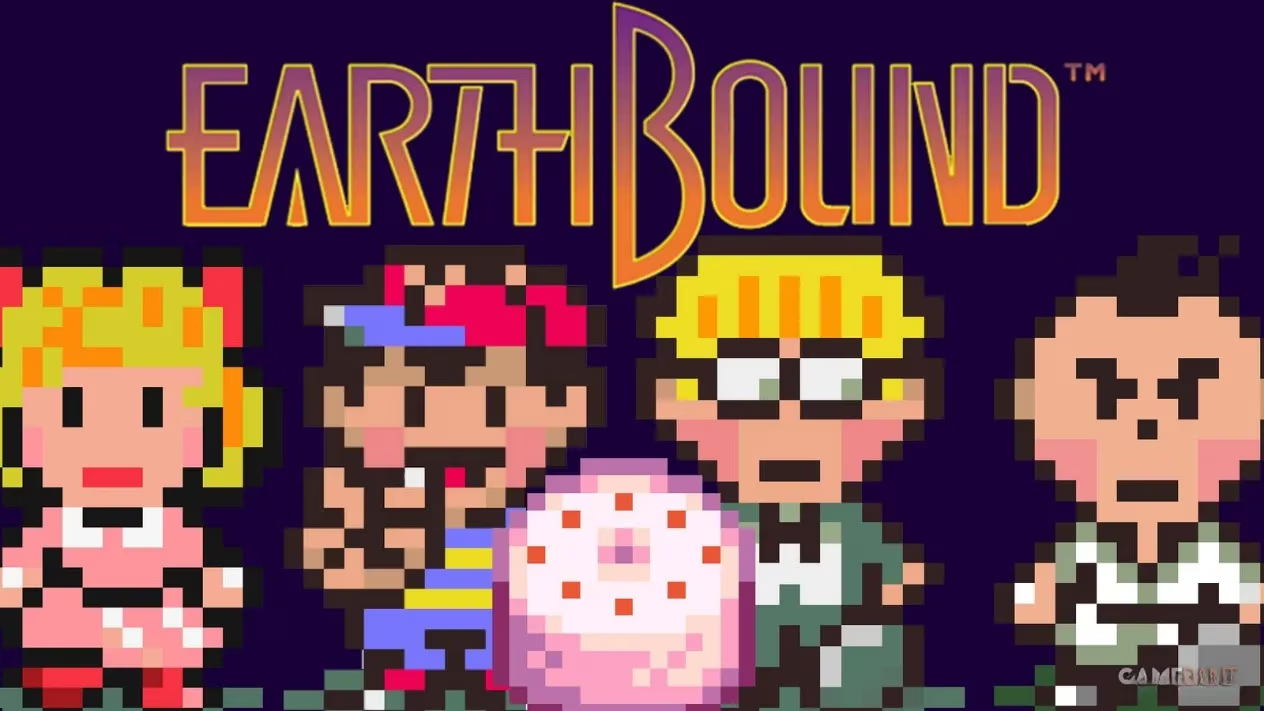
The Lonely Journey of a Western Outlier
As a fan, I always felt the peculiar isolation of loving Earthbound. In Japan, it was Mother 2, a direct sequel to a Famicom classic. But here, it was an orphan, its only predecessor forever locked away across the ocean until a belated Virtual Console release in 2015 as Earthbound Beginnings. While Mario conquered kingdoms and Link saved princesses, Ness was just a kid checking in with his mom by phone, eating burgers to heal, and battling the existential weirdness of a cosmic threat called Giygas. The game lacked the built-in franchise recognition that powered its SNES peers. Its charm was intimate: the quirky humor, the endearing cast of Paula, Jeff, and Poo, and a story that blended mundane childhood with epic, psychedelic horror. We were a small club, those of us who cherished it, knowing that within Nintendo's pantheon of titans, our beloved, oddball RPG was a cherished footnote, represented mainly by Ness's enduring presence in Super Smash Bros.—a wonderful bone thrown to the faithful, but a reminder of the untapped potential for new, official adventures.
The Torch Passed to the Faithful
When official channels grew quiet, the fans began to speak, to create, to dream. I watched this community—my community—transform from collectors and theorists into architects of legacy. The campaign for Mother 3 was a saga of hope and heartbreak, a testament to dedication. We translated it ourselves, sharing that poignant, challenging story of loss and rebellion because we couldn't wait for permission. This DIY spirit didn't stop there. The landscape became fertile with fan mods and ROM hacks, creative playgrounds where the game's unique DNA was spliced and recombined. These weren't just tributes; they were laboratories. From them emerged spiritual successors, standalone indie games that didn't just mimic Earthbound's aesthetics but internalized its soul: the courage to be weird, to juxtapose levity and darkness, to make the personal feel universal.
The Indie Harvest: Where Earthbound's Seeds Bloomed
It fills me with a quiet pride to walk through the indie game gardens of 2026 and see so many flowers that grew from Earthbound's soil. They understood the assignment, as they say. They took the core formula—often a party of children confronting darkness—and explored its shadows with new bravery.
| Inspired Indie Title | Core Earthbound Inspiration | How It Expanded the Legacy |
|---|---|---|
| Undertale | Quirky humor, fourth-wall breaks, meaningful player choice. | Made combat consequences deeply narrative and moral, with a pacifist route that redefined RPG engagement. |
| OMORI | Childhood party, surreal dream worlds, psychological horror beneath a cute surface. | Delved unflinchingly into trauma, anxiety, and depression, using its RPG format as a vehicle for intense emotional exploration. |
| Lisa: The Painful | Dark humor, a post-apocalyptic setting with absurdity, and permanent consequences. | Embraced a brutal, adult-oriented world where choices haunt you, amplifying the "painful" in its title. |
| Yume Nikki | Surreal, exploratory dream logic and unsettling abstract imagery. | Removed combat almost entirely, focusing purely on atmospheric exploration of a subconscious dreamscape. |
Undertale is, of course, the brightest star in this constellation. Knowing that Toby Fox's journey began with the Earthbound "Halloween Hack" makes perfect sense. He learned the language of quirky, heartfelt RPGs and then wrote his own poetic dialect, one where every monster has a name and sparing them is more powerful than any attack. OMORI, however, might be the one that moves me the most. It takes Earthbound's template—a group of kids navigating strange worlds—and turns the volume up on the internal struggle. Where Earthbound hinted at darkness, OMORI immerses you in it, using its charming art to make the plunge into its psychological depths even more devastating. These games aren't clones; they are conversations. They are passionate replies to a game that asked, "What if an RPG felt like your own strange, personal journey?"
A Legacy Measured in Feeling, Not Sequels
So, here we are, 30 years on. A official sequel for the West remains a dream I no longer expect to see fulfilled. And yet, I find a strange peace in that. Earthbound's story was complete in its own way. Its true legacy was never about a franchise number; it was about a feeling, a tone, a permission slip for creators to be authentically weird. It proved that a game could be set in a parody of modern America, that your ultimate weapon could be a yo-yo, that your final boss could be a formless, weeping embodiment of cosmic terror, and that it could all coalesce into something profoundly moving.
The indie scene has become the series' true successor, a sprawling, unofficial Mother 4 written by a chorus of different voices. Each inspired title is a love letter, proving that what made Earthbound special wasn't locked in a 16-bit cartridge. It was in its spirit—a spirit of quirky humor shielding deep emotional resonance, of childhood innocence confronting unimaginable darkness. That spirit is alive and well, thriving in games that today's players hold as dear as I held my SNES controller in 1994. The game that "stunk" has, over three decades, blossomed into the most beautiful, enduring fragrance in the garden of RPGs.
0 Comments