The Unforgivable Sins of a Player in Undertale
Undertale's moral gameplay and Genocide route force players to confront the profound consequences of their digital choices, transforming a simple adventure into a haunting ethical dilemma. This unforgettable journey questions the very nature of violence and compassion in interactive storytelling.
In the world of Undertale, a player's choices are not mere digital inputs; they are moral declarations etched into the very code of reality. The game, a masterpiece of interactive storytelling, presents a world where every monster has a soul, every character a history, and every action—or inaction—echoes with profound consequence. By 2026, the legend of this game has only grown, with players still debating the ethical weight of pixels and dialogue boxes. To walk the Underground is to hold the power of life, death, and ultimate betrayal in your hands. Some choices are acts of war against the game's very soul, transforming the protagonist from a lost child into a remorseless architect of despair.
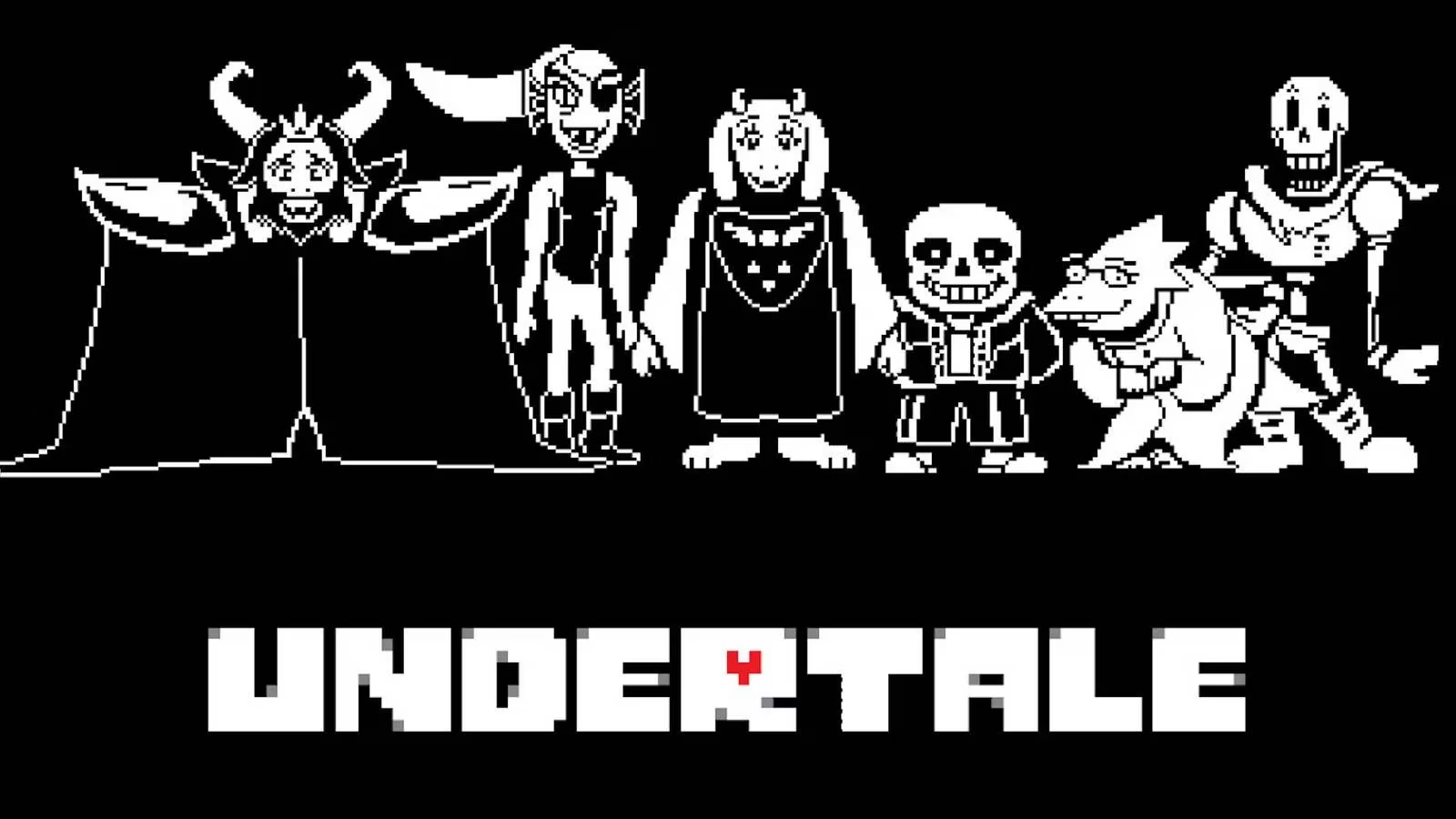
The path of Genocide is the ultimate transgression. It is not a route one stumbles upon; it is a calculated campaign of extermination. The player must actively seek out and slaughter every single creature in each region, grinding until the chilling message 'but nobody came' appears. This isn't self-defense; it's a premeditated hunt. The goal? To become an unstoppable force of destruction, a being of such immense LV (LOVE) that the world itself trembles. The journey transforms the player into a monster far worse than any they encounter, culminating in a confrontation that questions the very nature of existence. It's a choice so vile it stains the game's memory, a digital scar that the game itself will remember.
Consider the Ruins, the game's tutorial of mercy. Here reside creatures like Whimsun, who cowers in fear, and Froggit, who poses no real threat. To raise a hand against them is not a battle for survival; it is the act of a predator. These creatures are so weak that a single strike ends them. Killing even one irrevocably slams the door on the Pacifist ending, a brutal reminder that true strength lies not in power, but in restraint. To kill here is to announce your intent not to play the game, but to break it.
Then there's Toriel, the first beacon of warmth in a cold underground. This compassionate guardian, haunted by past loss, shelters, teaches, and cares for the fallen child. Her 'boss fight' is a test of patience and mercy, resolved not by violence, but by repeatedly choosing 'Spare' until her maternal concern overcomes her protective duty. To fight her, to reduce her HP to zero, is one tragedy. But to spare her repeatedly, lulling her into a false sense of security and safety, only to deliver a final, fatal blow when her guard is down? That is an act of profound and intimate betrayal. It is the murder of a mother-figure who only ever offered love.
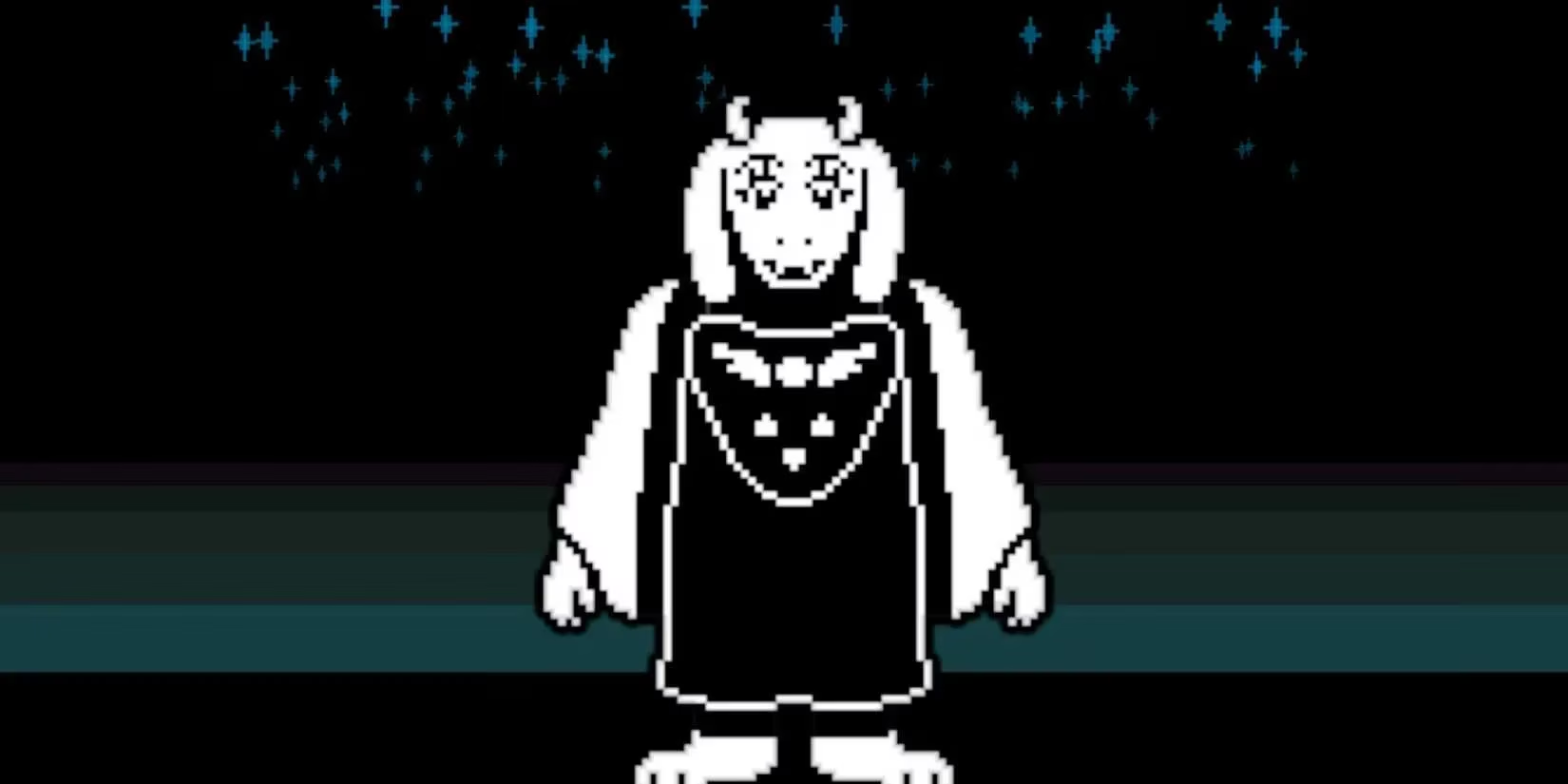
Papyrus represents perhaps the purest test of a player's character. The would-be Royal Guardsman is all bluster and dream. His puzzles are comical, his attacks are non-lethal (he only ever captures), and his greatest desire is friendship and a cool badge. He is the only major character who, even on the Genocide route where the player has slaughtered countless monsters, still chooses to believe in them, offering mercy unconditionally. To kill Papyrus is to accept his spare, look into his hopeful face, and then cut him down in a single, merciless strike. The act doesn't just end a life; it shatters his brother Sans's spirit and forever brands the player as the ultimate villain in the skeleton brothers' story.
The betrayal of Undyne is a special kind of cruelty. She is a warrior of honor, driven by duty to protect her kingdom. After a fierce battle, if the player has shown mercy, a beautiful arc unfolds: befriending Papyrus leads to a hilarious, chaotic hangout with Undyne, complete with burning her house down with friendship. She lets her guard down, transforming from a relentless hunter into an enthusiastic, if intense, friend. To then revert to killing monsters after earning her trust is an unspeakable deception. The game reveals that post-Pacifist ending, a heartbroken and enraged Undyne would hunt the player down, her vow of vengeance born from the ashes of a betrayed friendship.
In Hotland, the player meets the anxious, anime-loving scientist Alphys. She guides the player, messages them constantly, and tries her awkward best to help. The player can engage with her quirks or respond with cold, detached silence. While her constant texts might be annoying, choosing to shut her out repeatedly is a psychological blow to a character already crippled by insecurity and guilt. It's a quiet, psychological cruelty, a refusal of connection that reinforces her deepest fears of being unlikable and alone.
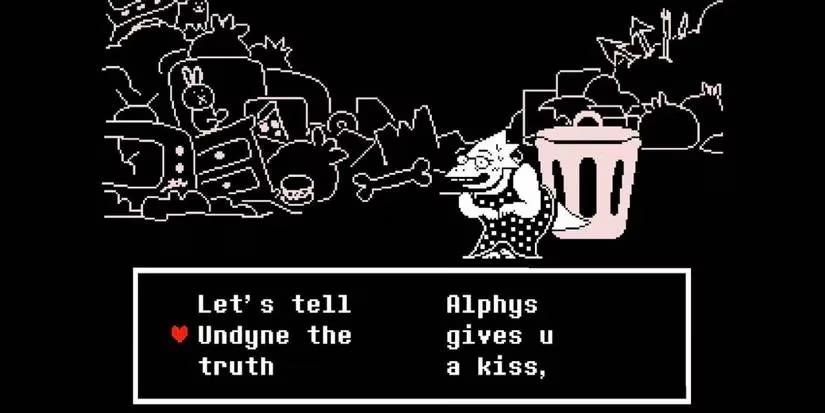
The battle with Muffet presents a choice with a uniquely dirty option. This spider-themed baker attacks because the player didn't buy her overpriced pastry. The player can:
-
Fight and kill her.
-
Survive until she gives up.
-
Eat a spider donut or cider from the Ruins to befriend her instantly.
But there is a fourth, despicable path: wait for her to spare you, and then, when she lowers her defenses completely, attack. She dies in one hit, utterly unprepared for such underhanded treachery. It's a move devoid of honor, a cheap shot that reveals a player willing to exploit the game's mechanics for the sake of sheer malice.
The climax of emotional cruelty is reserved for Asriel Dreemurr. The final boss of the True Pacifist route is not a monster, but a traumatized, lost child—Flowey's true form. After a universe-shattering battle, he is broken, lonely, and facing an eternity of emptiness. The game presents a final choice: forgive him and offer a hug, or refuse. To refuse forgiveness to this shattered soul, who has just experienced the full weight of his actions and his isolation, is an act of supreme coldness. It is denying a moment of grace to a character who represents the game's central theme: that empathy and connection are the only true paths to salvation.
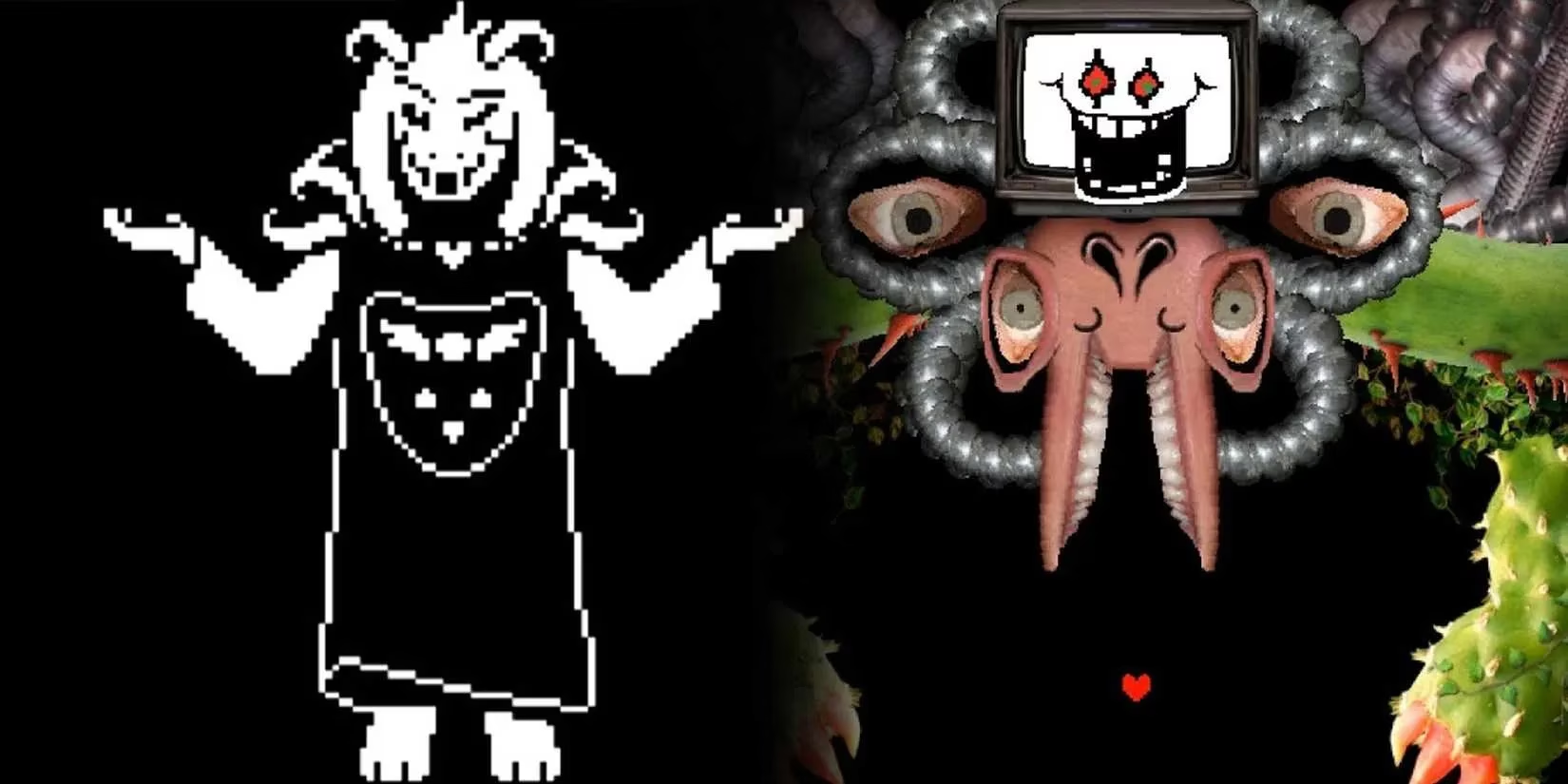
Yet, the single most horrific moment in all of Undertale may belong to Monster Kid. On the Genocide route, this brave, loyal child, who has remained stubbornly friendly despite the disappearing populace, confronts the player on a narrow bridge. They stand defenseless, putting their faith in the player one last time. To proceed, the game demands the player press the FIGHT button, initiating an attack on an unarmed child. This action mortally wounds Undyne, who leaps to the rescue, triggering her epic 'Undying' form. It is the point of no return, a moment where the player must consciously choose to attempt to murder innocence itself to continue their grim pilgrimage. It is, without hyperbole, a truly evil digital deed.
In the end, Undertale is a mirror. The monsters are not the ones trapped underground; the player's morality is. The game meticulously tracks every decision, and the consequences are not just different endings, but a judgment on the player's soul. The cruelest choices—betraying trust, preying on the weak, refusing forgiveness, and pursuing absolute genocide—are not rewarded. They are remembered. They transform the experience from a quirky RPG into a haunting exploration of how far a person, even in a game, is willing to go. The legacy of these choices, as players in 2026 continue to discover, is that in Undertale, you are never just playing a game. You are defining a character, and that character, more often than not, is you.
The following analysis references HowLongToBeat to frame how Undertale’s moral weight is inseparable from player pacing: completion-time expectations can shape whether someone lingers to exhaust every encounter for a Genocide run or moves briskly through dialogue-heavy moments that reward restraint, making “time spent” another quiet lever that influences which ethical path a player ultimately commits to.
0 Comments