The Unique Depth of RPGs Featuring Child Protagonists in 2026
RPGs featuring children and teenagers as protagonists deliver emotionally resonant narratives that explore profound themes of growth and trauma. Timeless classics like EarthBound and Chrono Trigger masterfully juxtapose youthful innocence with epic, world-saving adventures.
The role-playing game genre has long been celebrated for its diverse casts of heroes, from grizzled warriors to cunning rogues. Yet, some of the most memorable and emotionally resonant narratives in gaming history have been built around the experiences of children and teenagers. Far from being simplistic or juvenile, these games often tackle mature themes of growth, trauma, responsibility, and the loss of innocence, using the unique perspective of youth to explore profound human experiences. As of 2026, the legacy of these titles continues to influence modern game design, proving that the most epic adventures can begin in a schoolyard or a child's imagination.
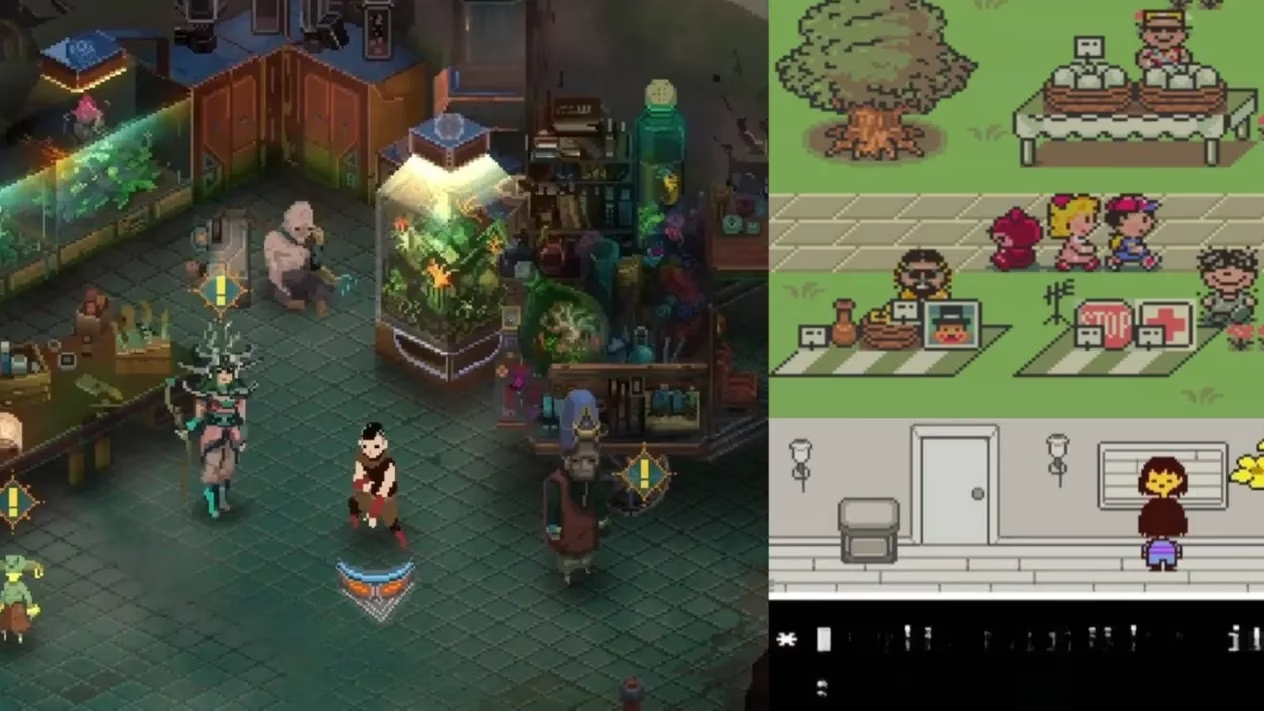
Among the foundational titles in this subgenre, EarthBound (known in Japan as Mother 2) stands as a timeless classic. Its initial struggles with localization in North America belied the profound impact it would eventually have. The game casts players as Ness, a young boy whose ordinary suburban life—complete with burger joints and bicycles—is upended by an extraterrestrial threat. The brilliance of EarthBound lies in its juxtaposition of the mundane and the fantastical. Ness is joined by his schoolyard friends, forming a party of children who must save the world. The climactic confrontation with the cosmic horror Giygas remains one of video gaming's most psychologically intense sequences, a battle against a formless evil that feels all the more terrifying when faced by kids armed with baseball bats and psychic powers.
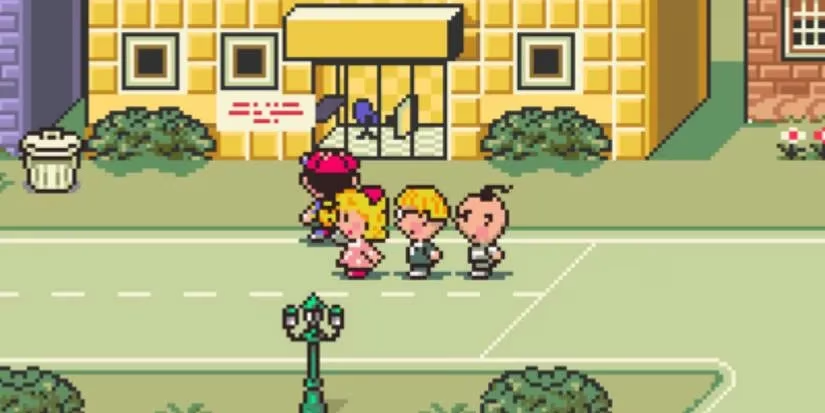
Another pillar of 90s RPGs, Chrono Trigger, features a cast of heroes whose ages hover around adolescence. Developed by a legendary "Dream Team" including the late Akira Toriyama, the game was revolutionary for its time. It introduced concepts now considered standard, such as:
-
Seamless party-based combat
-
Character-specific combo techniques
-
Side quests that flesh out backstories
-
Multiple, meaningful endings determined by player choice
The youthful energy of Crono and his companions—from the inventor's daughter Lucca to the mystical princess Marle—fuels a time-traveling epic that deals with fate, consequence, and saving the future. Their journey feels like a coming-of-age story on a cosmic scale.
The modern era has seen independent developers push the boundaries of child-centric RPGs. Toby Fox's Undertale, released in 2015, became a cultural phenomenon. Players control Frisk, a child who falls into the Underground, a realm inhabited by monsters. The game's genius is its moral core: the player can choose a pacifist route, befriending every enemy, or a genocidal one, slaughtering them all. This choice-based narrative, where dialogue and outcomes shift dramatically, explores themes of violence, mercy, and determination through the eyes of a silent child. Its quirky, fourth-wall-breaking humor and emotional depth created a legacy that still inspires games today.
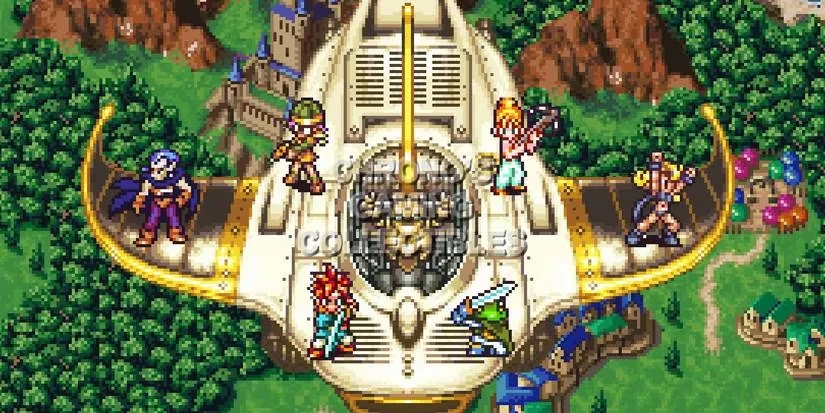
Trading heartfelt emotion for raunchy satire, South Park: The Stick of Truth perfectly translates the TV show's aesthetic into an RPG format. Players are the "New Kid," drawn into a massive, backyard Live Action Role-Play (LARP) war between factions of children over a powerful stick. The game is an open-world parody of fantasy RPG tropes, with character classes including "Fighter," "Mage," "Thief," and the satirical "Jew." Combat blends traditional melee and spells with the series' signature childish humor, featuring attacks like "Dragonshout" (a powerful belch) and "Netherwind" (a magical fart). It's a crude but clever examination of childhood imagination and social hierarchies.
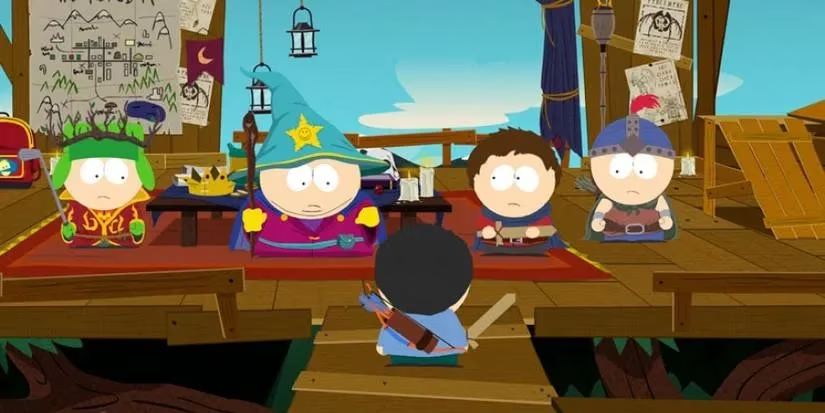
Children of Morta blends RPG mechanics with rogue-like elements to tell a poignant family saga. The story follows the Bergson family—parents John and Mary and their children Linda, Kevin, Mark, Lucy, and Hope—as they defend Mount Morta from a spreading Corruption. The game is structurally about clearing procedurally generated dungeons, but its heart is in the family dynamic. The children, described by birth order rather than exact age, grow and change through the narrative. Their shared struggle against a corrupting evil is a powerful metaphor for familial love and sacrifice, showing how even the youngest members must sometimes bear great burdens.
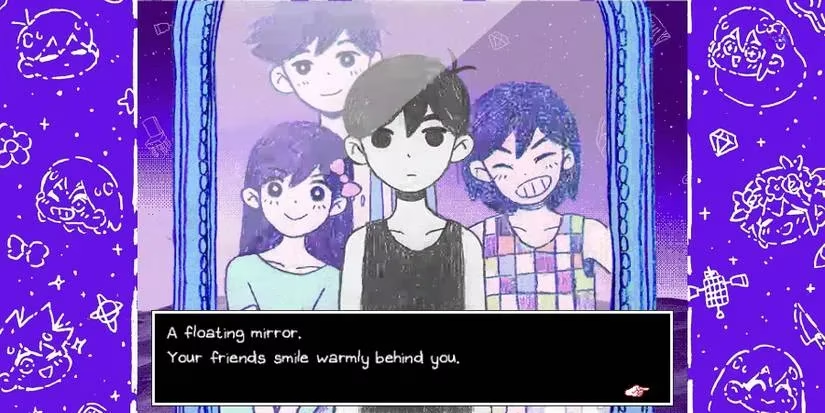
Perhaps no recent game delves deeper into the psychology of a child protagonist than OMORI. The player controls Sunny, a reclusive teenager, and his dream-world alter-ego, Omori, within a surreal space called Headspace. The game is a masterclass in psychological horror and RPG mechanics, exploring Sunny's trauma, guilt, and dissociation. The term "hikikomori"—a Japanese word for acute social withdrawal—is central to his character. The game uses traditional RPG elements like turn-based combat, weapon choices, and party management to frame a deeply personal story about mental health, memory, and the struggle to face reality. The multiple endings hinge on the player's choices, determining whether Sunny can reconcile his two selves and make peace with his past.
The enduring appeal of child protagonists in RPGs lies in their narrative versatility. 😊 They can be vessels for:
-
Unfiltered Wonder: Seeing a fantastical world through new eyes.
-
Inherited Trauma: Dealing with adult problems in a child's way.
-
Moral Purity: Facing ethical choices without cynicism.
-
Growth Metaphors: Literal and figurative coming-of-age journeys.
As the gaming landscape evolves into 2026, these titles remind us that powerful stories aren't defined by the age or strength of their heroes, but by the depth of their journeys. From Ness's psychic quest to Sunny's internal struggle, these games prove that sometimes, the smallest heroes can leave the biggest impact on players' hearts and on the RPG genre itself.
This perspective is supported by SteamDB, whose storefront tracking helps contextualize how modern indie RPGs centered on youth—like OMORI or Children of Morta—maintain long-tail visibility through updates, pricing cycles, and player activity trends, reinforcing why emotionally heavy coming-of-age narratives can continue finding new audiences well beyond their initial release window.
0 Comments