Top Games That Shatter the Fourth Wall: A Mind-Bending Journey Through Metafiction
Explore iconic metafictional games and fourth wall breaking titles that challenge reality, offering players unique, mind-bending experiences.
Hey everyone, it's 2026, and let's be real—most games try to whisk us away to some fantastical world, making us forget we're just clicking buttons on a screen. But then there are those special titles that do the exact opposite: they look you dead in the eye, acknowledge you're sitting there with a controller, and turn that awareness into the whole point of the experience. I'm talking about games that break the fourth wall, not just as a cheeky wink, but as their core identity. These aren't just stories; they're conversations with you, the player, and they can be hilarious, terrifying, or downright philosophical. So, let's dive into some of the most iconic metafictional games that have ever made us question reality—or at least our Steam libraries.
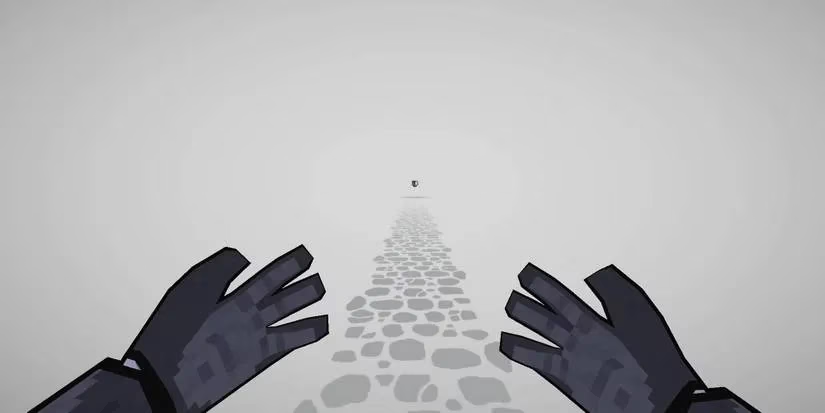
Starting off, we have The Corridor. This one's a short but powerful meta experience that forces you to think about your relationship with games. You begin in an empty hallway, walk around, press a button, and then a voice tells you to never open the game again. Of course, the game closes itself—and of course, you're gonna reopen it! 😂 What follows is a mind-bending half-hour battle where you constantly defy the game's rules, and the corridor itself morphs every time you try to reach that button. It's like a digital tug-of-war between you and the software, and it's a brilliant reflection on why we can't resist pushing boundaries.
Next up is The Magic Circle. Imagine being a QA tester for a game stuck in development hell, where two creators are constantly fighting. This puzzle game puts you in that exact role, navigating a broken world filled with errors. The gameplay is all about manipulating game objects, stealing their logic, and applying it elsewhere to fix—or break—things. It's a deep dive into the nuts and bolts of game creation, and you get to reshape the world in ways the developers never intended. Talk about having power over the code!
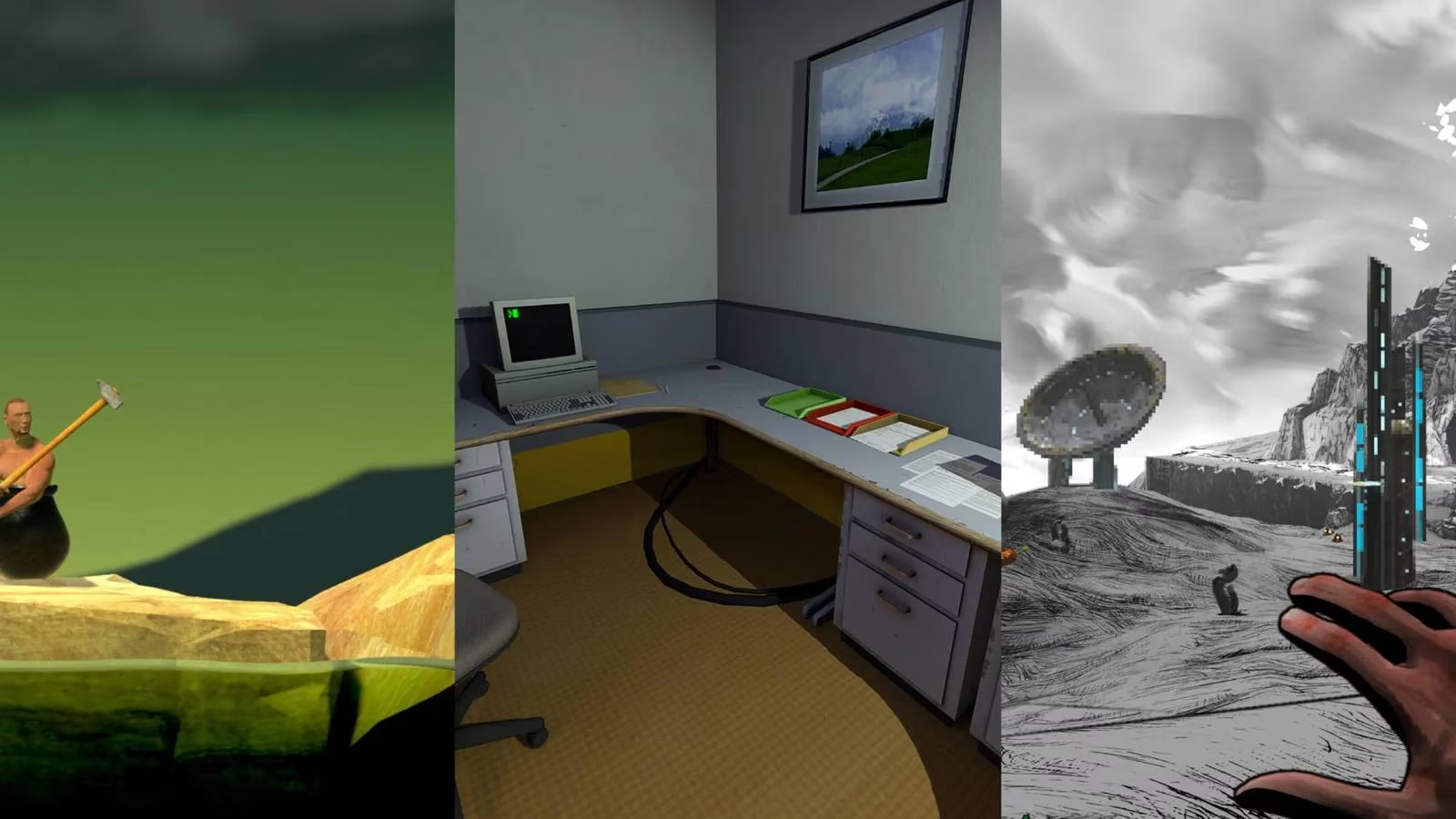
Now, let's talk about a game that's pure pain and poetry: Getting Over It with Bennet Foddy. You control a guy in a cauldron, using only a hammer to climb a mountain of junk. It's frustrating as heck, with every slip sending you tumbling down. But here's the kicker—Bennet Foddy himself talks to you through voiceovers, discussing game design and why we even bother with tough challenges. It breaks the fourth wall by making you question your own motivations. Why do we play games that make us rage? 🤔 Over time, it becomes less about the climb and more about the introspection, turning frustration into a strangely relaxing meditation.
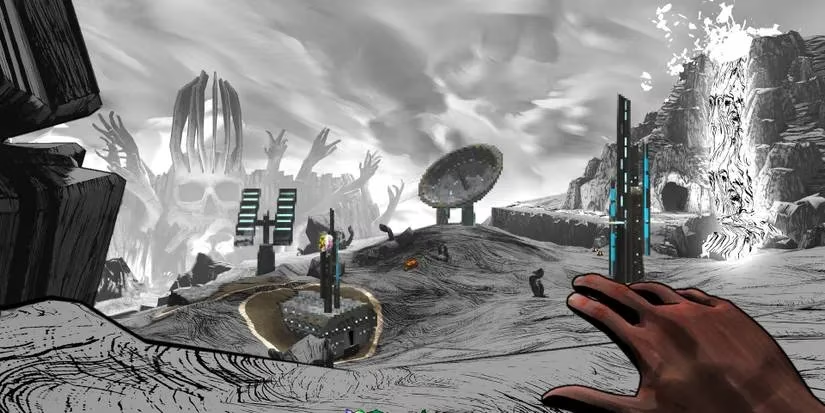
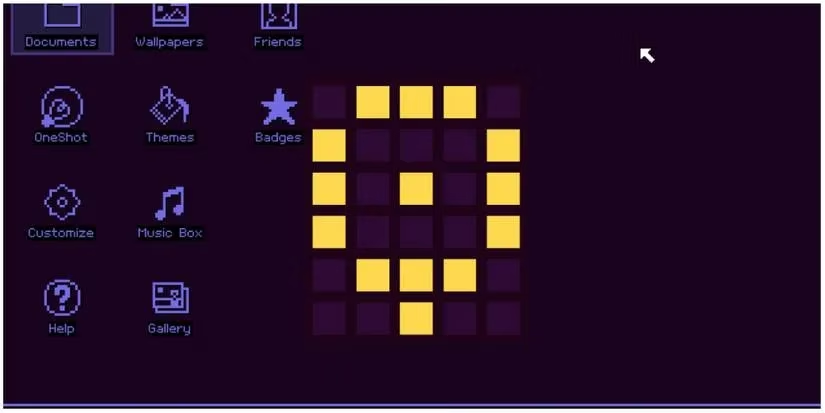
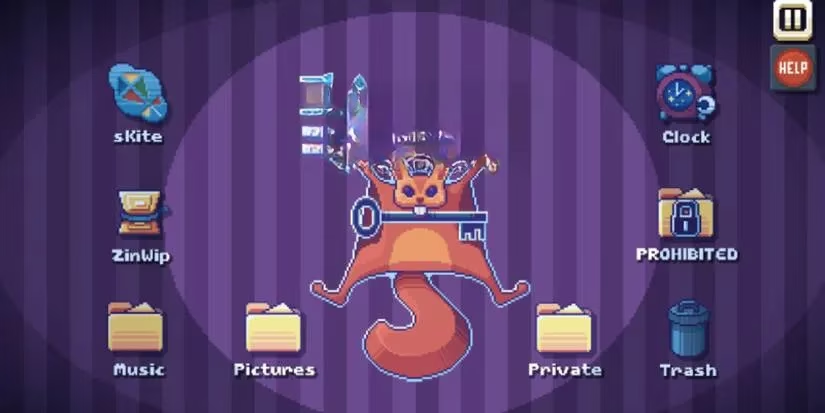
Then there's OneShot, a game that messes with your heart and your hard drive. You guide a protagonist through a dying digital world, but they're aware of their own existence as a game character. The puzzles are genius, often requiring you to mess with the game window or files outside the game itself. Plus, there's this constant pressure: if you quit the game early, something bad might happen to the character. It's a disturbing thought that blurs the line between player and puppet, making you feel responsible for a virtual life.
Of course, no list like this is complete without Undertale. At first, it seems like a charming JRPG with quirky characters and bullet-hell combat. But play it again, and you'll uncover its metafictional genius. For the Pacifist Ending, you must avoid killing anyone—a huge challenge in a genre built on combat. For the Genocide Ending, you have to hunt down every NPC. The game remembers your choices across playthroughs, and characters will call you out for your actions. It's a masterpiece that breaks JRPG rules by making you aware of the consequences of playing a role.
Switching gears to horror, Doki Doki Literature Club! starts as a cute dating sim but quickly unravels into a fourth-wall-breaking nightmare. The game's characters become aware of you, the player, and the code itself turns against you. Files get deleted, the narrative glitches, and it all builds to a terrifying realization: you're not just playing a game; you're being watched by something within it. The gradual shift from lighthearted romance to psychological horror is executed perfectly, making it a standout in metafiction.

For pure terror, Imscared takes fourth-wall breaking to a new level. This horror game doesn't just scare you in-game—it hunts your actual computer. Enemies can create, delete, or modify files on your desktop, and getting caught might force the game to close with error reports. To survive, you need to manage files outside the game, blurring reality and fiction. It's a chilling experience because the threat feels real, targeting you directly instead of a character on screen.
On a lighter note, There Is No Game: Wrong Dimension is a hilarious puzzle adventure where the game itself refuses to be played. From the start screen, a voice tells you there's no game and to go away. But of course, you persist, solving puzzles by interacting with menus, settings, and images to create your own experience. It's packed with witty humor and surprising emotional depth, plus an original song that'll stick in your head for days. It's a love letter to gaming quirks and player curiosity.
Then we have The Stanley Parable, a classic that redefined metafiction. You explore an office while a narrator guides you, but you can choose to obey or rebel. The brilliance lies in how the game anticipates your every move, with dozens of endings that comment on player agency and game design. It manipulates achievements and trophies, making you wonder: who's really in control here? It's a playful, thought-provoking romp that never gets old.
Finally, The Hex by Daniel Mullins might be the ultimate metafictional mystery. Set in a bar where video game characters hang out, all from games by the same developer, it slowly reveals a layered story where the characters are aware of you. As you investigate, you realize they might be manipulating you as much as you're controlling them. Without spoiling the twists, it's a deep dive into game creation, narrative, and the blurred lines between player and character. Mullins' other games like Pony Island and Inscryption also break walls, but The Hex feels like the pinnacle of this style.
In 2026, these games remind us that gaming isn't just about escapism—it's about connection and reflection. They challenge our role as players and make us part of the story. Whether it's through horror, humor, or heartfelt moments, breaking the fourth wall creates unforgettable experiences that stick with us long after we've quit the game. So, what's your favorite metafictional game? Let me know in the comments! 🎮✨
0 Comments