Undertale's Enduring Legacy: How a Decade-Old Game Continues to Shape Player Perspectives Through Its Profound Writing
Undertale, Toby Fox's indie masterpiece, captivates with emotional storytelling and impactful player choices, resonating across generations.
I still remember the first time I fell into the Underground back in 2015. Now, in 2026, as I revisit Toby Fox's indie masterpiece, I'm struck by how this pixelated RPG continues to resonate with players across generations. What began as a quirky adventure has become a cultural touchstone, its themes of choice, empathy, and determination proving more relevant than ever in our increasingly digital world. The game's writing isn't just dialogue—it's a carefully crafted emotional landscape that changes based on our decisions, making each playthrough a unique reflection of the player's own values and choices.
The Echoes of Memory: Toriel's Silent Tragedy
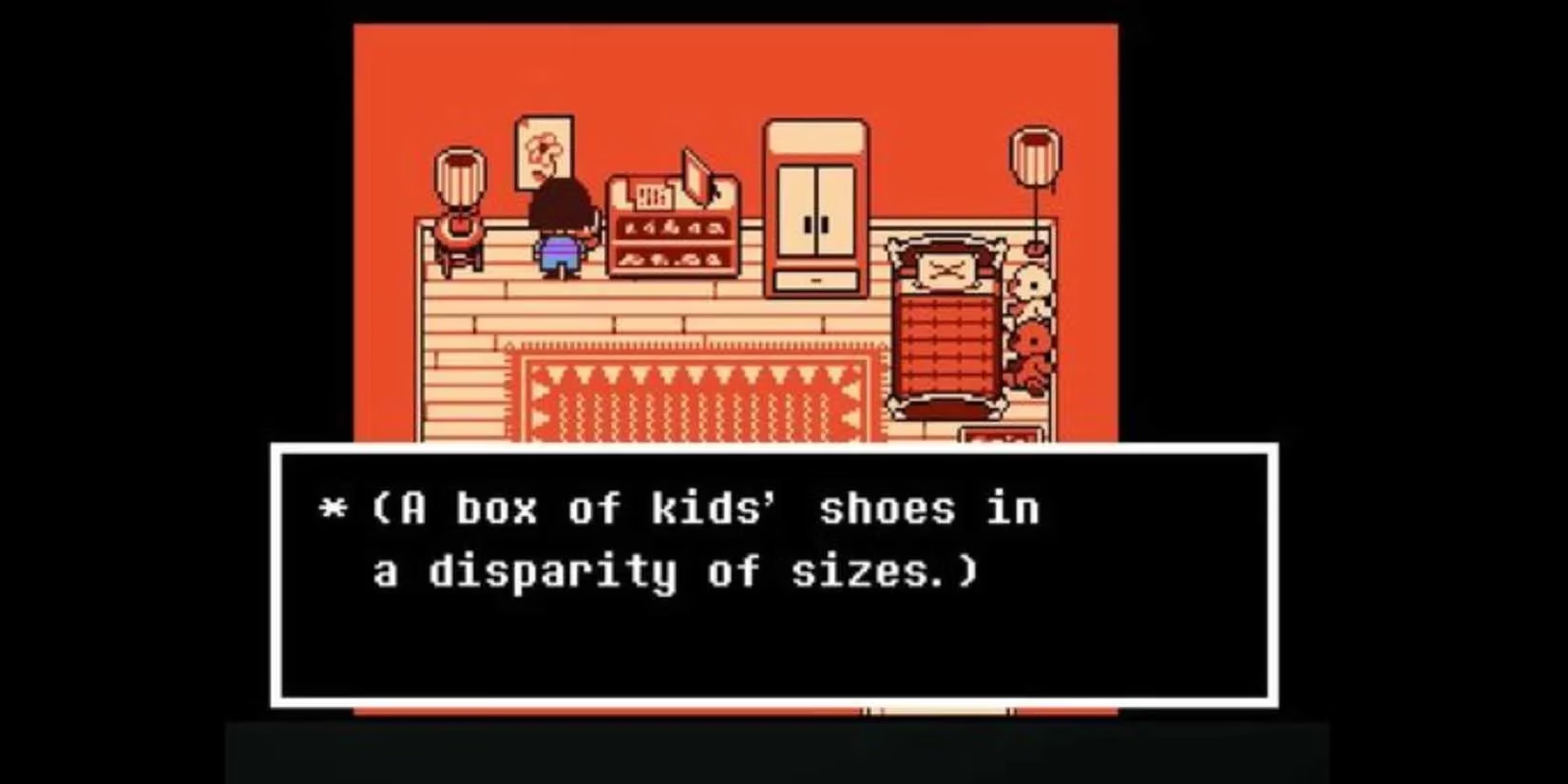
That simple shoebox in Toriel's spare bedroom remains one of gaming's most devastating environmental storytelling moments. On initial discovery, it feels like finding a hidden treasure chest in a forgotten attic—mysterious but seemingly insignificant. Only upon completing the game does its true weight descend upon you like a slow, cold fog. Those aren't just shoes; they're tombstones in miniature, each pair representing a child Toriel tried and failed to protect. This revelation transforms her character from a suspicious guardian to a grieving mother figure, her home becoming not just a sanctuary but a museum of loss. The writing achieves this emotional shift without explicit exposition, trusting players to connect the dots—a narrative technique as delicate as spider silk but strong enough to support profound emotional weight.
The Judge's Verdict: Sans' Moral Calculus
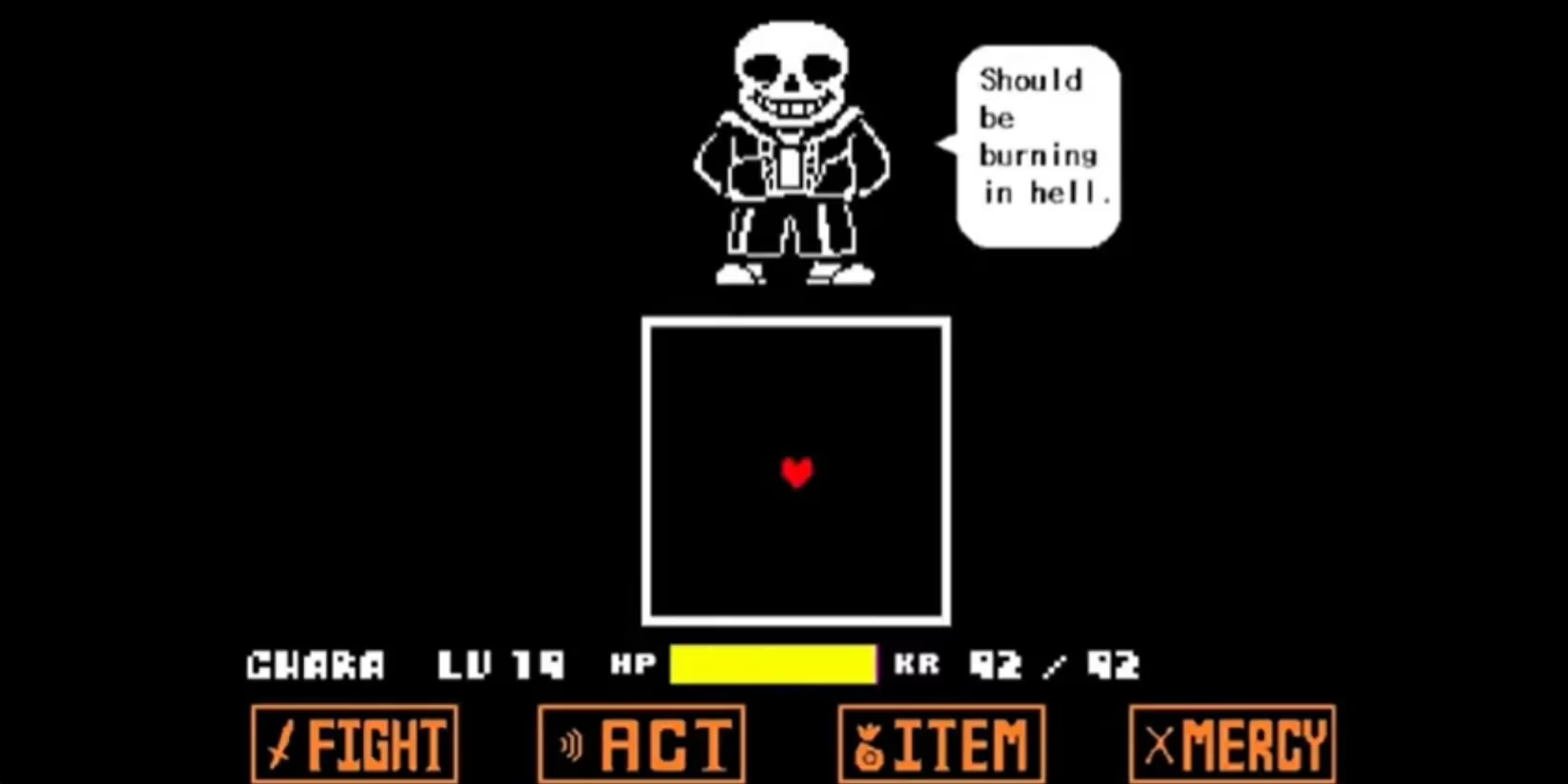
Sans' genocide route confrontation remains gaming's most effective tonal pivot—a narrative gut-punch that feels like walking through a familiar garden only to discover it's been built over a dormant volcano. His transition from laid-back punster to cosmic judge demonstrates Undertale's mastery of character development through player action. The line "you'd be dead where you stand" in pacifist routes functions like finding a loaded gun in a comedy club—suddenly, the laughter dies in your throat. Sans embodies the game's central question: what happens when mercy has limits? His dual nature serves as a mirror to our own playstyle, rewarding kindness with friendship while meeting violence with devastating consequence. The brilliance lies in how the game makes us complicit in creating whichever Sans we encounter.
The Sound of Silence: When Nobody Comes
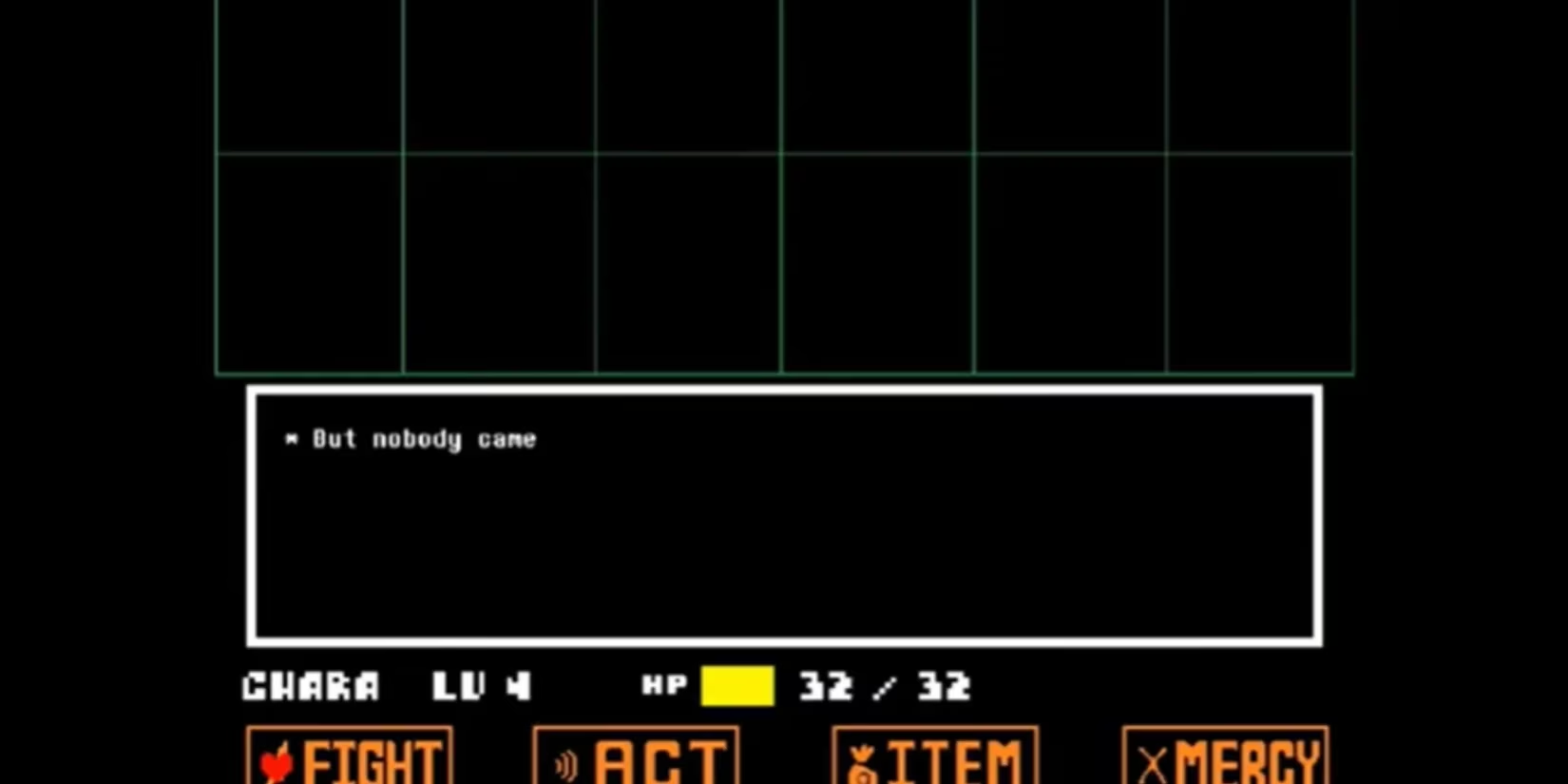
The genocide route's most chilling moment isn't a boss fight or dramatic reveal—it's absence itself. "But nobody came" represents gaming's most effective use of negative space, transforming the RPG's core mechanic (random encounters) into a haunting commentary on our actions. This emptiness feels like opening a beloved book to find all the words have vanished, leaving only the ghost of what once brought joy. The slowed-down version of "Your Best Friend" that accompanies these empty encounters serves as auditory corrosion, taking a once cheerful melody and stretching it into something unrecognizable and mournful. It's environmental storytelling at its most minimalist and effective, making players feel the weight of their genocide not through gore or explicit violence, but through profound, unsettling silence.
The Mirror's Truth: Identity Amidst Chaos
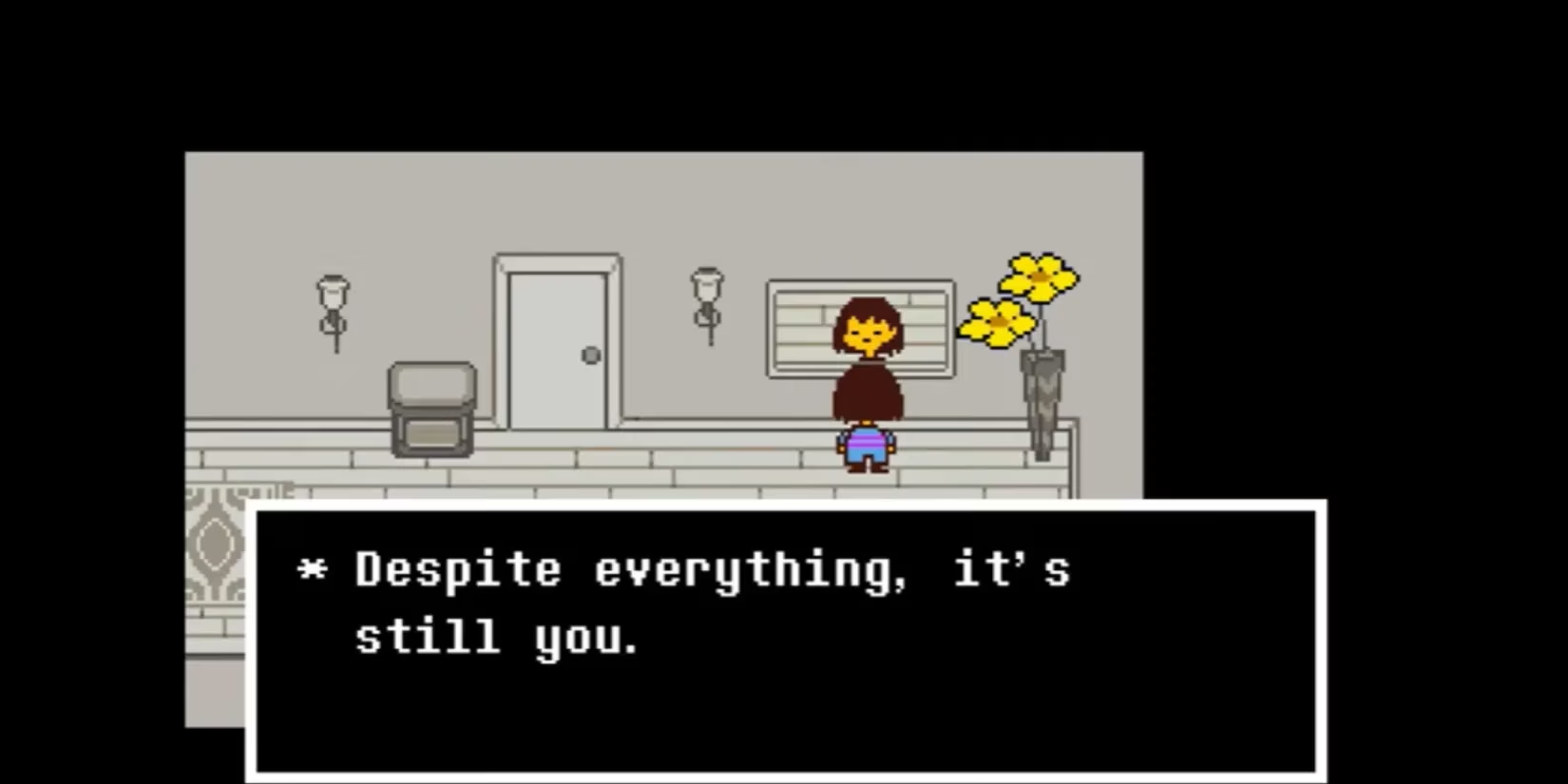
Undertale's culminating message—"Despite everything, it's still you"—functions as the narrative equivalent of a lighthouse beam cutting through stormy seas. After hours of battling, befriending, and making difficult choices, this simple mirror reflection offers both validation and challenge. The game suggests that our core identity isn't defined by the battles we fight, but by why we fight them and who we choose to protect along the way. This theme resonates powerfully in 2026, as we navigate increasingly complex digital and real-world identities. The mirror's message serves as an anchor, reminding players that external circumstances—whether monster battles or life challenges—don't fundamentally alter who we are at our core, provided we maintain our humanity through conscious choice.
Existential Echoes: Goner Kid's Meta-Commentary
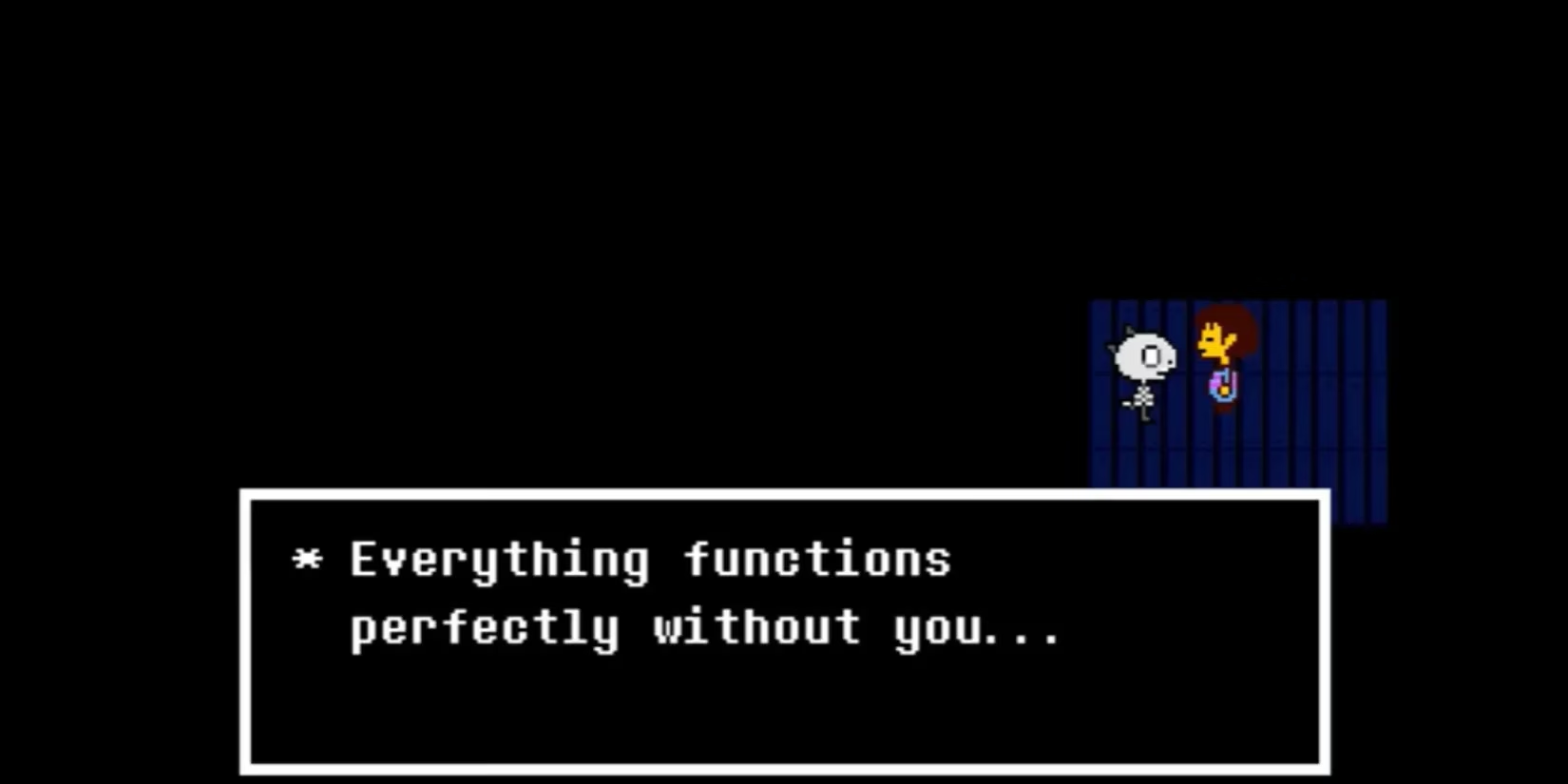
Goner Kid's appearance—dependent on that mysterious "Fun Value"—represents Undertale's most sophisticated narrative layer: meta-commentary that functions like finding a window looking out from a painting. "Everything functions perfectly without you" operates on multiple levels simultaneously:
-
Narrative level: The Underground existed before the player character fell
-
Gameplay level: The code runs regardless of player interaction
-
Existential level: The universe continues with or without individual consciousness
-
Ethical level: Our choices matter precisely because they aren't predetermined
This multi-layered approach makes Undertale feel less like a game and more like a philosophical dialogue disguised as an RPG. The writing acknowledges its own artificiality while making players feel genuine emotional connection—a paradox that gives the experience its unique, enduring power.
The Determination Paradox: Power and Responsibility
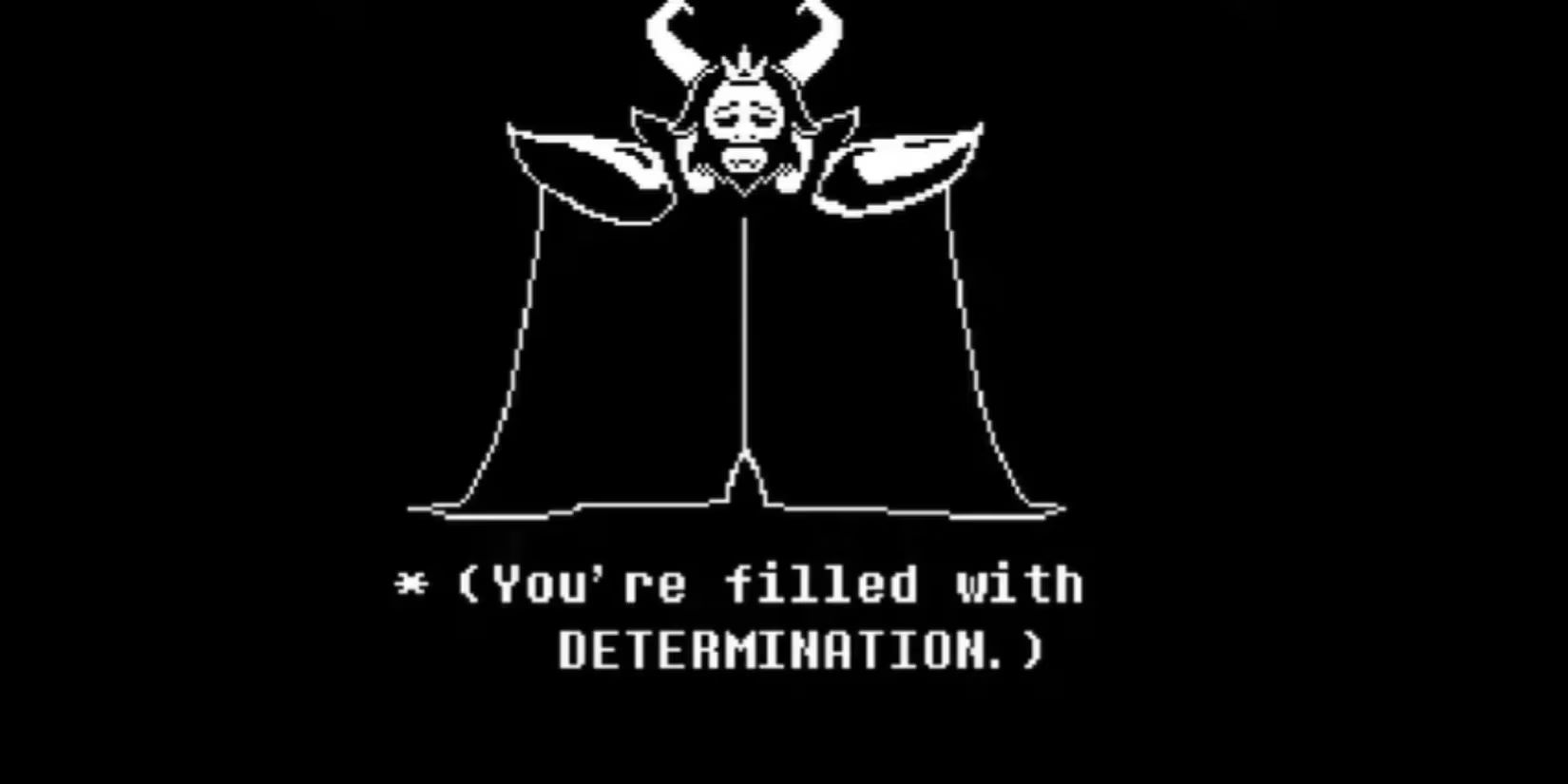
"You're filled with determination" has evolved from game mechanic to cultural mantra over the past decade. What makes this phrase so enduring is its dual nature—it's both a statement of fact and a moral challenge. Determination in Undertale isn't just a resource for overcoming obstacles; it's the catalyst that transforms intention into action, for better or worse. The game presents determination as:
| Positive Manifestation | Negative Manifestation |
|---|---|
| Persevering through Asgore's fight | Relentlessly pursuing genocide |
| Showing mercy to enemies | Refusing to spare anyone |
| Completing the True Pacifist route | Completing the Genocide route |
This duality makes determination one of gaming's most complex power systems—it's not inherently good or evil, but takes its moral character from how players choose to wield it. In 2026, as we face global challenges requiring both persistence and ethical consideration, Undertale's exploration of determination feels particularly prescient.
The Unseen Companion: Chara's Haunting Presence
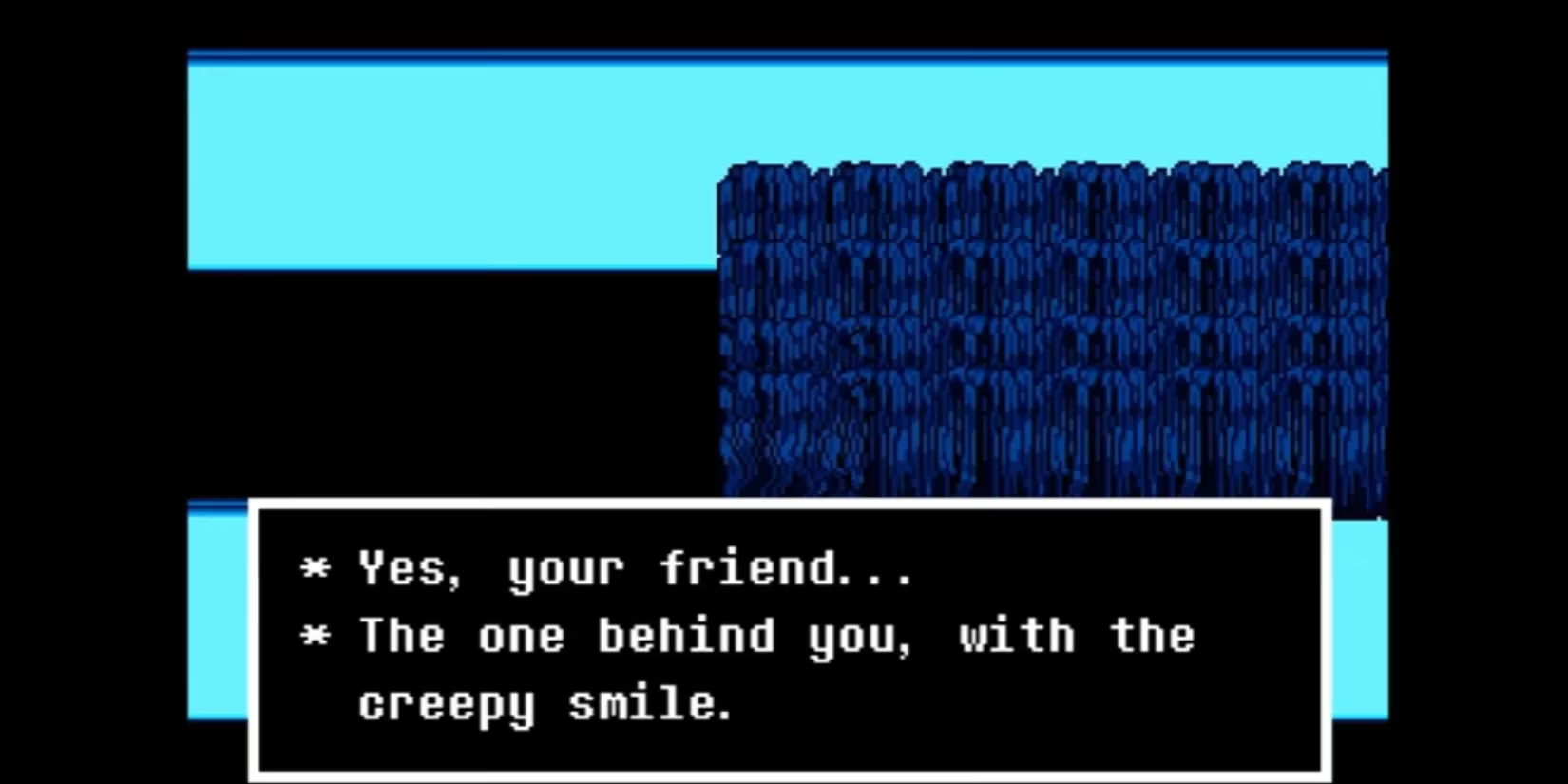
That chilling line about "the one behind you with the creepy smile" transforms Undertale from a simple adventure into psychological horror territory. Like discovering your shadow has developed independent movement, this realization that Chara might be observing every action adds a layer of paranoia to subsequent playthroughs. The writing suggests we're never truly alone in our choices—either literally within the game's lore (with Chara following) or metaphorically (with our past decisions and potential futures watching). This creates a fascinating narrative tension: are we playing as the fallen human, or is the fallen human playing with us?
Flowey's Accusation: The Humanity Question
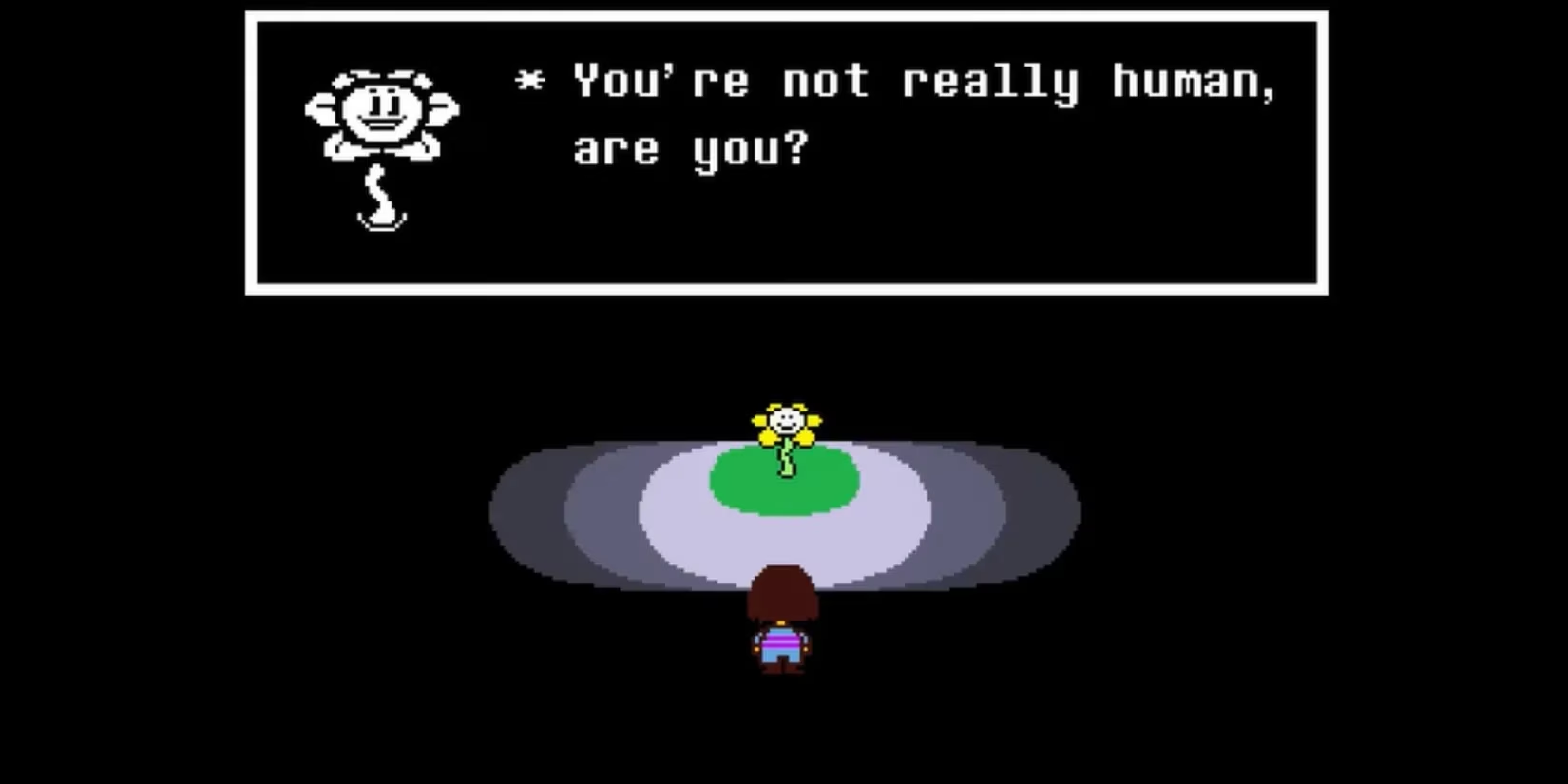
Flowey's declaration "you're not really human, are you?" lands with the force of a surgical incision—precise, painful, and revealing hidden layers beneath the surface. This accusation serves as the game's central philosophical challenge, questioning whether humanity is defined by biology or behavior. In 2026, as AI and digital identities become increasingly sophisticated, this question feels more urgent than ever. Undertale suggests that humanity isn't something we are, but something we do—a continuous choice to extend empathy rather than a fixed biological state. Flowey, as a being who remembers multiple timelines and has lost his capacity for empathy, becomes the perfect vehicle for this interrogation, his lack of soul making him both judge and evidence in the case against cruelty.
Legacy of Kindness: Why Undertale Endures
As I reflect on Undertale's journey from indie darling to cultural phenomenon, several factors explain its enduring appeal:
✨ Player Agency as Narrative Engine: Every choice feels meaningful because the game remembers
✨ Emotional Intelligence: The writing understands when to be funny, tragic, or profound
✨ Meta-Consciousness: The game knows it's a game, using that awareness to enhance immersion
✨ Thematic Resonance: Its exploration of choice, consequence, and empathy remains timeless
✨ Technical Innovation: Simple mechanics used in psychologically complex ways
In an era where many games prioritize graphical fidelity over emotional depth, Undertale stands as a testament to the power of thoughtful writing and player-centric design. Its pixels may be simple, but its emotional landscape is as rich and complex as any AAA title released in 2026. The game understands something fundamental: true immersion doesn't come from realistic graphics, but from meaningful choices that reflect and challenge our own humanity. As Sans might say, "take care of yourself, kid"—because in Undertale's world, and perhaps in ours, that self-care extends to how we treat everyone we encounter on our journey.
0 Comments