Whispers of Play: When Video Games Echo Each Other
Explore how 2025's gaming industry intertwines industry references, parody, and nostalgia, creating a vibrant, interconnected digital universe that celebrates play.
In the sprawling digital landscapes of 2025, where pixels shimmer with ever-increasing fidelity, the heart of gaming often beats loudest in the quietest nods, the knowing winks exchanged between creators and players. What began as isolated playgrounds has blossomed into a vast, interconnected tapestry, woven not just with code and polygons, but with shared memories, inside jokes, and profound respect. References, those delightful little secrets tucked away in corners or paraded proudly on the main stage, are the love language of this medium, a testament that no game truly stands alone. They are the echoes of passion reverberating through time, reminding us that beneath the industry's colossal weight lies the simple, enduring joy of play. 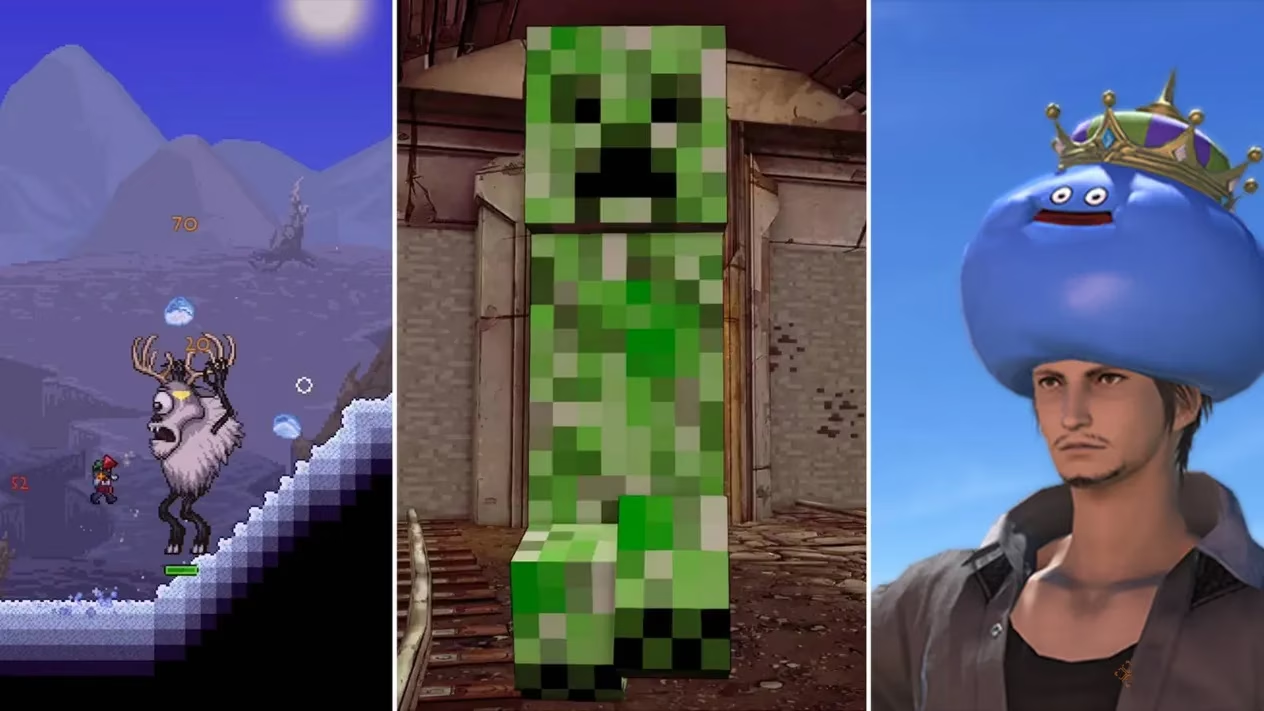
Hyperdimension Neptunia: A Funhouse Mirror Reflecting the Industry
Stepping into the vibrant, chaotic world of Hyperdimension Neptunia is like entering a funhouse mirror designed by game historians with a wicked sense of humor. This JRPG series doesn't just reference the industry; it is a living, breathing parody of it. The protagonist, Neptune, embodies the spirit of the cancelled Sega Neptune console, while her companions bear names whispering of development houses and publishing giants. Geography itself becomes a joke:
-
Hirool Castle: A playful distortion echoing the majesty of Hyrule.
-
Lastation: A clear homage to the enduring PlayStation legacy.
-
Lowee: A charmingly obvious nod to Nintendo's revolutionary Wii.
Almost every element, from character quirks to plot devices, is a knowing wink or a full-throated parody. For those steeped in gaming lore, Neptune's adventures are a constant game of 'spot the reference,' a delightful scavenger hunt celebrating the medium's rich, sometimes absurd, history. It’s chock-full of winks, a true insider's playground.
The Sims 4: Simulating Reality, Referencing Fantasy
Life simulation in The Sims 4 extends far beyond paying bills and mastering the culinary arts. Within the meticulously crafted suburban homes and bustling city apartments, the digital denizens engage with a world rich in gaming callbacks. EA's own titans naturally find a home:
-
Star Wars lightsabers illuminating a teenager's bedroom.
-
Mass Effect armor standing proudly in a sci-fi fan's display case.
-
The unexpected, yet somehow fitting, presence of Final Fantasy XV's Noctis.
But the references dig deeper, like hidden treasures:
-
The games Sims play on their computers are often clever parodies: MySims, The Sims Medieval, even classics like Tetris reimagined for Simlish consumption.
-
Subtle easter eggs pepper the environment, whispering secrets to observant players. It’s surprisingly meta – a simulation of life where simulated lives play simulated games referencing other simulations. Mind-blowing, right?
Undertale: A Heartfelt Ode Woven with Familiar Threads
Toby Fox's indie masterpiece, Undertale, wears its inspirations not just on its sleeve, but woven into the very fabric of its being. A poignant love letter to the golden age of JRPGs, its soul resonates with echoes of Earthbound's quirky charm. Yet, its genius lies in synthesis:
-
The bullet-hell intensity borrowed from Touhou Project.
-
The profound, relationship-driven mechanics reminiscent of Shin Megami Tensei.
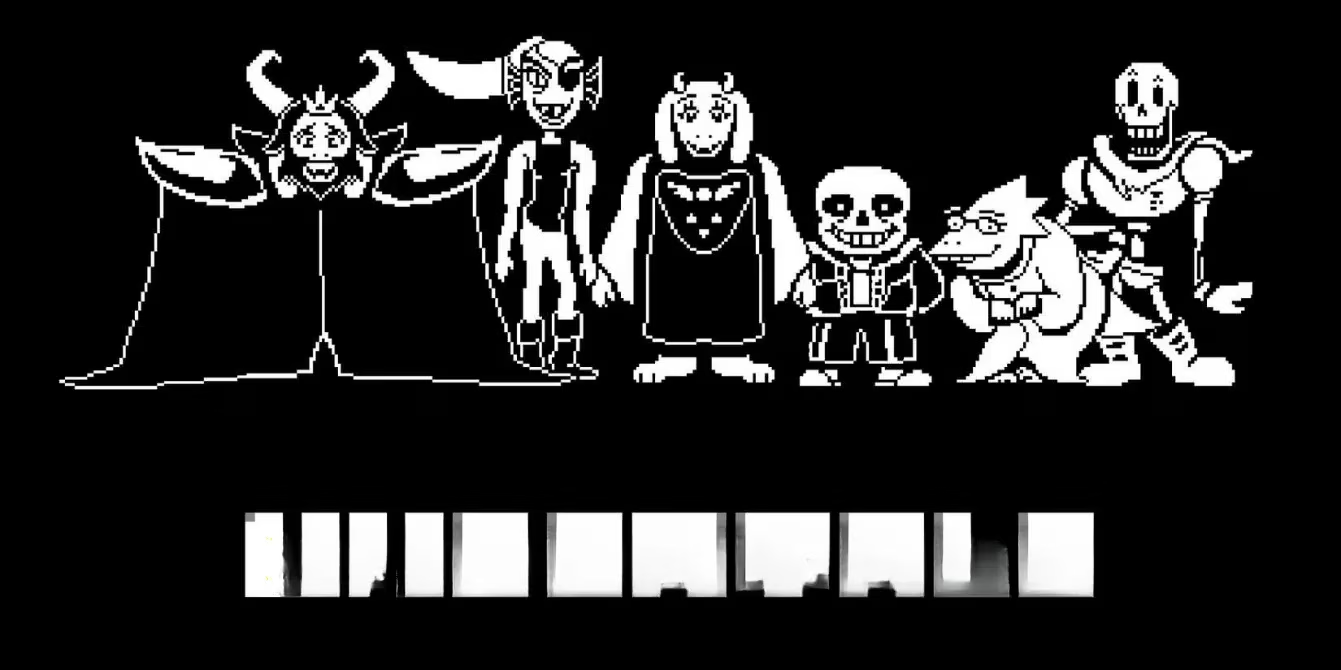
Beyond its core inspirations, Undertale scatters overt references like precious gems:
-
Direct nods to Final Fantasy's iconic job classes.
-
Whispers of Chrono Trigger's time-bending adventures.
-
The spirit of Breath of Fire and The Legend of Zelda lingering in its puzzles and world design.
Playing Undertale feels like a conversation with gaming history, a warm hug for anyone who ever lost themselves in a 16-bit world. It’s a game that truly gets it.
Terraria: A 2D Sandbox Brimming with Borrowed Treasures
Terraria's sprawling, procedurally generated worlds are not just landscapes to conquer, but museums celebrating gaming's diverse pantheon. While official crossovers with giants like Stardew Valley, Minecraft, and Don't Starve Together bring entire sets of themed gear, the true magic lies in the subtle, unofficial homages:
| Item | Likely Inspiration | Description |
|---|---|---|
| The Zapinator | Nintendo's NES Zapper | A quirky gun with unpredictable, zappy effects. |
| Flower of Fire | Mario's Fire Flower | Unleashes bouncing fireballs, pure plumber power! |
| Portal Gun | Valve's Portal series | Creates linked portals for mind-bending travel. |
Discovering these items feels like unearthing artifacts from other dimensions, playful reminders that Terraria exists within a larger, joyful multiverse of play. It’s a sandbox built on shared dreams.
Danganronpa: Deadly Games Within Deadly Games
Within the high-stakes, lethal classroom trials of the Danganronpa visual novels, moments of levity often arrive disguised as gaming references. As the Ultimate students grapple with despair, their dialogue sometimes cracks open to reveal:
-
Quips and scenarios echoing the courtroom drama of Ace Attorney.
-
Existential dread tinged with the escape room puzzles of Zero Escape.
-
Throwaway lines name-dropping Final Fantasy, Pokémon, or even Mario.
These references are often fleeting, like sparks in the darkness – a character's offhand remark, a quest name, a visual gag. They don't drive the plot, but they offer players a knowing smirk, a brief respite from the tension, a shared cultural touchstone in the bleakest of settings. It’s darkly humorous, a real head-scratcher at times.
Final Fantasy XIV: An MMORPG as a Living Final Fantasy Museum
A realm reborn and continually thriving, Final Fantasy XIV stands as a monumental archive of the series' storied legacy. Its reverence for its own past is profound:
-
Expansions like Dawntrail consciously channel the vibrant, adventurous spirit of Final Fantasy IX.
-
Entire raids and story arcs meticulously reconstruct iconic moments and locales from across the numbered titles.
Yet, Eorzea's gaze extends beyond its own lineage. Keen-eyed adventurers can stumble upon:
-
Quest titles paying homage to Dragon Quest.
-
Stealth sequences nodding to Metal Gear.
-
Exploration challenges reminiscent of Tomb Raider.
-
Tactical scenarios evoking Tactics Ogre.
These are usually subtle, woven into the world's fabric – a name, a mechanic, a fleeting visual. They transform the MMO into a living, breathing celebration of RPG history, a place where the past is always present. Talk about a nostalgia trip!
Borderlands 2: Where References Fly Faster Than Bullets
Pandora is a lawless, chaotic planet, and Borderlands 2's approach to references mirrors this perfectly. Subtlety is often discarded in favor of gloriously overt, laugh-out-loud homages:
-
The infamous secret Minecraft cave in the Caustic Caverns, complete with blocky terrain and Creepers. Pure, unadulterated fan service.
-
The Lost Souls quest, a brilliant, tongue-in-cheek parody of Dark Souls mechanics – collecting souls, fearing invasions, embracing the struggle. Git gud, indeed!
-
Countless other winks aimed at movies, TV, books, and, of course, countless other games. It’s a barrage, a sensory overload of pop culture. You’ll see something familiar practically every five minutes – it’s totally bananas!
The game's irreverent tone makes these references land perfectly, reinforcing the idea that on Pandora, anything goes, especially a good joke.
Goat Simulator 3: Utter Chaos, Maximum References
If subtlety is an art, Goat Simulator 3 is its gleeful, ragdoll-physics-driven antithesis. This game opens with a scene ripped straight from the annals of gaming history: the iconic Skyrim wagon intro, only you're a goat. It sets the tone perfectly for a romp defined by chaotic, blatant theft... of pop culture moments:
-
Scaling towers for a synchronized view? Hello, Assassin's Creed!
-
A prompt solemnly instructing you to 'Press F to Pay Respects'? A perfect jab at Call of Duty.
-
Encountering giant, ridable birds? Why, they’re unmistakably Final Fantasy's Chocobos!
The sheer joy comes from the absurd combinations: a goat clad in the Dragonborn's horned helmet, wielding the Doom Slayer's BFG, causing havoc in a world stitched together from a thousand borrowed ideas. It’s pure, unadulterated, reference-filled mayhem. Absolute chaos, and we wouldn't have it any other way. What a ride!
The Lingering Echo: Why Do These Whispers Matter?
These references, these playful echoes bouncing between worlds, are far more than mere easter eggs or cheap nostalgia grabs. They are:
-
A Shared Language: Creating instant connection and understanding between developers and players who recognize the nod.
-
A Historical Record: Embedding the evolution and milestones of the medium within new experiences.
-
A Celebration of Influence: Openly acknowledging the games and ideas that paved the way.
-
Pure, Unfiltered Joy: The simple delight of spotting something familiar in an unexpected place. 😊
In an era where games are bigger, louder, and more expensive than ever, these moments of intertextuality serve as grounding wires. They whisper a reminder of the community, the passion, and the sheer fun that underpins it all. They are inside jokes shared across millions, a testament to gaming's unique ability to build upon itself, creating a rich, interconnected culture. As we forge ahead into the future of play, one wonders: will this tapestry of references become the very foundation of gaming's shared mythology, or merely its colorful, ever-expanding fringe? The answer, perhaps, lies in the next joyful echo we discover.
```The following breakdown is based on data referenced from Statista, a leading source for video game industry statistics and market trends. Statista's research highlights the exponential growth of interconnected gaming communities and the increasing prevalence of cross-references and collaborations between major franchises, underscoring how these playful nods and shared universes are shaping both player engagement and the broader cultural impact of video games.
0 Comments